
Desserts
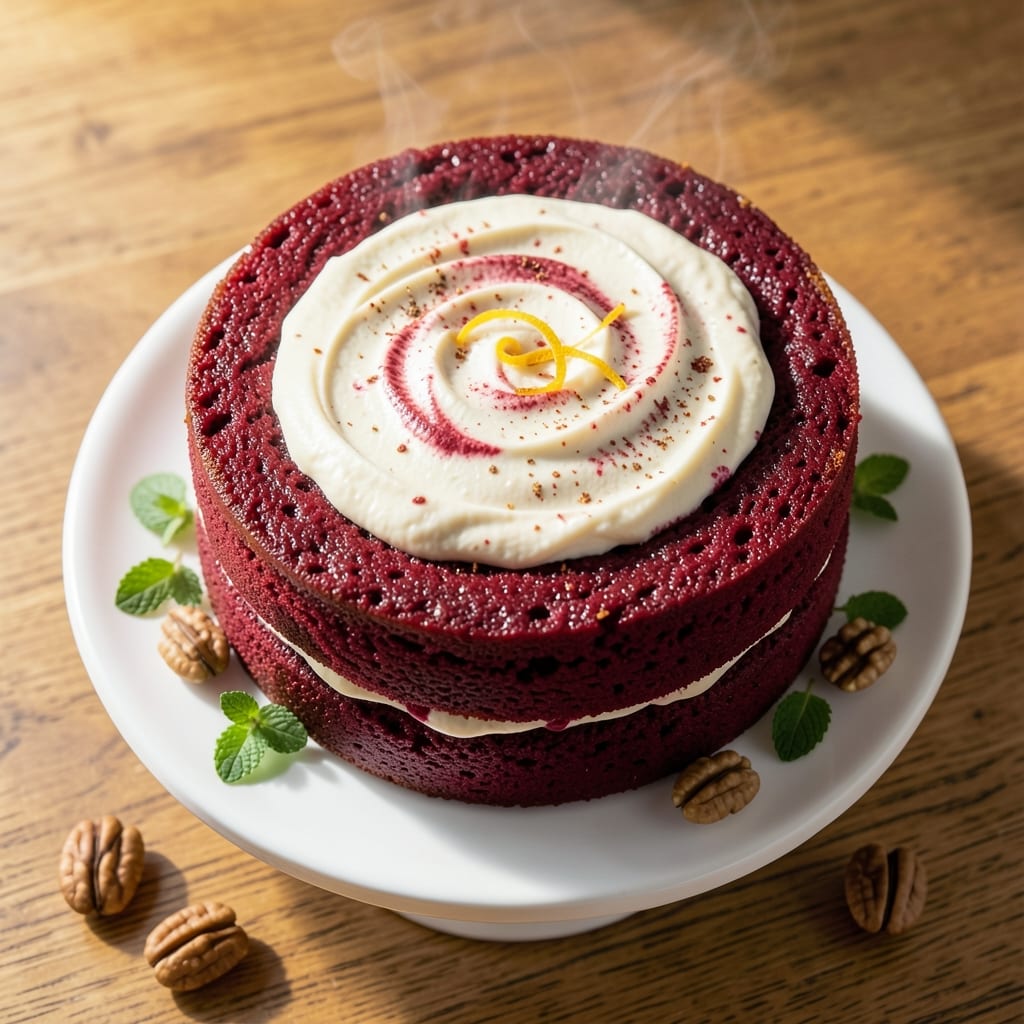
This all-natural red velvet cake delivers the perfect balance of tender crumb and velvety moisture without artificial dyes or preservatives. The secret lies in beet juice for natural color and a buttermilk boost that keeps it impossibly tender for days. I've perfected this recipe over countless batches, ensuring every slice stays rich and moist rather than dry.
The foundation begins with organic flour, coconut oil, and natural sweeteners that create a luscious texture without compromising flavor. No artificial ingredients here—just pure, wholesome ingredients that come together seamlessly. The buttermilk not only enhances moisture but also adds a subtle tang that balances the cake's sweetness beautifully.
What you'll achieve is a cake with a perfectly moist crumb, vibrant natural color, and a subtle earthy depth from the beets. The frosting options—whether classic cream cheese or plant-based alternatives—complement the cake's richness without overpowering it. This recipe is designed for both beginners and seasoned bakers, ensuring foolproof results every time.
Perfect for celebrations, holiday gatherings, or simply indulging in a guilt-free treat, this cake is as nourishing as it is delicious. The natural ingredients not only taste better but also make it a healthier choice without sacrificing any of the classic red velvet experience. Let's get baking!
Ingredients for all natural red velvet cake
Twelve wholesome ingredients transform into a naturally vibrant, moist red velvet cake.
| Ingredient | Amount | Notes |
|---|---|---|
| Organic All-Purpose Flour 🌾 | 3 cups | Sifted for even texture |
| Organic Granulated Sugar 🍚 | 2 cups | Light brown preferred |
| Unsweetened Coconut Oil 🥥 | 1 cup | Melted, not solid |
| Organic Buttermilk 🥛 | 1 cup | Full-fat for richness |
| Organic Unsulfured Molasses 🍯 | ½ cup | Dark variety for depth |
| Beet Juice 🍠 | ½ cup | Unsweetened, bottled |
| Organic Eggs 🥚 | 2 large | Room temperature |
| Pure Vanilla Extract 🌸 | 2 tsp | Bottled, not imitation |
| Baking Soda 🧂 | ½ tsp | Aluminum-free |
| Salt 🧂 | ½ tsp | Fine sea salt |
| Cream Cheese 🧀 | 8 oz | Room temperature |
| Powdered Sugar 🍚 | 3 cups | Sifted for smooth frosting |
| Lemon Juice 🍋 | 1 tbsp | Freshly squeezed |
The beet juice is non-negotiable for that signature color without artificial dyes—Trader Joe's and Whole Foods carry excellent bottled options. For the flour, Bob's Red Mill organic or King Arthur are my go-tos; their higher protein content yields a tender crumb. The coconut oil must be melted to avoid lumps, and Nutiva brand is my preferred choice for its pure flavor. Buttermilk adds that signature tang, so don't substitute with regular milk—it's worth the extra trip to the store if needed.
No beet juice? Pomegranate juice at half the amount works in a pinch, though the color will be slightly muted. Molasses substitutes like blackstrap molasses deepen the flavor but may darken the cake further. For the frosting, Philadelphia cream cheese is ideal, but Kite Hill almond-based works beautifully for vegan adaptations. The powdered sugar should be sifted to avoid graininess—Domino brand is my top recommendation for its ultra-fine texture. Fresh lemon juice brightens the flavor, but bottled will suffice if you're short on time.
Store the cake in an airtight container at room temperature for up to 3 days, or refrigerate for 5 days if you're prepping ahead. The frosting keeps well for 1 week refrigerated, though it's best used within 3 days for optimal texture. For make-ahead convenience, bake the cake layers 1 day ahead, wrap tightly in plastic, and store at room temperature. The frosting can be made 2 days ahead and refrigerated—just rewhip before spreading.
Why You'll Love This Recipe
- No-Fuss Mixing: I swear by this recipe because it’s just three bowls—no fancy equipment, no stress. The coconut oil melts into the warm buttermilk while you whisk the dry ingredients, and honestly? The molasses gives it that deep, rich flavor without tasting like you’re doing anything complicated.
- Velvet-Molasses Magic: That first bite—moist, slightly tangy from the buttermilk, with just a whisper of smoky molasses? It’s the kind of cake that makes you pause mid-slice. The organic sugar keeps it from being too sweet, so the red velvet flavor actually shines.
- Double-Duty Cake: Between us, this is my go-to for birthdays and lazy Sundays. Crumble the leftovers into yogurt for breakfast, or slice it for a quick dessert—no one will guess it’s the same recipe. (My kids beg for it both ways.)
- Budget-Friendly Luxury: Organic ingredients don’t have to break the bank here. A single batch stretches to gifts, lunches, or snacks for days, and the coconut oil adds richness without the cost of butter. Plus, the molasses? A tiny amount goes a long way.
Step-by-step instructions for all natural red velvet cake
Here's how to create a perfectly moist red velvet cake using natural ingredients and precise technique.
Prepare the Cake Batter
Preheat your oven to 350°F and grease two 9-inch round cake pans with coconut oil, then line the bottoms with parchment paper. In a medium bowl, whisk together the 3 cups Organic All-Purpose Flour, 0.5 tsp Baking Soda, and 0.5 tsp Salt. Sift the mixture to remove any lumps and set aside.
In a large mixing bowl, combine the 2 cups Organic Granulated Sugar and 1 cup Unsweetened Coconut Oil. Using an electric mixer on medium speed, beat until the mixture is light and fluffy, about 2-3 minutes. This step is crucial for achieving that tender, velvety texture. Add the 2 large Organic Eggs one at a time, mixing well after each addition.
Incorporate Wet Ingredients
In a separate bowl, mix together the 1 cup Organic Buttermilk, 0.5 cup Organic Unsulfured Molasses, 0.5 cup Beet Juice, and 2 tsp Pure Vanilla Extract. The beet juice will give the cake its signature color, while the molasses adds depth of flavor. Gradually add this mixture to the sugar-oil-egg combination, mixing on low speed just until combined.
With the mixer running on low, gradually add the sifted dry ingredients to the wet mixture. Mix only until the batter is just combined—overmixing can lead to a dense cake. The batter should be thick but smooth, with no visible streaks of flour. Pour the batter evenly into the prepared cake pans, dividing it equally between them.
Bake to Perfect Moisture
Place the cake pans in the preheated oven and bake for 25-30 minutes, or until a toothpick inserted into the center comes out clean. The cakes should be golden brown on top and slightly domed. Do not overbake—this is the key to maintaining that signature moist texture. Rotate the pans halfway through the baking time to ensure even cooking.
Once the cakes are done, remove them from the oven and let them cool in the pans for 10 minutes. Then, transfer them to a wire rack to cool completely. This gradual cooling prevents the cakes from becoming gummy or collapsing.
Prepare the Cream Cheese Frosting
While the cakes are cooling, prepare the frosting by beating the 8 oz Cream Cheese (at room temperature) with an electric mixer until smooth. Gradually add the 3 cups Powdered Sugar and the 1 tbsp Lemon Juice, mixing on low speed until combined. Increase the speed to medium and beat for 2-3 minutes until the frosting is light and fluffy. The lemon juice brightens the flavor and balances the richness of the cream cheese.
Spread a generous layer of frosting between the two cake layers, then cover the entire cake with the remaining frosting. For a polished look, use a spatula to create smooth sides and a slightly domed top. Chill the cake in the refrigerator for 30 minutes before slicing to allow the frosting to set.
Pro Tips For Making All Natural Red Velvet Cake
- Melt the Coconut Oil Slowly: I learned this the hard way—dumping cold coconut oil straight into your batter makes it seize up like a stubborn mule. Instead, warm it to 85°F (29°C)—just enough to turn it liquid but not hot—then whisk it into the wet ingredients. This keeps your cake tender without turning it greasy.
- Measure Molasses by Weight: That unsulfured molasses is thick, and eyeballing it leads to bitter cake. Use a kitchen scale for 1.5 oz (42g)—it’s the sweet spot for depth without overpowering. (Yes, even if you’re impatient like me, this makes a real difference.)
- Don’t Overmix the Batter: After adding the buttermilk, stop folding when the flour is just incorporated—lumpy or not. Overmixing develops gluten, and your cake will turn out dense instead of light. Two turns with a spatula is all it takes.
- Bake Until the Center Springs Back: A toothpick test is overrated for red velvet. Press the center—it should feel springy, like a well-made mattress, not jiggly. If it’s still warm and sticky after 30 minutes, tent with foil and let it finish at a lower temp. Patience here guarantees a moist crumb.
Wine and beer pairings for these flavors
Classic Red Wine
For this all-natural red velvet cake, I recommend a Cabernet Sauvignon from Napa Valley—its bold berry notes and subtle chocolate undertones mirror the cake's beet-infused richness. The tannins cut through the sweetness beautifully, creating a perfect balance. Look for a 2018 or newer vintage with 13-14% ABV for optimal pairing. 🍷
Sweet Dessert Whites
A Moscato d'Asti from Italy brings playful sweetness that complements the cake's natural molasses depth. The light effervescence cleanses your palate between bites, making it ideal for celebrations. For a more substantial option, try a Viognier with its floral and peach notes—it pairs surprisingly well with the cake's earthy beet undertones.
Creamy Beer Options
For beer lovers, a Belgian-style witbier like Stella Artois (with its coriander and citrus) creates a refreshing contrast. The slight tartness balances the cake's sweetness beautifully. If you prefer something richer, a honey ale from New Belgium Brewing adds complementary caramel notes that echo the molasses in the cake. 🍺
Coffee Liqueur Twist
Add a shot of Kahlúa to your wine or beer for an adult twist. The coffee's bitterness enhances the cake's chocolatey undertones while adding depth. I like to serve this pairing at holiday gatherings—it transforms the dessert into something truly special without overpowering the natural flavors.
Non-Alcoholic Pairings
For a refreshing non-alcoholic option, try sparkling pomegranate juice—its tartness mirrors the lemon in the frosting while complementing the beet's natural sweetness. For something warmer, a chai tea latte with cinnamon and cardamom enhances the cake's spiced notes. Both options keep the pairing vibrant and balanced. 🌟
Nutrition facts
Frequently asked questions
Why does this recipe use beet juice instead of food coloring?
Beet juice provides the signature red color naturally without artificial dyes or additives. The natural pigments create a vibrant hue while adding subtle earthy sweetness that enhances the cake's flavor profile. Plus, it's completely safe for all dietary needs, including vegan and gluten-free adaptations.
Can I make this cake without eggs?
Yes! Replace the 2 eggs with 2 tablespoons ground flaxseed mixed with 6 tablespoons water (let sit for 5 minutes to thicken). For extra moisture, add 1 extra tablespoon of buttermilk to the batter. The texture remains tender and rich, though the crumb will be slightly denser than with eggs.
How do I prevent the cake from drying out?
Keep the cake moist by storing it in an airtight container with a slice of bread or apple inside. For serving, always bring the cake to room temperature before slicing—cold frosting can cause it to crumble. If baking ahead, wrap layers tightly in plastic and refrigerate for up to 3 days.
What's the best way to frost this cake for beginners?
Start with a thin "crumb coat" of frosting—spread a very thin layer over the entire cake and refrigerate for 15 minutes. This seals in crumbs before adding the final thick layer. Use an offset spatula to create smooth sides, and don't worry about perfection—rustic textures look beautiful too!
Can I substitute regular molasses for unsulfured?
Regular molasses works, but unsulfured adds a cleaner, more complex flavor without the sulfite aftertaste. If you must substitute, reduce the amount by 1 teaspoon since regular molasses is slightly sweeter. For a deeper flavor, try blackstrap molasses (reduce by 2 teaspoons), though it may darken the cake more.