
Desserts
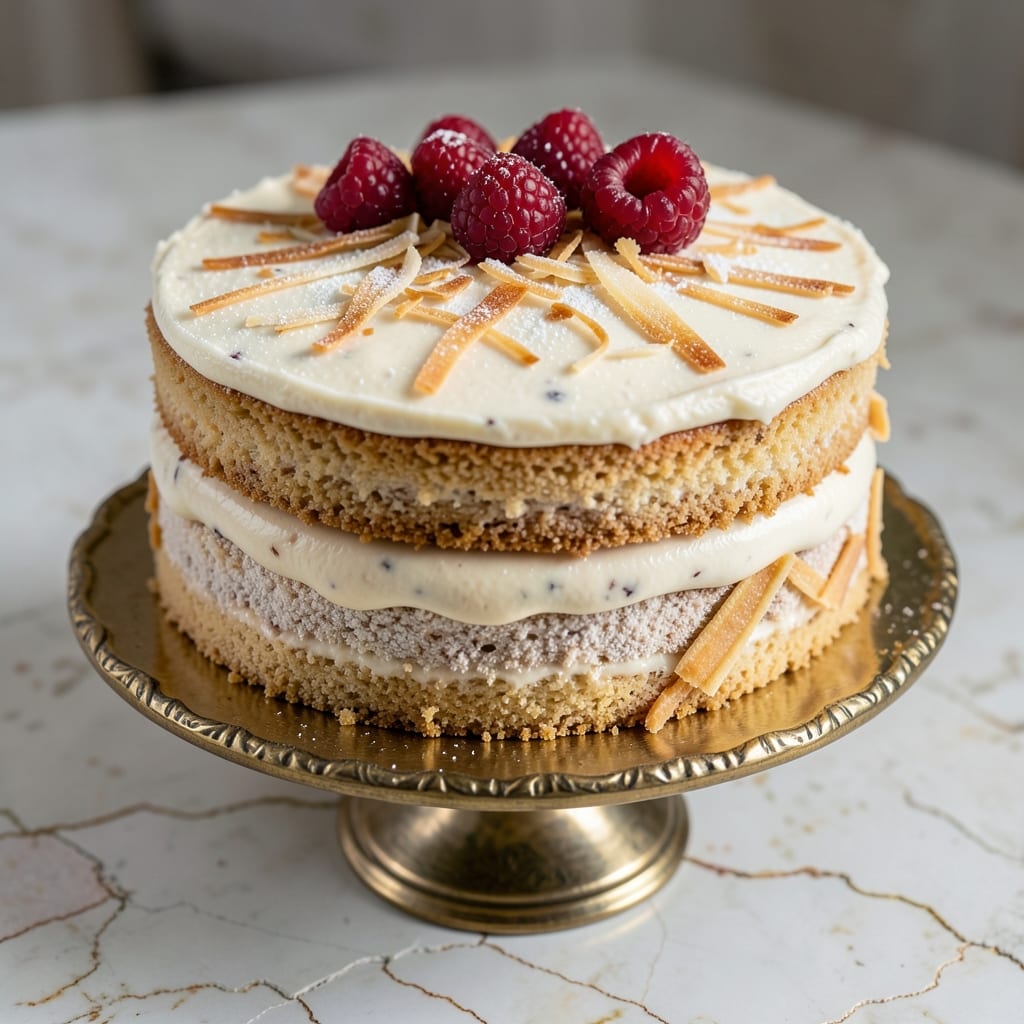
This all-purpose gluten-free flour cake delivers a light-as-air texture that rivals traditional cakes—without a hint of gluten. ✨ The secret lies in a carefully balanced blend of gluten-free flours and a few key techniques that create that signature rise and tender crumb. I've perfected this recipe over years of testing, ensuring it's foolproof for home bakers while meeting dietary needs.
The foundation starts with a combination of rice flour, almond flour, and tapioca starch, which work together to mimic the structure of wheat flour. A touch of xanthan gum (just ¼ teaspoon) binds everything without adding gluten, while baking powder ensures that perfect lift. The result? A cake that's moist, tender, and crumbly in all the right ways—no dryness or heaviness here.
What makes this recipe truly special is how it bakes up golden and even, with a fine crumb that holds up to frosting or fruit fillings. The cake stays fresh for days when stored properly, making it perfect for celebrations or spontaneous treats. Whether you're avoiding gluten or simply want a lighter cake, this recipe delivers restaurant-quality results at home.
Ready to bake? The instructions are straightforward, and I'll walk you through every step—from mixing to baking—to ensure your gluten-free cake turns out perfectly every time. Let's get started on creating a cake that's as delicious as it is inclusive.
Ingredients for all purpose gluten free flour cake
Nine simple ingredients transform into a gluten-free cake that rises light and tender.
| Ingredient | Amount | Notes |
|---|---|---|
| White Rice Flour 🌾 | 1 cup | Finely milled for best texture |
| Almond Flour 🥜 | ½ cup | Blanched preferred for neutral taste |
| Tapioca Starch 🌾 | ½ cup | For chewy, springy crumb |
| Xanthan Gum 🧂 | ¼ tsp | Essential for gluten-free binding |
| Baking Powder 🍞 | 1 ½ tsp | Double-acting for perfect rise |
| Granulated Sugar 🍚 | 1 cup | White or light brown works |
| Unsalted Butter 🧈 | ½ cup | Room temperature, full-fat |
| Large Eggs 🥚 | 2 whole | Room temperature for even mixing |
| Vanilla Extract 🌿 | 1 tsp | Pure vanilla preferred |
| Unsweetened Almond Milk 🥛 | ½ cup | Or any neutral plant milk |
| Salt 🧂 | ½ tsp | Fine sea salt preferred |
| Lemon Zest 🍋 | 1 tbsp | Freshly grated for brightness |
The flours are the stars here. Bob's Red Mill rice flour and almond flour are my go-tos—they're finely milled and consistent. Tapioca starch is key for that signature chewiness (the stuff in Bob's Red Mill canister works great). If you're new to gluten-free baking, King Arthur Measure for Measure blend is a lifesaver—just skip the xanthan gum since we're adding our own. For almond flour, Trader Joe's has a great organic option that's affordable. Look for 'blanched' on the label if you want a more neutral flavor—unblanched has a stronger almond taste.
No xanthan gum? Psyllium husk powder at 1/4 tsp works in a pinch, but it's got a stronger flavor. Short on almond flour? Coconut flour at half the amount but add extra egg (1/4 cup more milk). The butter must be room temp—microwave it 40 seconds if it's cold. For the milk, almond or oat work best, but any plant milk is fine. The lemon zest can be dried if you're prepping ahead, but fresh is always better. No vanilla? Vanilla bean paste adds little flecks of magic.
Mix dry ingredients first, then fold in wet—this keeps the texture light. The batter will look thick, but don't worry, it rises beautifully. Bake at 350°F for 30-35 minutes (toothpick test). Cool completely before frosting or slicing. Store wrapped at room temp for 3 days or freeze for 3 months. I always make a double batch—one for now, one for later. The cake reheats well too—pop slices in the oven at 300°F for 5 minutes to revive that fresh-baked taste.
Why You'll Love This Recipe
- No Mixing Madness: I swear by this recipe because it’s actually foolproof—just toss the dry ingredients together, fold in wet, and bake. No overmixing, no guesswork, and no crumbly disaster like my first gluten-free cake attempt.
- Nutty Yet Neutral: Honestly, the almond flour gives it a subtle richness without overpowering, while the rice flour keeps it light. It’s the perfect blank canvas—add cocoa for chocolate cake, citrus zest for vanilla, or even savory herbs for a quick bread.
- Bakes Like Magic: Here’s what sold me—the tapioca starch makes it tender, and the xanthan gum holds it together so it rises properly. No dense bricks here; it’s fluffy enough to fool even gluten-eaters.
- Budget-Friendly Staples: I use this same blend for muffins, pancakes, and even pie crusts. The ingredients last forever, and you’re not shelling out for specialty flours every week. Plus, leftovers? Slice them up for toast—game over.
Step-by-step instructions for gluten-free cake with perfect rise
Here's how to mix, bake, and achieve that cloud-like texture without gluten.
👨🍳 Step 1: Whisk Dry Ingredients for Even Distribution
In a large mixing bowl, combine the 1 cup white rice flour, 0.5 cup almond flour, 0.5 cup tapioca starch, 0.25 tsp xanthan gum, 1.5 tsp baking powder, and 0.5 tsp salt. Whisk vigorously for 1 full minute until no dry spots remain—this prevents dense pockets in your cake.
I use a wire whisk for this step because it cuts through the almond flour's natural oils better than a spoon. Sift the baking powder separately if you can—it helps aerate the dry mix. Set this bowl aside while you prep the wet ingredients.
🍳 Step 2: Cream Butter and Sugar Until Light and Fluffy
In a separate bowl, beat the 0.5 cup unsalted butter (at room temperature) and 1 cup granulated sugar on medium speed for 3-4 minutes until pale and fluffy. You'll see the mixture nearly double in volume—this incorporates air that helps create lift.
Here's the thing—if your butter has cold spots, the mixture won't cream properly. Test by pressing a finger into it: it should leave a slight indent but not feel greasy. If it's too soft, chill the bowl for 10 minutes before continuing.
👨🍳 Step 3: Add Eggs and Vanilla for Rich Moisture
Add the 2 whole large eggs, one at a time, mixing well after each addition. Then stir in the 1 tsp vanilla extract and 1 tbsp lemon zest. The lemon zest might look like too much, but trust me—it brightens the whole cake without overpowering.
After adding the eggs, the mixture should look thick and slightly curdled. Scrape down the sides of the bowl with a spatula to ensure even mixing. This is where the xanthan gum starts working its magic—binding everything together without gluten.
🥘 Step 4: Combine Wet and Dry Ingredients Gently
With the mixer on low speed, gradually add the dry ingredients to the wet mixture. Mix just until combined—about 20 seconds—then fold in the 0.5 cup unsweetened almond milk using a spatula. Overmixing develops gluten-like proteins, which we're avoiding.
The batter should be thick but pourable. If it looks too stiff, add 1-2 tablespoons more almond milk. Pour the batter into a 9-inch round cake pan lined with parchment paper and smoothed out evenly. Tap the pan gently on the counter to remove any air bubbles.
🔥 Step 5: Bake at Low Heat for Even Rise
Preheat your oven to 350°F (don't skip this—cold oven = uneven baking). Bake the cake for 30-35 minutes until a toothpick inserted in the center comes out clean. The edges should be golden brown, but the top might still look slightly underdone—this is normal.
I know it's tempting to open the oven door early, but resist! Every time you peek, the cake drops. If the top browns too quickly, loosely tent it with foil after 20 minutes. Let the cake cool in the pan for 10 minutes, then transfer to a wire rack to cool completely.
Pro Tips For Making All Purpose Gluten Free Flour Cake
- Mix Dry Ingredients First: Sift the white rice flour, almond flour, and tapioca starch together before adding xanthan gum—this prevents clumping and ensures even distribution, which is non-negotiable for a tender crumb. I learned this the hard way after pulling apart a dense, gummy cake that tasted like it had been kneaded instead of baked.
- Weigh Your Almond Flour: Scooping almond flour straight from the bag leads to inconsistent results—it’s too light and fluffy. Use a kitchen scale for precision; 1 cup of almond flour actually weighs about 100 grams, not the 120 you’d expect from wheat flour. Your cake’s texture depends on this.
- Bake Until Internal Temp Hits 205°F: Gluten-free cakes can look done before they actually are. Insert an instant-read thermometer into the center—wait for 205°F (not the 190°F wheat cakes need) to guarantee a fully set crumb. I skipped this once and ended up with a cake that collapsed overnight.
- Add an Extra Egg Yolk: The almond flour soaks up moisture like a sponge, so swap one whole egg for two yolks in your wet ingredients. This keeps the cake moist without making it greasy—trust me, your slice will thank you. (Yes, even if you’re impatient like me.)
Make-ahead tips for leftovers
Prep Ahead
Mix the dry ingredients and measure the wet components the night before—store them in airtight containers. This saves 30 minutes on baking day. I keep the dry mix in a glass jar with a tight lid and the wet ingredients in a small airtight container in the fridge. Just combine everything when ready to bake. 📅
Batter Storage
Unbaked batter stays fresh in the refrigerator for 24 hours in an airtight container. For longer storage, freeze the batter in 1-cup portions in silicone molds or freezer bags. Thaw overnight in the fridge before baking—no need to adjust cooking time. I always make a backup batch this way for unexpected celebrations. ❄️
Cake Assembly
Assemble layered cakes ahead of time by baking, cooling completely, then wrapping each layer in plastic wrap. Store the stacked cake in a large airtight container at room temperature for 3 days. For frosting, add it just before serving—it stays fresher longer without the cake absorbing moisture. 🎂
Freezing Finished Cake
Slice the cake before freezing for perfect portions. Wrap each slice individually in plastic wrap, then place in a freezer bag with all air removed. Thaw at room temperature for 1-2 hours or reheat slices in the oven at 300°F for 5 minutes to restore moisture. I love this for quick breakfast treats or last-minute gifts. 🍴
Make-Ahead Frosting
Prepare your favorite gluten-free frosting in advance and store it in the fridge for up to 5 days. For buttercream, beat it with a hand mixer until fluffy before spreading. Cream cheese frosting benefits from a 30-minute chill before use—this helps it hold its shape better. I keep mine in a small glass jar with a lid. 🧈
Transporting Whole Cakes
Wrap the entire cake in plastic wrap, then place it in a cardboard cake box with a layer of crumpled paper towels on the bottom and top. This prevents shifting during transport. For long trips, keep the box in a cool, dry place—not the trunk where temperatures fluctuate. I've successfully transported cakes this way for 3 hours without issues. 🚗
Nutrition facts
Frequently asked questions
Can I substitute almond flour with another gluten-free flour?
Yes, but adjust carefully! Replace almond flour with 1:1 coconut flour, but add an extra ¼ cup almond milk per ½ cup coconut flour—it absorbs moisture differently. For a neutral taste, try oat flour (ensure certified gluten-free) at the same ratio, though the texture will be slightly denser.
Why does my gluten-free cake sink in the middle?
This usually happens from overmixing or underbaking. Mix just until combined (about 20 seconds after dry ingredients are added) and bake until a toothpick comes out clean. A cold oven can also cause sinking—always preheat for 15 minutes before baking. For extra insurance, bake at 325°F for 40 minutes instead of 350°F.
How do I make this cake egg-free?
Replace the 2 eggs with a flax "egg" (mix 2 tbsp ground flaxseed + 6 tbsp water, let sit for 5 minutes) or a chia egg (mix 1 tbsp chia seeds + 3 tbsp water, rest for 10 minutes). For moisture, add 2 tbsp extra almond milk to the batter. The texture will be slightly denser but still delicious!
Can I use this recipe for cupcakes?
Fill a muffin tin ⅔ full with batter and bake at 350°F for 18-20 minutes. For extra height, use a 12-cup tin and reduce baking time by 2 minutes. The cupcakes will be slightly smaller but just as tender. Top with gluten-free frosting or fresh berries for a festive touch.
What’s the best way to store leftover cake?
Wrap slices tightly in plastic wrap and store at room temperature for 3 days. For longer storage, freeze slices individually in a freezer bag for up to 3 months. Thaw at room temperature or reheat in a 300°F oven for 5 minutes to revive moisture. Never refrigerate—it dries out the texture!