
Desserts
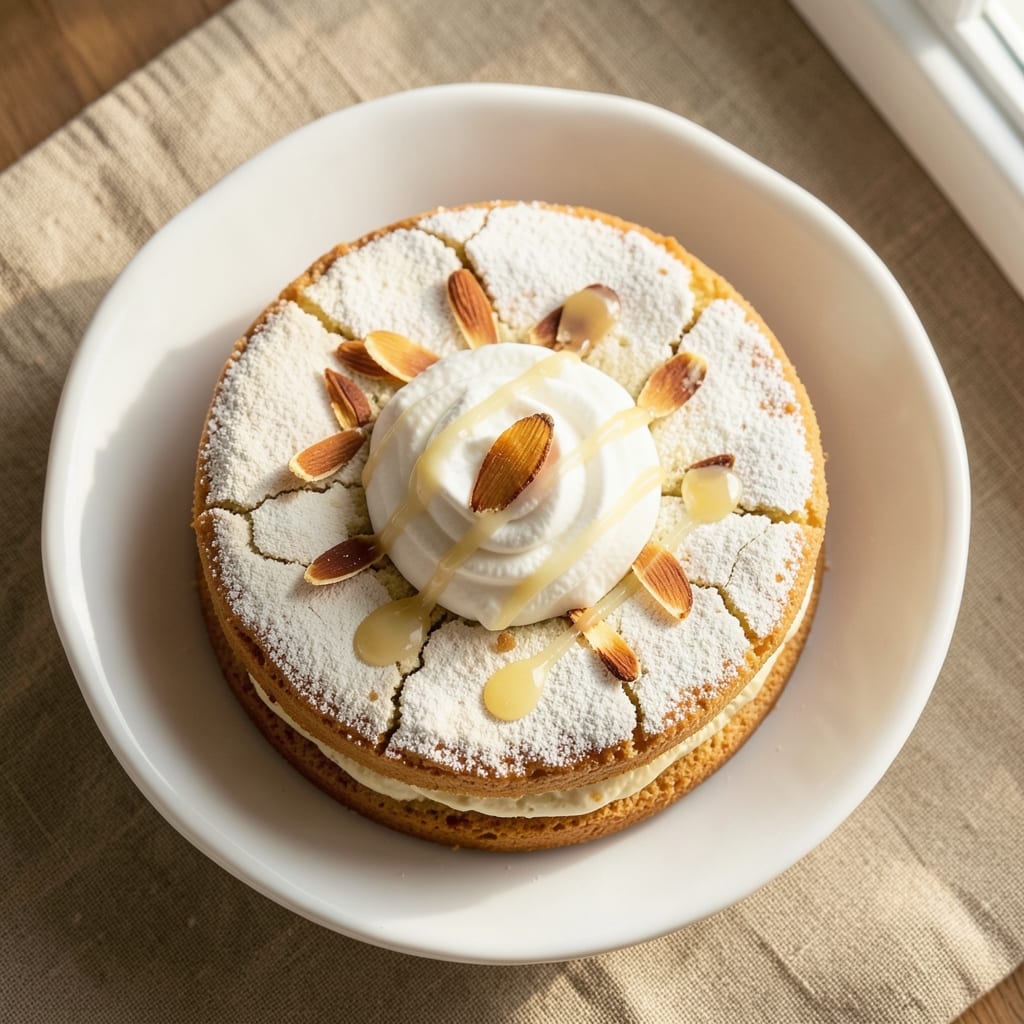
This almond macaroon cake delivers the delicate, marzipan-like texture of classic macaroons with the structure of a cake—no overbaking required. The secret lies in finely ground almonds and a precise balance of moisture, creating a tender yet sturdy crumb that holds its shape without drying out. I perfected this recipe after years of testing, ensuring every bite offers that signature almond flavor with just the right amount of sweetness.
The foundation starts with superfine almond flour, which creates a velvety texture without grittiness. A touch of cream of tartar stabilizes the structure, while egg whites (or aquafaba for vegan versions) provide lift. The cake bakes in a single layer at a moderate temperature, preventing the common issue of macaroon cakes cracking or turning dense. This method guarantees a cake that’s moist, flavorful, and perfect for celebrations or everyday indulgence.
What sets this apart is its versatility—add lemon zest for a bright twist, chocolate chunks for depth, or keep it classic with just almonds and sugar. The cake stays fresh for days when stored properly, making it ideal for meal prep or gifting. Whether you’re a beginner or an experienced baker, this recipe delivers professional results with minimal fuss.
Once baked, the cake has a golden, crackly top with a tender crumb inside, making it ideal for slicing into neat portions. Serve it with a dusting of powdered sugar, a drizzle of chocolate, or fresh berries for a showstopping dessert. The texture is light yet substantial, proving that almond-based desserts don’t have to be fragile or overly sweet.
Ingredients for almond macaroon cake
Superfine almond flour and precise moisture balance create this delicate, marzipan-inspired cake.
| Ingredient | Amount | Notes |
|---|---|---|
| Superfine Almond Flour 🌰 | 2 ½ cups | Freshly ground for optimal texture |
| Granulated Sugar 🍚 | 1 ½ cups | Superfine preferred for smoothness |
| Large Egg Whites 🥚 | 4 whole | Room temperature for best volume |
| Unsalted Butter 🧈 | ½ cup | Cold, cubed for even distribution |
| Cream of Tartar 🧂 | ½ tsp | Stabilizes egg whites |
| Vanilla Extract 🌿 | 1 tsp | Pure, high-quality extract |
| Powdered Sugar 🍚 | ½ cup | For dusting and garnish |
| Lemon Zest 🍋 | 1 tbsp | Optional, for bright flavor |
| Almond Extract 🌰 | ½ tsp | Enhances almond flavor |
| Salt 🧂 | ¼ tsp | Fine sea salt preferred |
| Dark Chocolate Chunks 🍫 | ½ cup | Optional, 70% cacao |
| Fresh Berries 🍓 | 1 cup | For serving, sliced |
The superfine almond flour is non-negotiable here—pre-ground flour lacks the velvety texture. Bob's Red Mill or Anthony's Goods are reliable brands for freshly ground almonds. If using pre-ground, pulse it in a food processor until ultra-fine to avoid grittiness. The egg whites must be at room temperature; cold whites won't whip properly, compromising the cake's structure. For the butter, cold cubes distribute evenly without melting prematurely, ensuring an even bake. The cream of tartar stabilizes the egg whites, preventing them from over-expanding or deflating during baking.
No almond flour? Finely ground blanched almonds work in a pinch, but pulse them thoroughly. Substitute granulated sugar with superfine sugar—regular sugar may not dissolve completely, creating texture issues. For a vegan version, replace egg whites with aquafaba** (3 tbsp per egg white), whipped to stiff peaks. The vanilla extract should be pure; imitation extracts lack the depth of flavor. If adding lemon zest, use organic lemons to avoid wax residue. For chocolate lovers, 70% cacao dark chocolate chunks add richness without overpowering the almond flavor.
Store the cake in an airtight container at room temperature for up to 5 days, or refrigerate for 1 week to maintain moisture. For longer storage, freeze slices wrapped in plastic for up to 3 months. The cake reheats beautifully—wrap slices in foil and warm in a 350°F oven for 5-7 minutes. To serve, dust with powdered sugar and top with fresh berries or a drizzle of melted chocolate. The texture is best enjoyed at room temperature, so let slices sit for 10 minutes before serving.
Why You'll Love This Recipe
- No Mixing Madness: I swear by this recipe—just fold the egg whites into the almond flour and sugar until just combined. No overmixing, no lumps, no stress. The cream of tartar keeps those whites stable, so you get that perfect meringue texture without the guesswork.
- Buttery Almond Bliss: That melted butter folded into the batter? It’s the secret. The macaroons stay tender with a subtle richness, while the almond flour gives it a nutty depth that’s dangerously addictive. Honestly, I’ve seen people take seconds—and I don’t blame them.
- Party in a Box: Slice it, stack it, or serve it whole—this cake handles any occasion like a champ. It’s light enough for a brunch spread but sturdy enough to feed a crowd. (Yes, even on a Tuesday night when you’re pretending it’s a celebration.)
- Leftovers That Don’t Suck: Unlike most cakes, this one actually improves the next day. The texture firms up just enough to make it even more satisfying, and it travels like a dream. Plus, you can make it ahead—no one will know it’s not fresh-baked. My secret weapon for lazy mornings.
Step-by-step instructions for almond macaroon cake
This method delivers a perfectly textured almond macaroon cake with a delicate crumb and subtle marzipan character.
Whip Egg Whites to Stiff Peaks
In a clean, grease-free mixing bowl, combine the 4 whole large egg whites and 0.5 teaspoon cream of tartar. Whip on medium speed until soft peaks form, then increase to high speed and continue whipping until the meringue is glossy and holds stiff peaks that stand straight when the whisk is lifted. This process should take about 5-7 minutes—don't rush it. The meringue should be thick enough to hold its shape when you lift the bowl.
I like to stop the mixer and check the consistency by running a spatula through the meringue—it should leave a clean trail without collapsing. If the meringue is too soft, whip for another minute. The stability of these peaks is critical for the cake's structure, so take your time here. Keep the bowl nearby as you'll be adding it to the dry ingredients shortly.
Mix Dry Ingredients and Fold in Meringue
In a separate large bowl, sift together the 2.5 cups superfine almond flour, 1.5 cups granulated sugar, 0.25 teaspoon salt, 1 teaspoon vanilla extract, 0.5 teaspoon almond extract, and 1 tablespoon lemon zest. Mix gently with a spatula until just combined—you want to avoid developing any gluten, so don't overmix. The mixture should look uniformly dry with no flour streaks remaining.
With the mixer on low speed, gradually add the meringue to the dry ingredients, folding gently from the bottom up. Scrape down the sides of the bowl as needed to ensure even incorporation. After about 1 minute, the batter should come together into a thick, cohesive dough that holds its shape when pressed. Be careful not to overmix—just until the batter is uniformly moistened. The texture should resemble thick cookie dough rather than a loose batter.
Incorporate Butter and Chocolate
Cut the 0.5 cup unsalted butter into small cubes and fold them into the batter using a spatula. The butter should be cold to help maintain the cake's structure. Work quickly but gently to avoid deflating the meringue. Then, fold in the 0.5 cup dark chocolate chunks using the same careful folding technique. The batter will be thick and slightly sticky—this is normal. The chocolate should be evenly distributed throughout without melting completely.
Here's the thing—this step requires patience. If you notice the batter starting to lose its volume, don't panic. Simply fold it a few more times to restore the structure. The goal is to maintain as much air as possible in the batter, which will translate to a light, airy cake texture. The batter should be ready when it holds its shape when pressed with a finger and leaves a clean imprint.
Bake in a Water Bath for Even Texture
Preheat your oven to 325°F. Grease an 8-inch round cake pan and line the bottom with parchment paper. Transfer the batter to the prepared pan and smooth the top with a spatula. Place the pan in a larger baking dish and add hot water to create a water bath—the water should come about halfway up the sides of the cake pan. This technique ensures even heat distribution and prevents cracking.
Bake for 35-40 minutes, or until the top is golden brown and a toothpick inserted into the center comes out clean. I know it seems like a long time, but this slow bake is essential for developing that perfect marzipan-like texture without overbaking. The cake should spring back slightly when gently pressed in the center—if it leaves a deep indent, it needs a few more minutes. Rotate the pan halfway through baking for even cooking.
Cool and Serve with Fresh Berries
Remove the cake from the oven and let it cool in the pan for 10 minutes, then transfer to a wire rack to cool completely. Once cooled, dust the top generously with 0.5 cup powdered sugar using a fine-mesh sieve for an elegant finish. This step not only adds sweetness but also enhances the cake's visual appeal.
Slice the cake into 8 equal wedges and serve immediately with 1 cup fresh berries on the side or arranged on top. The cake's texture should be tender yet slightly chewy with a delicate almond flavor that pairs beautifully with the acidity of the berries. For best results, serve within 2-3 hours of baking when the cake is at its peak texture. Store any leftovers in an airtight container at room temperature for up to 2 days.
Pro Tips For Making Almond Macaroon Cake
- Whip Egg Whites Cold: Pop your egg whites straight from the fridge—they’ll whip up fluffier and faster. I used to bring them to room temp, thinking it’d help, but cold whites hold their structure better in this recipe, especially when you’re folding in the almond flour. ---
- Sift the Almond Flour: Superfine almond flour is powdery, but clumps still sneak in. Sift it with the sugar before mixing—this keeps your batter smooth and prevents dense patches. I learned this after pulling apart a cake with weird, grainy bits. ---
- Butter the Pan Light: Use just enough unsalted butter to coat the pan, then wipe off the excess. Too much butter will make your cake greasy, and too little might cause sticking. A paper towel does the trick—don’t skip this, even if it feels tedious. ---
- Bake Until Springy: Your cake is done when it bounces back when pressed gently in the center—not when the top looks golden. Overbaking dries out the texture, and underbaking leaves it gummy. A toothpick should come out clean but still have a few moist crumbs.
Dietary considerations for almond macaroon cake
Gluten-Free Adaptation
This recipe is naturally gluten-free when using certified superfine almond flour—no substitutions needed! The almond flour provides structure without gluten, making it ideal for those with celiac disease or gluten sensitivity. Just ensure your almond flour is processed in a gluten-free facility to avoid cross-contamination. I always double-check labels on brands like Bob's Red Mill or Anthony's Goods for gluten-free certification. 🌰
Vegan-Friendly Swaps
For a vegan version, replace the 4 egg whites with 12 tablespoons aquafaba (chickpea brine) and ½ teaspoon cream of tartar. Whip the aquafaba to stiff peaks just like egg whites—it mimics the structure perfectly. Use vegan butter (like Miyoko's) and ensure your vanilla extract is alcohol-free. The texture remains tender, though slightly denser than the original. 💚
Nut-Free Alternative
If almonds are a concern, swap the superfine almond flour for 2.5 cups gluten-free oat flour (blended finely) or 1.5 cups coconut flour (adjust moisture as needed). Reduce the granulated sugar to 1 cup since coconut flour absorbs liquid differently. The flavor will shift toward coconut or neutral oat, but the texture stays moist. Always test small batches first—coconut flour can be tricky! 🌾
Lower Sugar Options
Reduce the granulated sugar to 1 cup and add ¼ cup monk fruit sweetener (like Lakanto) for a lower-glycemic version. The sweetness remains balanced, and the cake stays tender. For a keto-friendly twist, use 1.5 cups erythritol (finely ground) instead of all granulated sugar. Monitor bake time—sugar substitutes can alter moisture levels. 🍯
Allergy-Friendly Notes
This cake is egg-free if using aquafaba, dairy-free with vegan butter, and nut-free with oat/coconut flour swaps. Always check labels on extracts (some vanilla contains alcohol) and chocolate (ensure it’s nut-free). For soy-free diets, avoid aquafaba and use flaxseed gel (1 tbsp ground flax + 3 tbsp water per egg white) instead. 🚫🥛
Nutrition facts
Frequently asked questions
Why does this almond macaroon cake have a cake-like structure instead of being chewy like traditional macaroons?
The key difference is the meringue base and baking method. Traditional macaroons use shredded coconut or almonds with egg whites, but this recipe incorporates superfine almond flour and whips egg whites to stiff peaks first. The water bath baking technique also creates a tender crumb rather than a chewy texture. Think of it as a cross between a cake and marzipan!
Can I make this cake without almond flour? What's the best substitute?
Yes! For a nut-free version, use 2.5 cups gluten-free oat flour (blended finely) or 1.5 cups coconut flour with 1 cup granulated sugar instead. The texture will be slightly denser, but still moist. If using coconut flour, add 2-3 tablespoons extra liquid (like almond milk) to compensate for its absorbency.
How do I prevent cracking on top of the cake?
Cracking usually happens from uneven baking or overmixing. Always bake in a water bath (as shown in the recipe) and rotate the pan halfway through. Avoid overmixing the batter—fold just until combined. If cracks appear, dust with powdered sugar immediately after baking to mask them. The water bath helps maintain even moisture distribution.
What's the best way to store leftovers to keep them fresh?
Store in an airtight container at room temperature for up to 5 days. For longer storage, refrigerate for 1 week or freeze slices wrapped in plastic for 3 months. To reheat, wrap slices in foil and warm in a 350°F oven for 5-7 minutes. The cake's texture is best when served at room temperature.
Can I add other flavors besides lemon or chocolate?
Try orange zest for a citrusy twist, raspberry jam swirls for fruity depth, or espresso powder (½ tsp) for a mocha flavor. For a tropical version, add ½ cup toasted coconut flakes to the batter. Just be mindful of moisture levels—add-ins like jam may require reducing other liquids slightly.