
Desserts
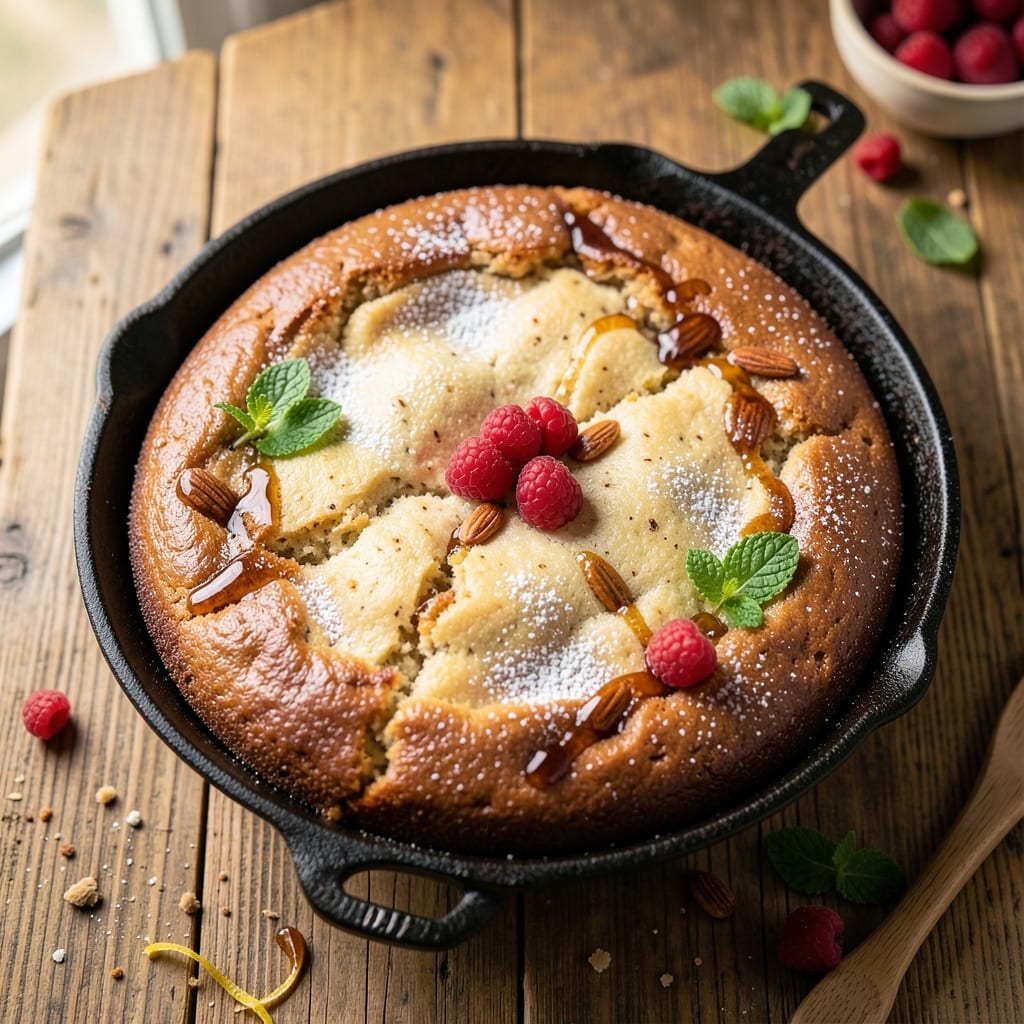
This almond skillet cake recipe delivers a perfect balance of toasted nut crunch and velvety vanilla warmth in every bite. The secret lies in blending almond flour with traditional flour for a moist yet sturdy texture, while toasted almonds add irresistible crunch. I developed this recipe after years of baking skillet cakes—this version stays golden on top while remaining tender inside, with just the right amount of sweetness to satisfy any craving.
The beauty of this recipe is its simplicity: just 10 ingredients and 30 minutes of active time, with most of the work done in the oven. The almond flour gives it a naturally nutty depth, while vanilla extract and a touch of cinnamon create that comforting vanilla-kissed flavor. Perfect for special occasions or a cozy weeknight treat, this cake serves 6-8 and comes together without fuss.
What makes this skillet cake truly special is how it transforms from a simple batter into a golden, aromatic masterpiece with crisp edges and a tender center. The toasted almonds on top add texture and visual appeal, while the vanilla-infused layers create a flavor profile that's both nostalgic and sophisticated. It's the kind of dessert that feels indulgent but is actually easy to make.
Whether you're serving it warm with vanilla ice cream or letting it cool slightly for easier slicing, this almond skillet cake is sure to impress. The recipe also works well with variations—try adding chocolate chips for extra richness or swapping in pecans for a different nutty twist. Let's get baking!
Ingredients for almond skillet cake
Nine ingredients blend almond richness with classic baking for a moist, golden skillet cake.
| Ingredient | Amount | Notes |
|---|---|---|
| Almond Flour 🥜 | 1 ½ cups | Finely ground, blanched preferred |
| All-Purpose Flour 🌾 | ½ cup | For structural balance |
| Granulated Sugar 🍚 | 1 cup | Light brown sugar optional |
| Unsalted Butter 🧈 | ¾ cup | Cold, cubed for easier mixing |
| Large Eggs 🥚 | 2 whole | Room temperature preferred |
| Vanilla Extract 🍯 | 1 tbsp | Pure, high-quality preferred |
| Baking Powder 🧂 | 1 ½ tsp | Aluminum-free preferred |
| Ground Cinnamon 🌿 | ½ tsp | Freshly ground for best flavor |
| Salt 🧂 | ¼ tsp | Fine sea salt preferred |
| Whole Almonds 🥜 | ½ cup | Toasted, roughly chopped |
| Milk 🥛 | ¼ cup | Whole milk for richness |
The almond flour is the star here—Bob's Red Mill or King Arthur brands are my go-to for consistency. Toast your own almonds for the topping (toss whole almonds in a dry skillet over medium heat for 5-7 minutes until golden), but pre-toasted from the baking aisle works in a pinch. The butter should be cold when you measure it—scoop it straight from the fridge for perfect cubes. For the vanilla, Nielsen-Massey or McCormick Pure extract delivers that authentic depth. If you're using light brown sugar, pack it tightly into the measuring cup for accurate volume.
No almond flour? Substitute with 1.5 cups all-purpose flour plus 0.5 cup ground almonds, but texture will differ slightly. Short on butter? Vegetable oil at the same amount keeps it moist, though texture may be denser. The milk can be swapped for almond milk or oat milk, but whole milk gives the best crumb. For extra richness, replace half the milk with heavy cream. The baking powder is crucial—double-check it's fresh by mixing with water; if it bubbles, it's good. If your cinnamon tastes dull, toast it in a dry pan for 1 minute to wake up the flavor.
This batter keeps at room temperature for up to 24 hours if covered tightly—perfect for making ahead. The toasted almonds stay crisp for 3 days in an airtight container. For best results, bake the cake just before serving—it's best warm with vanilla ice cream. If you must reheat, warm slices in a 200°F oven for 5 minutes to restore that golden crunch. Leftovers? Store in the fridge for 3 days or freeze for 2 months—wrap tightly in plastic wrap.
Why You'll Love This Recipe
- One-Bowl Miracle: I swear by this recipe—just toss everything into a bowl, mix, and bake. No fancy techniques, no measuring cups cluttering your counter, and honestly? That’s all it takes.
- Nutty Sweet Magic: The almond flour gives it this perfect texture—tender crumb with just enough chew, while the butter and sugar create that golden, caramelized crust. It’s the kind of dessert that makes you pause mid-bite.
- Breakfast or Dessert: Serve it warm with a drizzle of honey for breakfast, or dust it with powdered sugar for a quick dessert. My kids even sneak bites when I’m not looking—(yes, even on a Tuesday night).
- Budget-Friendly Luxury: Almond flour can be pricey, but a little goes a long way here. The rest of the ingredients? Basic pantry staples. You get a restaurant-worthy treat without breaking the bank—plus, leftovers reheat beautifully.
Step-by-step instructions for almond skillet cake
This method delivers a perfectly balanced cake with a crispy edge and tender crumb every time.
Prepare the Dry Ingredients
In a medium bowl, whisk together the 1.5 cups almond flour and 0.5 cup all-purpose flour until evenly combined. This ensures no lumps remain, which could create dense pockets in your cake. Sift the mixture if you notice any clumps forming—this lightens the texture significantly.
Next, add the 1.5 teaspoons baking powder, 0.5 teaspoon ground cinnamon, and 0.25 teaspoon salt to the bowl. Whisk again until fully incorporated. The baking powder will help create that signature lift, while the cinnamon adds warmth that pairs beautifully with the almond flavor. Set this mixture aside for now—it's the foundation of your cake's structure.
Cream Butter and Sugar
In a separate large bowl, combine the 0.75 cup unsalted butter (cold, cubed) and 1 cup granulated sugar. Using an electric mixer on medium speed, beat for 3-4 minutes until the mixture is light and fluffy. You'll notice the butter pieces gradually emulsify with the sugar, creating a pale, airy texture. This step is crucial—it incorporates air that will help your cake rise properly.
I like to scrape down the sides of the bowl with a rubber spatula every minute or so to ensure even mixing. The butter should leave a slight ribbon when the beaters are lifted—this tells me it's properly creamed. If you're doing this by hand, be prepared for a good arm workout, but the result is worth it for that perfect texture.
Add Wet Ingredients and Mix
Add the 2 whole large eggs, one at a time, mixing well after each addition. Then stir in the 1 tablespoon vanilla extract and 0.25 cup milk. The mixture should be smooth and slightly thick, resembling a thick batter. If it looks too stiff, add 1 tablespoon milk at a time until it reaches a pourable consistency—this ensures even distribution when you pour it into the skillet.
With the mixer running on low speed, gradually add the dry ingredients to the wet mixture. Mix just until combined—you should still see some flour streaks. Overmixing develops gluten, which can make your cake tough. Stop mixing as soon as everything is incorporated. This is where the almond flour really shines, giving that delicate crumb texture we're after.
Fold in Toasted Almonds
In a small skillet, toast the 0.5 cup whole almonds over medium heat for 3-4 minutes, stirring constantly, until they're golden brown and fragrant. This adds that essential crunch and depth of flavor. Let them cool slightly, then fold them into the cake batter using a spatula. Be gentle—you don't want to deflate all the air you've worked so hard to incorporate.
The toasted almonds should be evenly distributed throughout the batter. You'll notice the batter becomes slightly thicker from their addition. This is normal and actually enhances the texture of the final cake. If you have any leftover toasted almonds, sprinkle them on top before baking for extra crunch.
Bake to Golden Perfection
Preheat your oven to 350°F. Lightly grease a 10-inch cast iron skillet or oven-safe skillet with butter or nonstick spray. Pour the batter into the prepared skillet and smooth the top with a spatula. The batter should fill the skillet about ¾ full—this allows room for rising.
Bake for 30-35 minutes, until the edges are golden brown and a toothpick inserted into the center comes out clean. The top should be slightly cracked, which indicates it's perfectly baked. If you notice the edges browning too quickly, tent the skillet with aluminum foil to prevent over-browning while the center finishes cooking.
Remove from the oven and let the cake cool in the skillet for 10 minutes. Then carefully invert it onto a serving plate. The warm, gooey center will be your reward for patience—this is where the almond skillet cake truly shines. Serve warm with a dusting of powdered sugar or a scoop of vanilla ice cream for the ultimate dessert experience.
Pro Tips For Making Almond Skillet Cake
- MEASURE FLOUR BY WEIGHT: I learned this the hard way—scooping almond flour with a cup leads to a dry, crumbly cake. Use a kitchen scale for the almond flour and all-purpose flour combo (typically 1:1 ratio in this recipe). The difference in density makes volume measurements unreliable, and your cake will thank you for the precision.
- WHISK EGGS AND SUGAR FIRST: Don’t just dump everything in the bowl and mix. Whisk the eggs and sugar together until the mixture lightens slightly—about 2-3 minutes—before adding the melted butter. This step incorporates air, which is non-negotiable for a tender, fluffy crumb. (Yes, even if you’re impatient like me.)
- BAKE UNTIL THE EDGE SPRINGS BACK: The cake will look set before it’s actually done. Press the center gently with a finger—if it springs back slowly, keep baking. If it leaves a dent, it’s overdone. Almond flour cakes dry out fast, so pull it out when the edges pull away from the pan but the middle still has a slight give.
- USE ROOM-TEMP BUTTER: Cold butter creates pockets of steam that can make your cake dense. Let the butter sit out for 30 minutes before melting it—just until it’s soft enough to press with your finger. This ensures even distribution and a lighter texture. (I skip this when I’m lazy, but the difference is noticeable.)
Make-ahead tips for almond skillet cake
Batter Prep Ahead
Mix your batter up to 24 hours in advance and store it in an airtight container in the fridge. When ready to bake, let it sit at room temperature for 30 minutes before pouring into your skillet. This prevents condensation issues and ensures even baking. I always double-check the batter consistency—it should be thick but still pourable like heavy cream. 🥛
Toast Almonds Early
Toast your 0.5 cup whole almonds the night before and store them in a sealed jar at room temperature. This saves time on baking day and intensifies their flavor. For extra crunch, lightly toast fresh almonds right before folding them into the batter—just 2 minutes in a dry skillet over medium heat. The aroma alone makes my kitchen feel like a bakery. 🥜
Skillet Prep Shortcut
Use a nonstick spray like Pam or lightly brush your 10-inch cast iron skillet with melted butter the day before. Store it covered until ready to use. This prevents sticking and gives that signature golden crust. I always preheat my oven to 350°F while the skillet heats up—this ensures even baking from the moment the batter hits the pan. ⏰
Make-Ahead Baking
Bake the cake up to 1 day ahead and store it at room temperature wrapped in plastic wrap. For longer storage, refrigerate for up to 3 days or freeze for 2 months. To reheat, warm slices in a 200°F oven for 5 minutes—this restores the golden crunch without drying it out. The flavors actually deepen overnight, making it perfect for meal prep. 💫
Portioning for Servings
Use a serrated knife to cut the warm cake into 6 equal wedges while it's still in the skillet. This makes serving clean slices easier. For parties, assemble individual portions in ramekins with a scoop of ice cream—guests will love the handheld presentation. I always label leftovers with the date to track freshness. ✨
Freezer-Friendly Tips
Slice the cooled cake and wrap each portion tightly in plastic wrap, then place slices in a freezer bag. Thaw at room temperature for 1 hour before serving. The texture remains moist, though the almonds may lose some crunch. For extra indulgence, sprinkle powdered sugar on top before freezing—it adds a sweet surprise when thawed. ❄️
Nutrition facts
Frequently asked questions
Can I make this almond skillet cake without almond flour?
Yes! Substitute with 1.5 cups all-purpose flour plus 0.5 cup ground almonds, though the texture will be slightly denser. For best results, toast the ground almonds first to enhance flavor. The cake will still be delicious but may lack the delicate crumb of almond flour.
Why did my cake sink in the middle?
This usually happens from overmixing the batter or opening the oven too soon. Mix just until combined (you should still see flour streaks), and avoid opening the oven door during the first 20 minutes of baking. If the cake sinks slightly but still has a warm center, it's likely just underbaked—return it to the oven for 5-10 more minutes.
How do I make this recipe gluten-free?
Replace the 0.5 cup all-purpose flour with 0.5 cup gluten-free 1:1 baking flour (like Bob's Red Mill). For the almond flour portion, ensure it's certified gluten-free. You may need to add 0.25 tsp xanthan gum to improve structure. Test your gluten-free flour blend first to ensure proper rising.
Can I use a different skillet size?
For best results, stick to a 10-inch skillet—this gives the perfect rise and texture. If you must use a different size, adjust baking time: smaller skillets (8-inch) may need 25-30 minutes, while larger ones (12-inch) could take 35-40 minutes. Always check doneness with a toothpick. The cake should be golden around the edges and springy in the center.
What's the best way to serve this cake?
Serve warm with a scoop of vanilla ice cream or a dusting of powdered sugar for a classic presentation. For extra flair, drizzle with warmed honey or caramel sauce. The cake's warm, gooey center pairs beautifully with cold ice cream, creating a perfect temperature contrast.