
Desserts
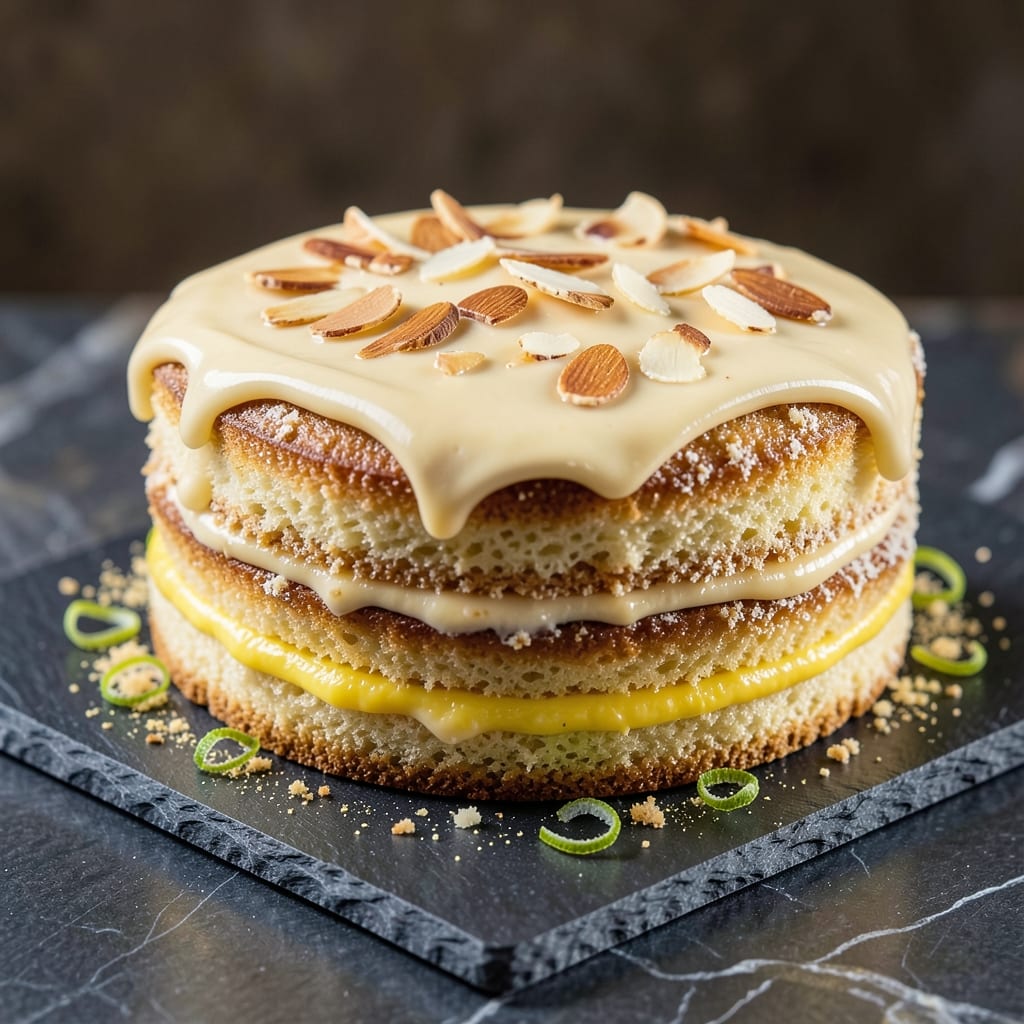
This amandine cake recipe delivers layers of delicate almond-infused sponge, topped with a citrus-kissed glaze that balances sweetness and brightness. The secret lies in finely ground almonds folded into the batter, creating a tender yet sturdy texture with subtle nutty depth. Every slice reveals a perfect harmony of flavors—where the almond essence meets the zesty finish of lemon or orange zest.
The recipe begins with a simple yet precise sponge base, where butter and sugar create a light foundation before eggs and flour are gently incorporated. Ground almonds add moisture and richness, while citrus zest infuses the batter with a refreshing aroma. Baking at a moderate temperature ensures even layers that stay moist without becoming dense.
What sets this cake apart is the citrus-kissed top, a glossy glaze made with powdered sugar, lemon juice, and a touch of almond extract. This topping not only enhances the visual appeal with its golden sheen but also adds a bright contrast to the nutty layers below. The result is a dessert that feels both elegant and approachable—ideal for special occasions or a sophisticated treat.
For an extra touch of sophistication, you can garnish with toasted almond slices or a dusting of powdered sugar. This cake pairs beautifully with a cup of Earl Grey tea or a glass of sparkling wine, making it perfect for afternoon gatherings or celebratory moments. Let's bring this almond-infused masterpiece to life.
Ingredients for amandine cake
These carefully measured ingredients create the signature almond-citrus harmony in every slice.
| Ingredient | Amount | Notes |
|---|---|---|
| Unsalted Butter 🧈 | 1 cup | Room temperature, softened |
| Granulated Sugar 🍚 | 1 ½ cups | Superfine preferred for smoothness |
| Large Eggs 🥚 | 4 whole | Room temperature, separated |
| All-Purpose Flour 🌾 | 1 ½ cups | Sifted, spooned lightly |
| Ground Almonds 🥜 | 1 cup | Finely ground, not almond flour |
| Lemon Zest 🍋 | 1 tbsp | From 1 large organic lemon |
| Orange Zest 🍊 | 1 tbsp | From 1 large organic orange |
| Vanilla Extract 🌸 | 1 tsp | Pure Madagascar preferred |
| Powdered Sugar 🍚 | 2 cups | For glaze, sifted |
| Fresh Lemon Juice 🍋 | 2 tbsp | From same lemon as zest |
| Almond Extract 🥜 | ½ tsp | Pure, not imitation |
| Toasted Sliced Almonds 🥜 | ½ cup | For garnish, lightly toasted |
| Salt 🧂 | ½ tsp | Fine sea salt |
| Baking Powder 🍞 | 1 tsp | Aluminum-free preferred |
The ground almonds are non-negotiable for that signature texture. Bob's Red Mill makes excellent finely ground almonds if you can't grind your own, but avoid almond flour—it's too coarse. For the citrus zest, organic lemons and oranges from the produce section have the most vibrant flavor. The butter should be room temperature—press it gently to test. If it leaves a dent, it's ready. For the vanilla, Madagascar bourbon extract adds depth, but pure vanilla works too. The powdered sugar for the glaze needs to be sifted to avoid lumps—trust me on this.
No almond extract? Vanilla bean paste at double the amount works surprisingly well. Running short on powdered sugar? Confectioners' sugar from the bulk bins is usually cheaper and just as fine. The ground almonds can be swapped for finely chopped marcona almonds if you're feeling fancy, but they'll need to be pulsed in a food processor first. For the citrus, lime zest adds a tangy twist if you want to experiment. The baking powder should be fresh—if it's more than 6 months old, the rise will suffer. Store it in an airtight container away from moisture.
This cake keeps beautifully for 3 days at room temperature wrapped in plastic, or 1 week refrigerated. For longer storage, freeze the layers separately for up to 3 months. The glaze can be made a day ahead—just whisk it up when you're ready to assemble. The toasted almonds for garnish? Toast them fresh before serving—they lose their crunch if stored too long. Serve at room temperature for the best texture, and always dust with powdered sugar right before slicing.
Why You'll Love This Recipe
- I’ll be real: it uses pantry staples, but the ground almonds make it feel special without breaking the bank. A single batch feeds 8-10, so leftovers last days—slice it cold for breakfast toast or warm it up for a lazy afternoon pick-me-up.
- No-Fuss Mixing: I swear by this recipe because it’s the kind of cake that doesn’t demand perfection—just a bowl, a whisk, and 10 minutes of your time. The ground almonds blend right into the batter, so no sifting or extra steps, and the butter-egg combo makes it light without being fussy.
- Buttery Almond Magic: That first bite? The toasted almond flavor from the ground almonds paired with rich, creamy butter is ridiculously good. It’s like a cross between a classic pound cake and a nutty, cozy hug—no frosting needed.
- Weeknight or Weekend Star: Between us, this cake is my go-to for any gathering—birthday desserts, book club treats, or just because. Cut into squares, and it’s the perfect size for sharing (or sneaking extra pieces). Honestly, it’s the kind of dessert that makes you look like a baking pro with zero effort.
Step-by-step instructions for almond-infused cake layers
Here's how to create a perfectly moist, citrus-infused cake with rich almond flavor and a delicate crumb.
Cream Butter and Sugars to Light and Fluffy
In a stand mixer fitted with the paddle attachment, beat the 1 cup unsalted butter and 1.5 cups granulated sugar on medium speed for 3-4 minutes. You're looking for a pale, fluffy mixture that nearly doubles in volume—this incorporates air that will create a light texture. I press down on the butter occasionally to ensure it's fully incorporated and smooth.
Stop the mixer and scrape down the sides of the bowl with a spatula to make sure everything is evenly combined. This step is crucial for achieving that tender, melt-in-your-mouth crumb. If the mixture feels too thick, let it sit at room temperature for 5 minutes before proceeding—this helps with the next step.
Add Eggs and Zests Gradually
Add the 4 whole large eggs, one at a time, mixing on low speed after each addition until fully incorporated. This prevents the eggs from scrambling in the hot butter mixture. After all eggs are added, mix in the 1 tbsp lemon zest, 1 tbsp orange zest, and 1 tsp vanilla extract on low speed for 30 seconds until just combined.
The citrus zests add a bright, aromatic layer that balances the richness of the almonds. I always use fresh zests from organic lemons and oranges—they're more vibrant than dried versions. If you notice any lumps of zest, gently press them against the side of the bowl with a spatula to break them up.
Combine Dry Ingredients and Ground Almonds
In a separate bowl, whisk together the 1.5 cups all-purpose flour, 1 cup ground almonds, 1 tsp baking powder, and 0.5 tsp salt. Sift the flour and baking powder together first, then fold in the ground almonds and salt. This ensures even distribution and prevents clumping.
With the mixer on low speed, gradually add the dry ingredients to the butter mixture in three additions, mixing just until combined after each. Be careful not to overmix—you should still see some flour streaks. The ground almonds add moisture and richness, but too much mixing develops gluten, which makes the cake tough.
Bake Layers to Golden Perfection
Divide the batter evenly between two 8-inch round cake pans lined with parchment paper. I use a kitchen scale for precision—each pan should have about 12 ounces of batter. Bake in a preheated 350°F oven for 25-30 minutes, or until a toothpick inserted in the center comes out clean with a few moist crumbs clinging to it.
Don't overbake—the cake should be golden on top but still slightly springy to the touch. If the tops brown too quickly, tent the pans with foil after 15 minutes. Let the cakes cool in the pans for 10 minutes, then transfer to a wire rack to cool completely before assembling. This prevents them from collapsing when you add the filling.
Assemble and Glaze with Citrus-Almond Shine
While the cakes cool, prepare the glaze by whisking together the 2 cups powdered sugar, 2 tbsp fresh lemon juice, and 0.5 tsp almond extract until smooth. The glaze should be thick but pourable—add 1-2 teaspoons of water if needed to reach the right consistency. Spread an even layer between the cake layers and over the top.
Gently press the 0.5 cup toasted sliced almonds onto the top layer for decoration. I like to arrange them in a circular pattern around the edges for visual appeal. Let the glaze set for 15 minutes before slicing—this gives it time to firm up slightly. Serve at room temperature for the best texture and flavor balance.
Pro Tips For Making Amandine Cake
- Toast the Almonds: DESCRIPTION: I learned this the hard way—raw ground almonds taste bitter and dull. Toast them in a dry pan over medium heat for 3-4 minutes until golden and fragrant, stirring constantly. The nutty aroma alone makes the cake taste richer, and it prevents that chalky aftertaste.
- Cream Butter Slowly: DESCRIPTION: Don’t rush the butter-sugar mix—let it sit at room temp for 30 minutes first, then beat on medium for 2 minutes before cranking to high. I used to blast it right away, and the eggs would curdle faster, leaving a dense, gummy cake. Patience here guarantees fluff.
- Sift the Flour Twice: DESCRIPTION: Skip this, and you’ll end up with a cake that’s tougher than it should be. Sift the flour and the ground almonds together into the butter mixture—it aerates the batter and prevents lumps. Yes, it’s extra work, but the texture difference is noticeable.
- Underbake Slightly: DESCRIPTION: The cake will look set before it is—pull it out when the center still jiggles very gently (like a wobbly Jell-O). Almond cakes dry out fast, and overbaking turns them into a sad, crumbly brick. Let it cool in the pan for 10 minutes, then finish cooling on a rack.
Common mistakes when making your amandine cake
Overmixing the Batter
This is the #1 mistake I see with almond-infused cakes—the temptation to mix until everything disappears completely. The moment you stop seeing any flour streaks (about 20-30 seconds after combining), stop mixing. Overmixing develops gluten, which creates a tough, chewy texture instead of that delicate almond sponge we want. I promise you, a few flour streaks won't ruin your cake—they'll disappear during baking. 🧈
Skipping Room Temperature Ingredients
Cold butter or straight-from-the-fridge eggs will create pockets of steam in your batter, leading to uneven baking and potential cracks. Let your butter sit out for 1-2 hours until it's soft but not melted (press your finger gently—it should leave a slight indent). Eggs should be at room temperature too, so pop them in a bowl of warm water for 10 minutes if you're in a hurry. Trust me, this small step makes a huge difference in texture.
Incorrect Baking Time/Temperature
Baking at 350°F is critical—any hotter and the outside burns before the center sets, any cooler and the cake won't rise properly. The 25-30 minute window is tight, so start checking with a toothpick at 22 minutes. If your oven runs hot, reduce temp to 325°F and add 5 minutes to baking time. I've ruined cakes by ignoring the toothpick test—always check for clean (or slightly crumbly) results before pulling them out.
Neglecting the Cooling Phase
Rushing to assemble your cake while it's still warm is a recipe for disaster—your layers will collapse under the weight of the glaze. Let cakes cool in pans for 10 minutes, then transfer to a wire rack to cool completely (about 1 hour). This patience ensures clean slices and proper layer adhesion. I've learned this the hard way after glaze drips pooled on my countertop from a cake that was too warm!
Glaze Consistency Issues
The glaze should be thick enough to coat the back of a spoon but still pourable—like heavy cream. If it's too runny, your cake will get soggy; if too stiff, it won't spread evenly. Start with 2 cups powdered sugar and add 1 tsp water at a time until you reach that perfect consistency. I keep a small bowl of water nearby while making the glaze—it's the easiest way to adjust on the fly. A good glaze should set slightly after 15 minutes but still be glossy.
Using Wrong Almond Texture
This is a game-changer: ground almonds (not almond flour) are essential for that signature texture. Almond flour is too coarse and will create a gritty, uneven crumb. If you only have whole almonds, pulse them in a food processor until they're finely ground but not paste-like. I've tested both, and the difference is night and day. For best results, use Bob's Red Mill finely ground almonds—they're consistently high-quality and easy to find.
Nutrition facts
Frequently asked questions
Can I make this amandine cake without ground almonds?
The ground almonds are key for that signature texture, but you can substitute with 1 cup finely chopped toasted marcona almonds (pulsed in a food processor) or 1 cup almond flour if ground almonds aren't available. Just know almond flour may make the cake slightly denser. For best results, stick with finely ground almonds—they create that perfect moist yet tender crumb.
How do I prevent my cake layers from cracking?
Cracking usually happens when the cake cools too quickly or the glaze is applied too soon. Let your layers cool completely in the pans for 10 minutes, then transfer to a wire rack to cool for 1 hour before assembling. Also, make sure your glaze is at room temperature before spreading—cold glaze can cause stress on warm cake layers. Patience here pays off!
Can I use this recipe for a single-layer cake?
For a single-layer cake, use the full batter in one 9-inch round pan (about 24 ounces of batter). Bake for 30-35 minutes at 350°F until a toothpick comes out clean. The baking time may increase slightly since there's more volume to cook through. Just monitor closely after 25 minutes to avoid overbaking.
What's the best way to store leftover amandine cake?
This cake keeps beautifully for 3 days at room temperature wrapped tightly in plastic wrap, or 1 week refrigerated. For longer storage, freeze the layers separately (without glaze) for up to 3 months. To refresh, let it sit at room temperature for 30 minutes before serving. The glaze can be added fresh when you're ready to enjoy it again.
Can I add chocolate to this recipe?
You can absolutely incorporate chocolate! Try adding 0.5 cup melted dark chocolate (60% cocoa) to the butter-sugar mixture at the beginning, or fold in 0.5 cup chocolate chips with the dry ingredients. For a marbled effect, divide the batter, tint half with melted chocolate, then swirl them together before baking. The chocolate pairs beautifully with the citrus-almond flavors!