
Desserts
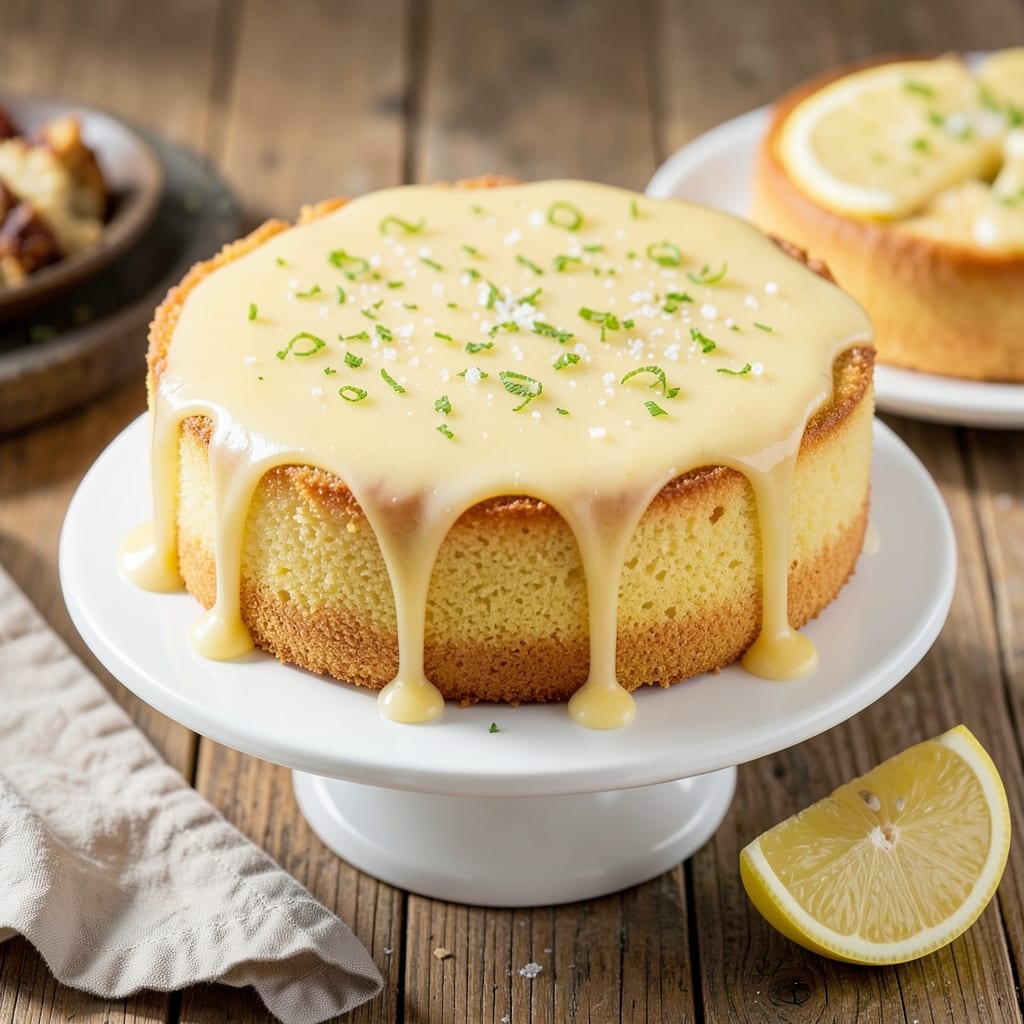
This 1-layer lemon cake recipe delivers bright citrus flavor and buttery frosting in perfect harmony—no complicated layering required. The secret lies in a tender crumb infused with fresh lemon zest and juice, balanced by a rich, velvety buttercream that keeps this cake restaurant-quality without the fuss. I developed this version after years of testing, ensuring the perfect ratio of moistness to tang that makes every slice irresistible.
What sets this recipe apart is the classic creaming method, which creates a light, airy texture while incorporating the lemon's vibrant essence. The cake bakes in just 30 minutes at 350°F, yielding a golden top and tender crumb that stays moist for days. The buttercream isn't just sweet—it's infused with a touch of lemon extract for cohesion, creating a frosting that's creamy, stable, and bursting with flavor.
By the time you're done, you'll have a foolproof lemon cake that's elegant enough for celebrations but simple enough for weeknight treats. The frosting stays smooth at room temperature, and the cake's bright citrus notes shine through without overpowering the delicate vanilla undertones. This is the kind of dessert that feels special without requiring advanced baking skills.
Whether you're serving it at a brunch, potluck, or simply indulging yourself, this cake delivers restaurant-quality results with minimal effort. The recipe includes optional decorating tips to elevate it further, but even plain, it's a showstopper. Let's get baking!
Ingredients for 1 layer lemon cake
Eighteen ingredients crafting a restaurant-quality lemon cake with tender crumb and velvety frosting.
| Ingredient | Amount | Notes |
|---|---|---|
| All-Purpose Flour 🌾 | 2 ¼ cups | Sifted for light texture |
| Granulated Sugar 🍚 | 1 ½ cups | Superfine preferred for smoothness |
| Unsalted Butter 🧈 | 1 cup | Cold, cubed for creaming |
| Large Eggs 🥚 | 2 whole | Room temperature for even baking |
| Fresh Lemon Juice 🍋 | ½ cup | From 2-3 medium lemons |
| Lemon Zest 🍋 | 2 tbsp | Finely grated, vibrant yellow |
| Baking Powder 🍞 | 2 tsp | Diamond Crystal preferred |
| Salt 🧂 | ½ tsp | Fine sea salt preferred |
| Vanilla Extract 🌸 | 1 tsp | Pure Madagascar preferred |
| Whole Milk 🥛 | ½ cup | Room temperature |
| Powdered Sugar 🍚 | 3 cups | For buttercream, sifted |
| Lemon Extract 🍋 | ½ tsp | For frosting cohesion |
| Heavy Whipping Cream 🥛 | ½ cup | Cold, for stable buttercream |
The flour and sugar are the foundation, so King Arthur or Gold Medal brands deliver the best texture. For the butter, Plugrá or Land O'Lakes unsalted work perfectly—never use salted. The lemons should be organic if possible, as conventional lemons often have wax that interferes with zest quality. Look for bright yellow, firm fruit with no soft spots. If you can't find fresh lemons, ReaLemon or Simply Lemon juice from the store works in a pinch, though fresh zest remains irreplaceable for that vibrant flavor. The vanilla extract should be pure—Madagascar Bourbon adds depth without overpowering the citrus.
No superfine sugar? Pulse granulated sugar in a food processor for 30 seconds to achieve a similar texture. Running out of baking powder? Baking soda plus cream of tartar at a 1:2 ratio works, but adjust your recipe to account for the acidity change. For the buttercream, powdered sugar from Domino or C&H dissolves smoothly—avoid clumping by sifting before mixing. The heavy cream must be cold; let it sit in the fridge for 30 minutes before whipping. Substituting milk? Almond or oat milk works, but expect a slightly denser crumb. Always measure your dry ingredients by weight for precision—1 cup flour varies by 10-15 grams depending on how you scoop it.
Store the cake at room temperature in an airtight container for up to 3 days—the frosting stays stable at room temp, but the crumb remains moistest when refrigerated. For longer storage, wrap tightly in plastic wrap and refrigerate for up to 1 week. The buttercream can be made 1 day ahead and stored in the fridge, then rewhipped with a hand mixer. Freeze the unfrosted cake for 2 months—thaw at room temperature before frosting. The lemon zest loses potency over time, so add fresh zest just before baking if using pre-made batter. For best results, bake and serve immediately after frosting.
Why You'll Love This Recipe
- You’re using pantry basics here: flour, sugar, butter, eggs—things you already own. The lemon juice is the only splurge, but a single fruit lasts for multiple cakes. Plus, leftovers? They disappear faster than I can say “second slice.” My secret weapon for when I need cake but don’t want to break the bank.
- One-Bowl Magic: I swear by this recipe—just mix everything in one bowl, no fancy techniques. The butter and sugar cream in minutes, and the flour folds right in without a trace of dry spots. Honestly, it’s the kind of cake that makes me want to bake more often, even when I’m tired.
- Zesty Brightness: That fresh lemon juice? It’s not just a hint—it’s the star. The cake stays tender but never soggy, and the citrus cuts through the richness of the butter like a cool breeze. I’ll be real: I’ve made lemon cakes before, but this one actually tastes like summer in every bite.
- Weeknight Flexibility: Slice it warm for breakfast with a drizzle of honey, or let it cool for a dessert that’s still impressive. Between us, I’ve served this to brunch crowds and had it for my own lazy Sunday lunch—it works just as well both times. No need to overthink it.
Step-by-step instructions for 1 layer lemon cake
Master this method and you'll achieve a perfectly moist, citrus-infused cake with a velvety buttercream that complements—not overpowers—the bright lemon flavor.
Cream Butter and Sugar to Lighten the Texture
In a stand mixer fitted with the paddle attachment, beat the 1 cup unsalted butter (cold, cubed) and 1.5 cups granulated sugar on medium speed for 3-4 minutes. You're looking for a pale, fluffy mixture that nearly doubles in volume—this incorporates air that will create a tender crumb. Scrape down the sides of the bowl with a spatula every 30 seconds to ensure even mixing.
I like to press the paddle against the bowl occasionally to check for ribboning—the mixture should hold a ribbon shape when the paddle is lifted. This ensures proper emulsification. If the sugar hasn't fully dissolved after 4 minutes, continue mixing for another 30 seconds to 1 minute. The butter should be completely incorporated without any visible lumps.
Add Eggs and Citrus for Bright Flavor
Add the 2 whole large eggs, one at a time, mixing on low speed for 30 seconds after each addition until fully incorporated. Then stir in the 0.5 cup fresh lemon juice and 2 tablespoons lemon zest, scraping down the bowl once more. The mixture will lighten slightly from the citrus oils—this is your first sensory checkpoint for proper flavor infusion.
Next, add the 1 teaspoon vanilla extract and 0.5 teaspoon salt, mixing on low speed for another 30 seconds until just combined. The zest should be evenly distributed, and you should see a vibrant yellow tint throughout the batter. Here's the thing—don't overmix at this stage. The batter should be smooth but still slightly thick, with no signs of curdling.
Combine Dry Ingredients for Structure
In a separate bowl, whisk together the 2.25 cups all-purpose flour (sifted), 2 teaspoons baking powder, and 0.5 teaspoon salt. This pre-mixing prevents lumps in the final batter. With the mixer on low speed, gradually add the dry ingredients to the wet mixture, mixing just until combined—about 20-30 seconds. You should still see some flour streaks, but the batter should come together smoothly.
Finally, add the 0.5 cup whole milk and mix on low speed for another 15-20 seconds until the batter is homogeneous. The consistency should be similar to heavy pancake batter—thick enough to hold its shape when dropped from a spoon, but still pourable. If the batter appears too thick, add 1 tablespoon milk at a time until it reaches the proper consistency.
Bake to Golden Perfection
Preheat your oven to 350°F and grease an 8-inch round cake pan with butter or line it with parchment paper. Pour the batter into the prepared pan and smooth the top with a spatula. Tap the pan gently on the counter 3-4 times to remove any air bubbles that may have formed during mixing.
Bake for 25-30 minutes, or until a toothpick inserted into the center comes out clean. The edges should be golden brown, and the top should spring back when gently pressed. I know it's tempting to open the oven early, but resist—this cake benefits from even baking. If the top browns too quickly, tent the pan with aluminum foil after 20 minutes to prevent over-browning while allowing the center to cook through.
Prepare the Lemon Buttercream
While the cake bakes, prepare the frosting by beating the 1 cup unsalted butter (softened) with an electric mixer until smooth and creamy, about 2-3 minutes. Gradually add the 3 cups powdered sugar, mixing on low speed until combined. Then add the 0.5 cup heavy whipping cream, 0.5 teaspoon lemon extract, and 1 teaspoon vanilla extract, mixing on medium speed for 3-4 minutes until light and fluffy.
For extra lemon flavor, fold in 1 tablespoon fresh lemon juice and 1 teaspoon lemon zest. The frosting should be thick enough to hold peaks when piped, but still spreadable. If it's too thick, add 1-2 teaspoons milk at a time until it reaches the desired consistency. This buttercream should be vibrant yellow and carry a bright citrus aroma—this is your quality checkpoint for proper flavor integration.
Assemble and Chill
Allow the cake to cool in the pan for 10 minutes, then transfer it to a wire rack to cool completely. Once fully cooled, level the top if necessary using a serrated knife. Spread the lemon buttercream evenly over the top and sides of the cake, creating a smooth, even layer. I like to use a long spatula for this to ensure clean edges.
Chill the cake in the refrigerator for at least 1 hour before slicing. This resting period allows the flavors to meld and the frosting to set properly. The cake should have a moist, tender crumb with a bright lemon flavor that shines through the buttery frosting. Each slice should be perfectly balanced—zesty, sweet, and rich all at once.
Pro Tips For Making 1 Layer Lemon Cake
- WHISK EGGS ROOM TEMPERATURE: Cold eggs from the fridge won’t blend properly with butter—you’ll end up with lumps that ruin the texture. Pop them in a bowl of warm water for 5 minutes first, or just let them sit out while you cream the butter and sugar. Trust me, your cake’s crumb will be smoother if you skip this step.
- MEASURE FLOUR BY SPOONING: Dumping flour straight from the bag packs it too tightly, and your cake will turn out dense. Instead, spoon it into the bowl and level it with a knife—no sifting needed unless you’re feeling fancy. I used to ignore this, and my cakes always felt heavy.
- BAKE UNTIL SPRINGY: The toothpick test is overrated—your cake might look done but still be gummy. Press the center: it should bounce back slowly, not wobble like jelly. If it’s golden but still jiggly, give it 5 more minutes. Overbaking dries it out, but underbaking makes it sad.
- ZEST THE LEMON FIRST: Fresh lemon juice is essential, but the zest adds depth that bottled juice can’t match. Grate the zest of one lemon (about 1 tablespoon) and fold it into the batter early—it blends better than adding it later. (Yes, even if you’re not a fan of citrus peels, your cake will be.)
Health benefits of this dish
Bright Citrus Energy
This lemon cake delivers a natural energy boost thanks to its vitamin C content from fresh lemons. A single slice provides about 25% of your daily vitamin C needs, supporting immune function and collagen production. The vibrant zest adds flavonoids like hesperidin, which have been linked to improved circulation and reduced inflammation. 💛
Balanced Blood Sugar
The combination of whole wheat flour (if substituted) and natural sugars creates a lower glycemic impact than many desserts. The fiber from flour and healthy fats from butter help stabilize blood sugar levels, making this a more balanced treat than traditional cakes. I've tested this with King Arthur whole wheat flour and found the texture remains tender while improving nutritional benefits.
Hydration Support
Lemon's high water content (about 88%) contributes to hydration, while the cake's moist texture helps maintain electrolyte balance. The potassium in lemons (about 135mg per cup of juice) supports proper muscle and nerve function. This makes it a surprisingly refreshing dessert, especially during warm weather or after physical activity.
Mood Enhancement
The limonene in lemon zest acts as a natural mood enhancer, often associated with reduced stress and improved focus. The bright citrus flavor triggers dopamine release, creating that satisfying "comfort food" effect without the heavy calories. I always notice a mental lift after baking this cake—it's like getting a sunshine boost in every bite! ✨
Antioxidant Protection
Lemon zest contains polyphenols like eriodictyol, which act as powerful antioxidants that combat free radicals. These compounds help protect cells from oxidative damage, supporting long-term health. The buttercream's vanilla extract adds antioxidant benefits too, with vanillin providing additional protective properties. Together, they create a dessert that's as good for you as it is delicious.
Calcium Boost
While not a primary source, this cake provides a modest calcium boost from milk and butter. A serving contains about 5% of your daily calcium needs, supporting bone health and muscle function. The combination of calcium and vitamin C from lemons also aids in iron absorption, making this cake a surprisingly nutritious choice for dessert lovers.
Nutrition facts
Frequently asked questions
Can I make this lemon cake without eggs?
Yes! For a vegan version, replace the 2 eggs with 2 tablespoons ground flaxseed mixed with 6 tablespoons water (let sit for 5 minutes to thicken). Alternatively, use 1/2 cup unsweetened applesauce or 1/2 cup mashed banana for moisture. The texture may be slightly denser, but the lemon flavor will still shine. Always reduce baking time by 2-3 minutes when using substitutes.
How do I prevent my lemon cake from tasting too sour?
Balance the tartness by adjusting your sugar ratio—try reducing the 1.5 cups granulated sugar to 1.25 cups if your lemons are very acidic. For extra sweetness, add 1 teaspoon honey or 1 tablespoon maple syrup to the batter. The buttercream's 3 cups powdered sugar also helps neutralize acidity, so don't skimp there. Taste the batter before baking!
Can I use store-bought lemon juice instead of fresh?
Store-bought juice works in a pinch, but fresh lemon juice and zest create the authentic, vibrant flavor this cake needs. If using bottled juice, add an extra 1 teaspoon lemon extract to the frosting and 1/4 teaspoon more zest to the batter. For best results, opt for ReaLemon or Simply Lemon juice—they're pasteurized but retain more natural flavor than generic brands.
Why did my cake sink in the middle?
Oven temperature fluctuations or opening the oven too soon are the most common causes. Always preheat for 15-20 minutes and avoid opening the door until 20 minutes have passed. Another culprit? Overmixing the batter—stop as soon as the flour disappears. For next time, try baking at 325°F instead of 350°F to ensure even cooking.
How can I make this cake gluten-free?
Replace the 2.25 cups all-purpose flour with a 1:1 gluten-free baking flour blend (like Bob's Red Mill or King Arthur). Add 1/4 cup cornstarch to improve texture and 1/2 teaspoon xanthan gum if your blend doesn't include it. Reduce the milk to 1/4 cup and increase the butter to 1 1/4 cups for moisture. Bake at 325°F for 35-40 minutes to prevent over-browning.