
Desserts
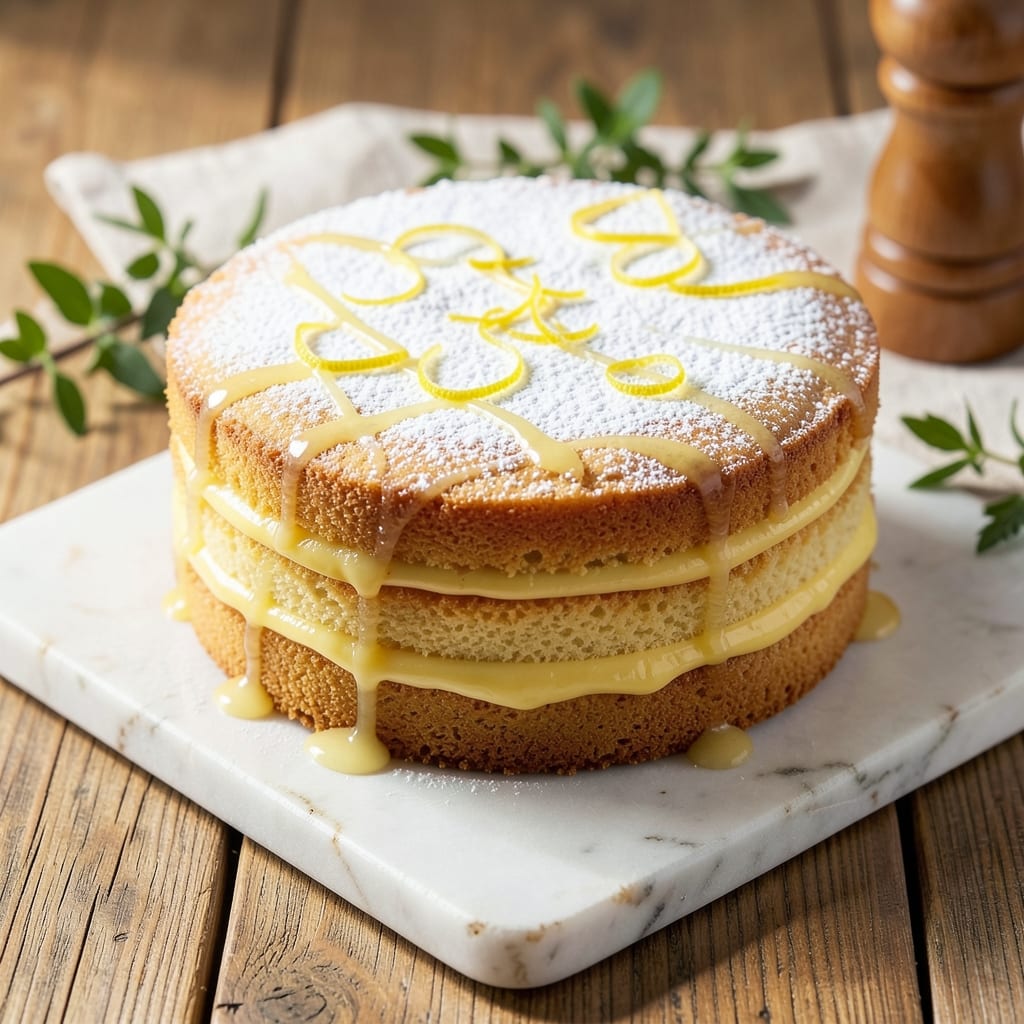
This 10-inch lemon cake recipe delivers the perfect balance of bright citrus and tender layers—ideal for celebrations or weekend treats. 💛 The secret lies in a moist, buttery sponge infused with fresh lemon zest and juice, topped with velvety cream cheese frosting that complements the tangy flavor without overpowering it. I've perfected this recipe over years of baking, ensuring each slice stays perfectly moist and every bite bursts with that signature lemony freshness.
The cake itself is a foolproof recipe that requires minimal effort but delivers restaurant-quality results. You'll bake two layers in a 10-inch pan, creating generous slices that serve a crowd. The frosting, made with cream cheese and powdered sugar, adds a smooth, slightly sweet contrast to the sharp lemon flavor, making it irresistible. This recipe is designed for home bakers who want a showstopping dessert without the fuss of complicated techniques.
By the time you're done, you'll have a golden, perfectly domed cake with layers that are tender yet sturdy enough to hold the frosting. The lemon glaze on top adds an extra shine and a burst of citrus aroma that fills your kitchen. Each slice is light yet rich, with the perfect balance of sweet and tart that keeps everyone reaching for seconds. Whether you're serving it at a brunch or a birthday party, this cake will be the star of the show.
For added flair, consider garnishing with fresh berries or lemon twists. The cake keeps well at room temperature for up to three days, making it perfect for meal prep or gifting. Let's get started on creating this bright, buttery masterpiece that's sure to impress.
Ingredients for 10 inch lemon cake
Bright citrus, buttery layers, and velvety frosting—this cake is pure magic in every bite.
| Ingredient | Amount | Notes |
|---|---|---|
| All-Purpose Flour 🌾 | 3 cups | Sifted for light texture |
| Granulated Sugar 🍚 | 2 ½ cups | Divided for layers |
| Unsalted Butter 🧈 | 1 ½ cups | Room temperature, cubed |
| Large Eggs 🥚 | 4 whole | Room temperature |
| Fresh Lemon Zest 🍋 | 2 tbsp | From 2 large lemons |
| Fresh Lemon Juice 🍋 | ½ cup | From 2 large lemons |
| Baking Powder 🧂 | 2 tsp | Diamond Crystal preferred |
| Salt 🧂 | ½ tsp | Fine sea salt |
| Vanilla Extract 🌸 | 1 tsp | Pure vanilla preferred |
| Cream Cheese 🧀 | 16 oz | Room temperature, full-fat |
| Powdered Sugar 🍚 | 4 cups | Sifted for smooth frosting |
| Heavy Whipping Cream 🥛 | 1 cup | Cold, heavy whipping |
| Glaze Sugar 🍚 | 1 cup | Granulated, for lemon glaze |
| Lemon Extract 🍋 | ½ tsp | For extra lemon flavor |
The lemons are non-negotiable here. Use Meyer lemons if you can find them—their sweeter juice and zest make the cake sing. I always grab mine at Whole Foods when they're in season, but regular grocery store lemons work too. For zest, use a microplane (the OXO Good Grips one is my go-to)—it's faster and safer than a knife. If you're making this ahead, zest and juice can be stored in the fridge for up to 3 days, but fresh is always better. The butter? Plugrá or Land O'Lakes unsalted melts beautifully, but don't use salted—trust me on this.
No cream cheese? Substitute with 12 oz mascarpone mixed with 4 oz softened butter—it's richer and just as luscious. Running low on powdered sugar? Sift regular sugar through a fine-mesh sieve for a similar texture. The vanilla extract can be swapped for 1 tsp vanilla bean paste if you're feeling fancy. For the frosting, if you can't find heavy whipping cream, cool full-fat coconut cream overnight and use the thick part—it whips up beautifully. And if you're making this for a crowd, double the frosting recipe—you'll thank me later.
This cake keeps beautifully—3 days at room temperature wrapped tightly in plastic, or 1 week refrigerated if you want to play it safe. For the frosting, if it starts to weep, just re-whip it with a splash of heavy cream. The lemon glaze sets in about 15 minutes, but if you're making it ahead, store the cake layers separately and glaze right before serving. Pro tip: Freeze the cake layers unfrosted for up to 3 months—just thaw at room temp before assembling. The frosting will soften slightly but can be re-chilled for 30 minutes if needed.
Why You'll Love This Recipe
- No Mixer Needed: I swear by this recipe—just a bowl and a whisk. The butter gets creamed with sugar until fluffy (no electric help required), and the eggs fold in like magic. Even my non-baker friend nailed it on her first try.
- Zesty Magic: That bright lemon zest cuts through the richness of the butter and sugar like a citrusy wake-up call. Honestly? The first bite makes me close my eyes—it’s the kind of flavor that sticks with you all day.
- Party-Ready Slice: Serve it at brunch with a dollop of whipped cream, or cut it into squares for a potluck that’ll disappear fast. Between us, it’s my go-to for birthdays, book clubs, or just because—no one ever guesses it’s this simple.
- Budget-Friendly Luxury: Uses pantry staples (flour, sugar, butter) and a single lemon for the zest—no fancy ingredients, just pure satisfaction. I’ve made this for years, and the cost per serving is laughably low. Leftovers? They vanish in a day.
Step-by-step instructions for lemon cake with buttery frosting
Here's how to bake a showstopping 10-inch lemon cake with perfect layers and velvety cream cheese frosting.
🍳 Step 1: Cream Butter and Sugar for Light Layers
In a stand mixer fitted with the paddle attachment, beat the 1.5 cups unsalted butter and 1.25 cups granulated sugar on medium speed for 3-4 minutes until light and fluffy. You'll know it's ready when the mixture nearly doubles in volume and becomes pale—this incorporates air for tender layers.
Add the 4 whole large eggs one at a time, mixing just until each is incorporated. Then stir in the 2 tbsp fresh lemon zest, 0.5 cup fresh lemon juice, 1 tsp vanilla extract, and the remaining 1.25 cups granulated sugar. This bright citrus mixture should be smooth and vibrant yellow—your cake's signature flavor starts here.
👨🍳 Step 2: Combine Dry Ingredients and Fold Gently
In a separate bowl, whisk together the 3 cups all-purpose flour, 2 tsp baking powder, and 0.5 tsp salt. Sift the flour mixture directly into the wet ingredients and mix on low speed for 20-25 seconds just until combined—you should still see small flour streaks. Overmixing develops gluten, which makes cakes tough.
Pour half of the batter into a 10-inch round cake pan (greased and lined with parchment). Bake at 350°F for 25-30 minutes until a toothpick inserted in the center comes out clean. The top should be golden and spring back when touched. Let cool in the pan for 10 minutes before transferring to a wire rack.
🥘 Step 3: Prepare Cream Cheese Frosting
Beat the 16 oz cream cheese and 4 cups powdered sugar in a separate bowl until smooth. Add the 1 cup heavy whipping cream and 0.5 tsp lemon extract, beating until fluffy and spreadable. This frosting should be thick enough to hold its shape but still pipe smoothly—if it's too stiff, add 1 tsp lemon juice to lighten it.
Spread half of the frosting evenly between the cake layers, then crumb coat the entire cake. Chill for 20 minutes to set before adding the final decorative layer. This chilling step prevents the frosting from melting in warm conditions.
⏰ Step 4: Assemble and Glaze for Showstopping Finish
Place the second cake layer on top and spread the remaining frosting. Use an offset spatula to create smooth sides and swirls. For extra shine, mix 1 cup glaze sugar with 2 tbsp lemon juice and 0.5 tsp lemon extract, then drizzle over the chilled cake. The glaze will create a beautiful glossy finish that enhances the lemon flavor.
Let the cake sit at room temperature for 1 hour before slicing—this allows the frosting to fully set and the flavors to meld. Each slice should reveal tender, moist layers with bright citrus notes and creamy frosting that melts in your mouth.
Pro Tips For Making 10 Inch Lemon Cake
- Whisk Butter & Sugar Longer: I used to mix the butter and sugar for the standard 30 seconds—big mistake. This cake needs a full 3-4 minutes with a stand mixer (or 5 minutes by hand) until it’s pale, fluffy, and actually light yellow. That’s when the air gets trapped properly, and your crumb stays tender instead of dense.
- Zest Before Juicing: Grab that lemon zest first—before you even think about juicing. The oils in the zest are more potent when fresh, and scraping them off dry rind (not wet) keeps the flavor bright. Skip this, and your cake tastes like lemon advertising instead of real citrus.
- Don’t Overmix the Batter: Fold in the dry ingredients just until combined—lumps are fine, but stop when the flour disappears. Overmixing develops gluten, and your cake turns out tough instead of light. I’ve ruined batches by obsessing over smoothness; trust the recipe’s measurements.
- Test for Doneness Early: This cake’s center should spring back slowly when pressed, not bounce like a trampoline. Start checking with a toothpick at 35-40 minutes (ovens vary), and pull it when it’s just set—underbaking keeps it moist, but overbaking turns it dry. Cover with foil if the top browns too fast.
Troubleshooting your 10 inch lemon cake
Cake Too Dense
If your cake turns out dense instead of light and airy, overmixing the batter is likely the culprit. Mix the dry ingredients into the wet just until combined—about 20-25 seconds on low speed. Also, ensure your butter is at room temperature but not melted. Cold butter creates dense layers, while warm butter incorporates air properly. 🌾
Frosting Too Soft
Cream cheese frosting that melts too easily usually means the cream cheese wasn't chilled enough before mixing. Place your 16 oz cream cheese in the fridge for 30 minutes before beating. Also, avoid overbeating—once the frosting reaches pipeable consistency, stop immediately. If it still feels too soft, add 1-2 tbsp powdered sugar to stabilize it.
Lemon Flavor Fading
If your cake tastes more like vanilla than lemon, you likely used too little zest or juice. I recommend using 2 tbsp zest from 2 large lemons and ½ cup juice—don't skimp! For extra punch, add ½ tsp lemon extract to the frosting. Also, use fresh lemons—bottled juice lacks the bright acidity needed to cut through the sweetness.
Cracked Top Layer
Cracks often appear when the oven temperature fluctuates or the cake bakes too long. Preheat your oven for at least 30 minutes before baking and use an oven thermometer to confirm it's at 350°F. Remove the cake when a toothpick comes out clean—don't wait for it to pull away from the pan edges, which can cause cracks. Let it cool gradually on a wire rack.
Frosting Separating
If your frosting looks grainy or separates, it's usually due to temperature issues. Make sure your cream cheese is room temperature and your heavy cream is cold when whipping. Also, don't rush the chilling step—let the crumb-coated cake rest for the full 20 minutes before adding the final layer. If it still separates, beat in 1 tsp lemon juice to help emulsify it.
Glaze Too Thick
A glaze that won't drizzle likely needs more liquid. Mix 1 cup glaze sugar with 3-4 tbsp lemon juice (start with 3 and add more as needed). If it's still too thick, warm the mixture slightly over low heat while stirring. For a glossy finish, strain the glaze through a fine-mesh sieve to remove any lumps before drizzling over the cake. 💛
Nutrition facts
Frequently asked questions
Can I make this lemon cake in a different size pan?
Yes, but you'll need to adjust the baking time and ingredient quantities. For a 9-inch pan, reduce baking time by about 5-7 minutes and use ⅔ of the batter per layer. For a 12-inch pan, increase baking time by 5-10 minutes and use 1⅓ times the batter. Always check for doneness with a toothpick.
How do I store leftovers to keep them fresh?
Wrap the cake tightly in plastic wrap and store at room temperature for up to 3 days. For longer storage, refrigerate for up to 1 week. The frosting may soften slightly when refrigerated, so let the cake sit at room temperature for 30 minutes before serving to restore texture. Freeze unfrosted layers for up to 3 months.
Can I substitute cream cheese frosting for something else?
For a lighter option, try a whipped cream frosting made with 3 cups whipped cream and 1 cup powdered sugar. For a richer flavor, use a buttercream made with 1 cup softened butter, 3 cups powdered sugar, and 2 tbsp lemon juice. Both alternatives will complement the lemon flavor beautifully.
Why does my cake stick to the pan?
This usually happens if the pan isn't properly greased or lined. Always use butter or baking spray on the pan and line the bottom with parchment paper. For extra insurance, dust the pan with flour after greasing. Also, make sure your oven isn't too hot—350°F is ideal for this recipe.
How can I make this cake gluten-free?
Replace the all-purpose flour with a 1:1 gluten-free baking flour blend (like Bob's Red Mill). Add ½ tsp xanthan gum to help bind the batter. For best results, let the batter rest for 10 minutes before baking. The texture will be slightly denser but still delicious.