
Desserts
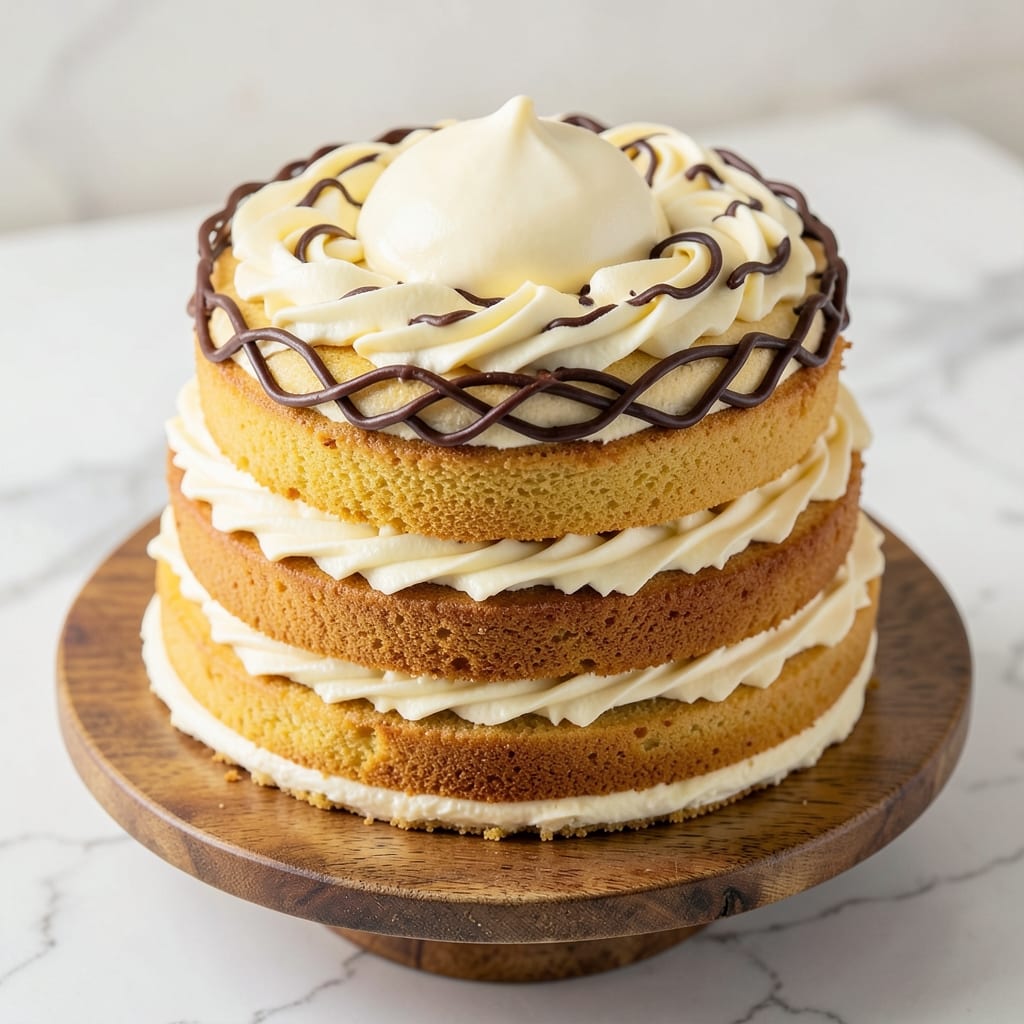
This 10-inch round vanilla cake recipe delivers the perfect balance of tender, moist layers and rich, buttery frosting that’s impossible to resist. 💛 The secret lies in precise ingredient ratios and gentle folding—no dry crumbs or dense centers here. Whether you're baking for a celebration or satisfying a sweet craving, this recipe ensures every slice is a showstopper.
What sets this vanilla cake apart is its foolproof technique: creaming butter and sugar until light and fluffy, then folding in eggs and dry ingredients just until combined. Baking at 350°F for 30–40 minutes guarantees a golden crust with a perfectly domed top, ready for your favorite frosting or glaze. No special equipment needed—just patience and attention to detail.
The result? A cake so moist it stays fresh for days, with layers that crumble just enough to hold frosting beautifully. The buttery vanilla flavor shines through without overpowering, making it the ideal blank canvas for decorating. Whether you go for classic buttercream, a glossy glaze, or fresh berries, this cake will impress every time.
Ready to bake? We’ll walk you through leveling, cooling, and decorating tips to ensure your cake looks as good as it tastes. Let’s get started—your guests won’t believe it’s homemade.
Ingredients for 10 inch round vanilla cake
Buttery richness meets tender vanilla perfection in this foolproof 10-inch cake.
| Ingredient | Amount | Notes |
|---|---|---|
| Unsalted Butter 🧈 | 1 cup | Room temperature, softened |
| Granulated Sugar 🍚 | 2 cups | White or light brown |
| Pure Vanilla Extract 🌿 | 2 tsp | High-quality, not imitation |
| Large Eggs 🥚 | 4 whole | Room temperature, separated |
| All-Purpose Flour 🌾 | 2 ½ cups | Sifted, spooned lightly |
| Baking Powder 🧂 | 2 tsp | Diamond Crystal preferred |
| Salt 🧂 | ½ tsp | Fine sea salt |
| Whole Milk 🥛 | 1 cup | Room temperature |
| Vegetable Oil 🫒 | ¼ cup | For greasing pans |
| Powdered Sugar 🍚 | 3 cups | For buttercream |
| Heavy Whipping Cream 🥛 | 1 cup | Cold, for buttercream |
The butter matters most here—unsalted, room-temperature is non-negotiable. Grab the European-style butter from Whole Foods or Trader Joe's if you want extra richness, but regular unsalted works perfectly fine. For vanilla, pure extract (not imitation) makes all the difference—McCormick or Nielsen-Massey are reliable brands. The eggs should be at room temp too—cold eggs can cause cracks. Sift that flour lightly, don't pack it down, or your cake might turn dense. And if you're using brown sugar, pack it tightly for accurate measurements.
No vanilla extract? Seeds from a vanilla bean work beautifully (just steep in warm water first), or almond extract at half the amount gives a nice twist. Short on powdered sugar? Granulated sugar processed in a food processor is a good substitute for buttercream. The milk can be swapped for buttermilk or evaporated milk if that's what you have. For a lighter texture, add 1 tsp baking soda but reduce baking powder to 1.5 tsp. And if your buttercream isn't coming together? Add 1 tsp lemon juice to help stabilize it.
This cake stays moist for 3-4 days when wrapped tightly at room temperature, or up to 1 week in the fridge. For best results, bake it a day ahead—flavors meld beautifully. Store leftover frosting between parchment layers in the fridge for up to 5 days. Need to freeze? Wrap the whole cake tightly in plastic and foil—it'll keep for 2 months. Just let it come to room temp before serving. And if you're decorating, use a cake turntable for perfect swirls—no one needs to know if you don't have one!
Why You'll Love This Recipe
- No Mixer Needed: I swear by this recipe when I’m in a rush—just cream the butter and sugar by hand (or use a fork in a bowl) until light and fluffy. No fancy equipment, no stress, just pure vanilla magic.
- Vanilla That Stops You: That first whiff of pure vanilla extract mixed into warm batter? It’s like a hug for your taste buds. The butter-rich crumb and just-sweet-enough sugar make every bite feel like a treat, not a chore.
- Birthday or Breakfast: Slice it for a celebration or grab a fork straight from the pan—this cake works for both. Between us, I’ve fed a crowd at a party and packed leftovers for my kids’ lunches without judgment.
- Leftovers That Last: Bake one, keep it for days. The texture stays tender, not dry, and the rich vanilla flavor only gets better with time. Honestly? I’ve had this cake for breakfast three mornings in a row and still crave it.
Step-by-step instructions for 10-Inch round vanilla cake
Here's how to bake a perfectly moist vanilla cake with tender layers and velvety frosting.
🍳 Step 1: Cream Butter and Sugar Until Light and Fluffy
In a stand mixer fitted with the paddle attachment, beat the 1 cup unsalted butter and 2 cups granulated sugar on medium speed for 3-4 minutes until completely smooth and pale. You'll see the mixture nearly double in volume and leave ribbons when the beaters are lifted.
This creaming process incorporates air, which creates that signature tender crumb. Scrape down the sides of the bowl every minute to ensure even mixing. If using light brown sugar, you might need an extra 30 seconds—it's slightly more moist and can take a touch longer to reach the same consistency.
👨🍳 Step 2: Add Eggs and Vanilla for Rich Flavor
Add the 4 whole large eggs, one at a time, mixing on low speed after each addition until fully incorporated. Then add the 2 teaspoons pure vanilla extract and mix for 10 seconds until combined. The mixture should look slightly curdled but will smooth out in the next step.
I like to use room temperature eggs—they blend more smoothly and create a lighter texture. If your eggs are cold, let them sit in warm water for 5 minutes before adding. The vanilla extract should be high-quality; imitation won't provide the same depth of flavor in this simple cake.
🍳 Step 3: Alternate Dry and Wet Ingredients
With the mixer on low speed, add one-third of the 2.5 cups all-purpose flour, then ½ teaspoon salt, then 1 teaspoon baking powder. Mix just until combined, then repeat with another third of the flour mixture. Finish with the remaining flour and 1 teaspoon baking powder, mixing until just combined—you should still see some flour streaks.
Next, add the 1 cup whole milk and ¼ cup vegetable oil in two additions, mixing on low speed just until incorporated. Overmixing develops gluten, which makes cakes tough. Stop mixing as soon as the batter looks smooth and uniform. The batter should be thick but pourable.
🔥 Step 4: Bake in a Prepared Pan
Preheat your oven to 350°F. Grease two 10-inch round cake pans with vegetable oil, then line the bottoms with parchment paper. Divide the batter evenly between the pans and smooth the tops with a spatula. Bake for 25-30 minutes or until a toothpick inserted in the center comes out clean.
Don't overbake—vanilla cakes are best when slightly underdone. The edges should be golden brown, but the center should still look slightly domed. If the tops brown too quickly, tent the pans with aluminum foil after 15 minutes. Let the cakes cool in the pans for 10 minutes, then transfer to a wire rack to cool completely.
🥘 Step 5: Make the Buttercream Frosting
In a large bowl, beat the 1 cup heavy whipping cream until soft peaks form. Gradually add the 3 cups powdered sugar, mixing on low speed until combined. Increase speed to medium-high and beat for 3-4 minutes until the frosting is light, fluffy, and holds stiff peaks.
For extra flavor, you can add 1 teaspoon vanilla extract to the frosting. Spread the frosting between the cooled cake layers and on the top and sides. Chill the cake for 30 minutes before serving to let the frosting set slightly. This cake keeps well for 3 days covered at room temperature or 1 week refrigerated.
Pro Tips For Making 10 Inch Round Vanilla Cake
- MELT BUTTER SLOWLY: I learned this the hard way—dumping cold butter straight into hot sugar makes a greasy mess that never dissolves properly. Warm the butter in the microwave for 20-30 seconds first, then let it sit for 30 seconds before adding to the sugar. This ensures a smooth batter without lumps, and your cake will have that perfect, tender crumb.
- USE ROOM-TEMP EGG WHITES: Cold egg whites can deflate your batter when folded in, leaving a dense cake. Take the whites out of the fridge 10 minutes before whipping, or pop them in warm water for 2 minutes. Fully aerated whites fold in like silk, giving you that light, fluffy texture you actually want.
- DON’T OVERMIX THE DRY INGREDIENTS: I used to beat the flour, sugar, and baking powder together until it looked like pancake batter. Wrong move. Mix the dry ingredients just until combined—about 10-12 strokes—then fold them into the wet mixture. Overmixing develops gluten, and your cake will turn out tough instead of tender.
- BAKE AT 325°F, NOT 350°F: I was skeptical until I tried it: 325°F is the sweet spot for a 10-inch cake. At 350°F, the outside sets too fast while the center stays undercooked, leading to cracks or a gummy middle. The lower temp lets heat penetrate evenly, giving you a perfectly domed, moist cake every time.
Flavor customization for 10 inch round vanilla cake
Citrus Zest Twist
Brighten your vanilla cake with 1 tablespoon freshly grated lemon or orange zest added to the batter. The citrus oils cut through the richness beautifully, adding a subtle tang that pairs perfectly with vanilla. I like to use organic lemons from my local farmer's market—they're more fragrant than store-bought. For extra zing, add 1 teaspoon lemon juice along with the vanilla extract. 🌿
Spiced Vanilla Infusion
Warm up your cake with ½ teaspoon ground cinnamon or ¼ teaspoon nutmeg mixed into the dry ingredients. These spices complement vanilla without overpowering it, adding depth that feels cozy and inviting. For a more dramatic twist, try ½ teaspoon cardamom—it's floral and aromatic, perfect for special occasions. I've found that Penzeys Spices has excellent quality for these delicate flavors.
Chocolate Swirl Surprise
Create a marbled effect by swirling ¼ cup melted chocolate (either dark or semi-sweet) into half the batter before dividing it between your pans. The chocolate will create beautiful ribbons throughout each slice. For a more intense flavor, use chocolate chips instead of melted chocolate—just fold them in at the end. This variation works especially well with vanilla buttercream on top. 🍫
Coffee-Infused Depth
Add 1 tablespoon instant coffee granules dissolved in the milk for a sophisticated mocha twist. The coffee enhances the vanilla flavor while adding a subtle bitterness that balances the sweetness. I recommend using Starbucks Via or Nescafé Classic for consistent results. This variation pairs wonderfully with chocolate ganache or espresso-infused buttercream. ☕
Nutty Crunch Addition
Fold ½ cup chopped walnuts or pecans into the batter for texture contrast. Toast the nuts first in a dry pan over medium heat for 3-4 minutes until fragrant, then let them cool before adding. For a more decadent option, try toasted coconut flakes—they add a tropical vibe that works surprisingly well with vanilla. Just be sure to fold them in gently at the very end to maintain the cake's tender crumb. 🌰
Boozy Enhancements
Add a touch of sophistication with 1 tablespoon bourbon, rum, or Grand Marnier mixed into the vanilla extract. The alcohol will infuse the cake with warm, complex flavors while adding subtle moisture. For a festive touch, try ½ teaspoon orange liqueur along with the citrus zest. I've found that Kirkland Signature bourbon (from Costco) gives great results without overpowering the vanilla. Just be mindful of alcohol content—this variation is best for adult celebrations. 🍸
Nutrition facts
Frequently asked questions
Can I bake this cake in a single 10-inch pan instead of two?
Not recommended for this recipe—baking in one pan would make the cake too thick (4+ inches) and risk overbaking the center while the edges cook. For a single-layer cake, reduce the batter by half and bake at 325°F for 25-30 minutes in a 9-inch pan instead. The texture will be denser but still delicious!
Why does my vanilla cake sometimes turn out dry?
Overmixing the batter or baking too long are the top culprits. Always mix dry ingredients just until combined (flour streaks should remain) and stop when a toothpick comes out clean—not crumb-free. For extra moisture, add 1 extra tablespoon milk or oil to the batter.
What's the best way to level the cakes before frosting?
Use a serrated knife or cake leveler—never a regular knife. First, let the cakes cool completely, then place them on a cutting board and slice horizontally about ½ inch above the pan's base. For perfectly flat tops, press a second cake on top and gently press down with a glass.
Can I substitute buttercream with cream cheese frosting?
Replace the buttercream with 1 (8 oz) package cream cheese, ½ cup softened butter, 3 cups powdered sugar, and 1 tsp vanilla. Beat until smooth and spread on cooled layers. This adds a tangy contrast that pairs beautifully with vanilla cake.
How do I store leftover cake without drying it out?
Wrap tightly in plastic wrap, then place in an airtight container with a slice of bread to absorb moisture. Store at room temperature for 3 days or refrigerate for 1 week. For longer storage, freeze the whole cake (frosted or unfrosted) for up to 3 months. Thaw overnight in the fridge.