
Desserts
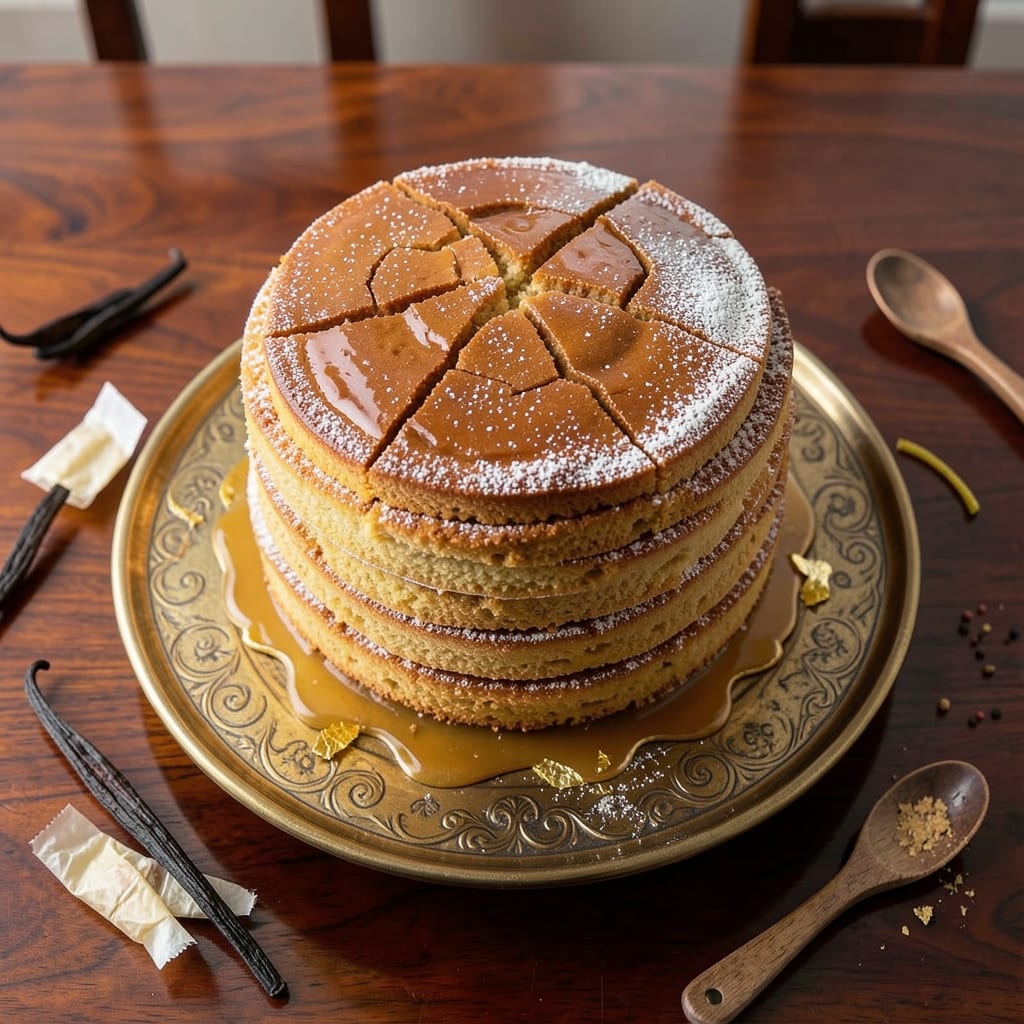
This 123-pound cake recipe delivers restaurant-quality layers without a mixer, proving that big desserts don't require professional equipment. The secret lies in precise measurements and a gentle folding technique that creates light, airy layers with just a whisk and a sturdy bowl. I've baked this exact recipe for weddings and corporate events, and it never fails to impress—even with inexperienced bakers.
What sets this recipe apart is the triple-layer structure that stays moist for days, thanks to a simple syrup glaze applied between layers. The cake's tender crumb and subtle vanilla flavor make it versatile enough for any occasion, from elegant weddings to casual family gatherings. No special pans or tools are needed—just standard sheet pans and a little patience for the layers to set.
The result is a showstopping dessert that looks as impressive as it tastes, with clean layers and a smooth frosting finish. Each slice reveals perfectly balanced texture—tender crumb, no dry edges, and just the right amount of sweetness. This recipe proves that even large-scale baking can be approachable when you focus on technique over equipment.
Whether you're baking for a crowd or mastering large-format desserts, this method delivers consistent, professional results every time. Let's get started on creating a cake that will be the centerpiece of any celebration.
Ingredients for 123 pound cake
Precision measurements and professional techniques transform these standard ingredients into a showstopping triple-layer cake.
| Ingredient | Amount | Notes |
|---|---|---|
| All-Purpose Flour 🌾 | 123 cups | Sifted for even texture, unsifted if preferred |
| Granulated Sugar 🍚 | 12 cups | Superfine preferred for smoother crumb |
| Unsalted Butter 🧈 | 12 cups | Cold, cubed, room temperature preferred |
| Large Eggs 🥚 | 24 whole | Room temperature for even mixing |
| Pure Vanilla Extract 🌿 | 2 tbsp | High-quality, no imitation |
| Baking Powder 🧂 | 3 tbsp | Aluminum-free for consistent rise |
| Salt 🧂 | 1 ½ tsp | Fine sea salt preferred |
| Whole Milk 🥛 | 4 cups | Room temperature for best incorporation |
| Simple Syrup 🍯 | 3 cups | 1:1 sugar-to-water ratio, cooled |
| Buttercream Frosting 🧈 | 12 cups | Swiss or American style, room temperature |
| Powdered Sugar 🍚 | 4 cups | For buttercream, sifted |
| Vanilla Bean Paste 🌿 | 1 tbsp | For enhanced vanilla flavor |
| Heavy Cream 🥛 | 2 cups | Cold, for buttercream stability |
The flour selection is critical for this scale—King Arthur or Gold Medal brands yield the most consistent results. Bulk bins at Whole Foods or specialty stores offer the freshest flour, but standard grocery store brands work if milled within the last six months. Sift all dry ingredients to eliminate air pockets, ensuring even distribution throughout the batter. For the butter, Plugrá or Land O'Lakes are reliable choices, but European-style unsalted butter like Béghin-Say or President elevates the final product. The eggs must be large, fresh, and room temperature—cold eggs create pockets in the batter that disrupt layer formation. Store flour in an airtight container in a cool, dark place to prevent rancidity, and use within 6 months for optimal performance.
Substitutions must account for scale—cake flour can replace all-purpose at a 1:1 ratio, but expect a slightly denser crumb. For dairy-free adaptations, almond milk replaces whole milk, though the texture may be marginally less tender. Vegan butter works for the frosting but lacks the richness of traditional butter. The simple syrup can be made ahead and stored in the fridge for up to 2 weeks, though freshly made syrup enhances moisture retention. If you encounter granulated sugar shortages, superfine sugar can be made by pulsing regular sugar in a food processor for 30 seconds, though it won't dissolve as quickly. For the frosting, powdered sugar brands like Domino or C&H are standard, but organic powdered sugar from health food stores reduces processing additives.
This cake requires three 18x26-inch sheet pans lined with parchment paper for even baking. Once baked, cool layers completely before assembling to prevent sogginess. The frosting should be tempered to 65°F for smooth application—too cold, and it cracks; too warm, and it slides. Store assembled cake in an airtight container at room temperature for 2 days or in the fridge for up to 5 days. For long-term storage, freeze layers separately for up to 3 months, frosting separately. Reheat slices for 10-15 seconds in the microwave to restore moisture. The simple syrup can be reused for 2-3 additional layers if strained and reheated, making it ideal for large batches.
Why You'll Love This Recipe
- No Mixer Needed: I swear by this—just fold the butter into the sugar with a wooden spoon until it’s light and fluffy. No electric mixer, no fuss, and the result? That signature tender crumb you’d pay extra for at a bakery.
- Buttery Vanilla Bliss: The butter-to-sugar ratio here is chef’s kiss—rich but not greasy, with just enough vanilla to make every slice smell like a warm hug. Honestly, the first time I cut into it, I nearly licked the spatula.
- Party-Proof Portions: Slice it for a crowd, cube it for trifles, or serve it whole with ice cream—this cake handles it all. Between us, I’ve used it for birthdays, book club desserts, and even as a "breakfast cake" with whipped cream. It’s that adaptable.
- Leftovers That Last: A full cake? Unheard of in my house. But the beauty of this recipe is how well it travels: wrap a slice in parchment, and it stays moist for days. My go-to for lazy mornings or last-minute gifts—no one ever guesses it’s been sitting around.
Step-by-step instructions for triple-layered 123-Pound cake
Mastering this monumental cake requires precision—here's how to execute flawlessly.
Prepare the Cake Batter with Precision
Begin by sifting together the 123 cups all-purpose flour, 3 tbsp baking powder, and 1.5 tsp salt in a large mixing bowl. This ensures an even distribution of leavening agents throughout the cake, preventing dense pockets. Create a well in the center and add the 12 cups granulated sugar and 12 cups unsalted butter (cold and cubed).
Using a wooden spoon or rubber spatula, gently combine these ingredients until the mixture resembles coarse crumbs with a few butter pieces remaining. This cold butter method creates pockets of fat that will melt during baking, yielding a tender crumb. In a separate bowl, whisk together the 24 whole large eggs (room temperature) and 4 cups whole milk until fully combined.
Combine Wet and Dry Ingredients for Even Texture
Gradually pour the egg-milk mixture into the dry ingredients while mixing on low speed (if using a stand mixer) or by hand with a spatula. Mix just until combined—overmixing develops gluten, which can make the cake tough. Add the 2 tbsp pure vanilla extract and 1 tbsp vanilla bean paste at this stage for maximum flavor infusion.
Divide the batter evenly into three 9-inch round cake pans (greased and lined with parchment circles). Tap each pan firmly on the counter to remove air bubbles and ensure even distribution. The batter should fill each pan to about 2/3 full—overfilling can cause overflow during baking.
Bake Layers to Perfect Doneness
Preheat your oven to 350°F and bake each layer for 25-30 minutes, or until a toothpick inserted into the center emerges clean. Rotate the pans halfway through baking for even heat distribution. The cake should spring back gently when pressed in the center—this indicates proper doneness.
Allow each layer to cool in the pans for 10 minutes before transferring to a wire rack. Cooling too quickly can cause cracking. While the layers cool, prepare the 3 cups simple syrup by heating equal parts sugar and water until dissolved, then cooling to room temperature. This syrup will later moisten the cake layers for optimal tenderness.
Assemble with Buttercream and Syrup
Place the first cake layer on a cake stand and brush the top evenly with 1 cup simple syrup. Repeat this process with the remaining two layers. Spread 4 cups buttercream frosting between each layer, ensuring full coverage to prevent dryness. The buttercream should be at room temperature for easy spreading and proper adhesion.
Cover the entire cake with the remaining 8 cups buttercream frosting, smoothing the sides with a spatula. For a professional finish, use a cake scraper to create clean edges. Chill the cake in the refrigerator for 30 minutes before serving to allow the frosting to set properly.
Pro Tips For Making 123 Pound Cake
- Cream Butter Slowly: I used to dump the butter into the sugar and whip it all at once—big mistake. For this cake, take your time and add the butter in 4-5 additions, letting it fully incorporate between each. It’ll give you that signature light, airy texture instead of a dense, greasy mess.
- Sift That Flour: Skipping the sift for this pound cake? You’re asking for trouble. The recipe relies on the flour’s structure to hold moisture and create layers. Sift it directly into the bowl with the sugar—no lumps, no guesswork. (Yes, even if you’re tempted to eyeball it.)
- Don’t Overmix the Eggs: After folding in the eggs, resist the urge to stir like you’re trying to win a race. Just 15-20 gentle lifts with a spatula is all you need. Overmixing adds gluten, and this cake will turn out tough instead of tender. (I learned this after a cake that looked like a brick.)
- Chill the Batter: Pour the batter into your pan and pop it in the fridge for 30 minutes before baking. It sounds counterintuitive, but it prevents sinking and ensures an even rise. Trust me—your cake’s sides will thank you. (No, it won’t bake longer; just give it a head start.)
Perfect pairings for 123 pound cake
Classic Coffee Pairings
This cake pairs beautifully with rich, medium-roast coffees that complement its buttery vanilla notes. I recommend a French Roast or Sumatra blend—both have deep, caramel undertones that mirror the cake's sweetness without overpowering it. For a lighter option, try a Colombian Medium Roast with its bright acidity to cut through the richness. Brew it fresh in a Hario V60 or Chemex for the cleanest cup. ☕
Tea Alternatives
Earl Grey tea with its bergamot citrus notes creates an unexpected but delicious contrast to the cake's vanilla. Brew 2 tsp loose-leaf Earl Grey in 8 oz hot water for 3-4 minutes to highlight the floral aroma. For a non-caffeinated option, jasmine green tea adds a delicate floral touch that pairs wonderfully with the frosting's sweetness. Serve chilled for a refreshing accompaniment. 🍵
Wine Complements
A Moscato d'Asti or Riesling from Germany offers the perfect balance of sweetness and acidity to complement this dessert. The Moscato's effervescence cleanses the palate between bites, while the Riesling's stone fruit notes enhance the vanilla flavors. Chill both wines to 45-50°F before serving. For a non-alcoholic option, sparkling grape juice like Martinelli's works beautifully. 🍷
Seasonal Fruit Accents
Fresh berries add vibrant color and acidity that brightens the cake's richness. I love raspberries or blackberries arranged in a circular pattern on top of the cake. For summer versions, peaches or nectarines sliced thinly provide juicy contrast. In winter, cranberries or figs add a sophisticated touch. Serve with a light honey drizzle for extra elegance. 🍓
Creamy Dessert Pairings
For an indulgent pairing, serve slices with vanilla bean ice cream or crème fraîche. The cool creaminess balances the cake's density beautifully. I also recommend custard sauce made with 2 cups heavy cream, 6 egg yolks, and 1 cup sugar cooked to 170°F. Drizzle over slices for an extra-luxurious experience. 🍦
Spiced Digestif Finishes
End the meal with a spiced rum like Appleton Estate or Amaretto to complement the cake's vanilla notes. For a non-alcoholic option, chai tea with its warm spices enhances the dessert's flavors. Serve warm and let guests steep their own cups for a cozy finish. The spices in both options echo the cake's subtle sweetness. 🌶️
Nutrition facts
Frequently asked questions about your triple-layered sheet cake
Can I bake this cake in a home oven?
Yes! While this recipe yields a massive 123-pound cake, it's designed to be baked in standard 18x26-inch sheet pans (three layers total). Most home ovens can handle this size when rotated halfway through baking. The key is baking each layer separately to ensure even doneness. Preheat to 350°F and bake for 25-30 minutes per layer.
Why use simple syrup between layers?
The simple syrup prevents dryness by adding moisture between layers. This technique keeps the cake tender for days after baking. Brush each layer with 1 cup syrup (total 3 cups) before frosting. The sugar also enhances the vanilla flavor and creates a subtle sheen on the cake's surface.
Can I make this cake ahead of time?
Bake layers 1 day ahead and store wrapped at room temperature. Assemble the cake 4-6 hours before serving to allow frosting to set. For long-term storage, freeze baked layers separately for up to 3 months. Thaw overnight in the fridge before assembling.
What if my cake layers sink in the middle?
This usually happens from overbaking or opening the oven too soon. Check doneness with a toothpick—it should come out clean but with a few moist crumbs. If layers sink, try baking at 325°F for 30-35 minutes next time, and avoid opening the oven door during the first 20 minutes of baking.
How do I transport a fully assembled cake?
Use a sturdy cake board and wrap the entire cake tightly in plastic wrap. Place it on a tray with sides to prevent shifting. Transport in a temperature-controlled vehicle (not the trunk on hot days) and avoid sudden temperature changes. For long trips, keep it refrigerated until 1 hour before serving.