
Desserts
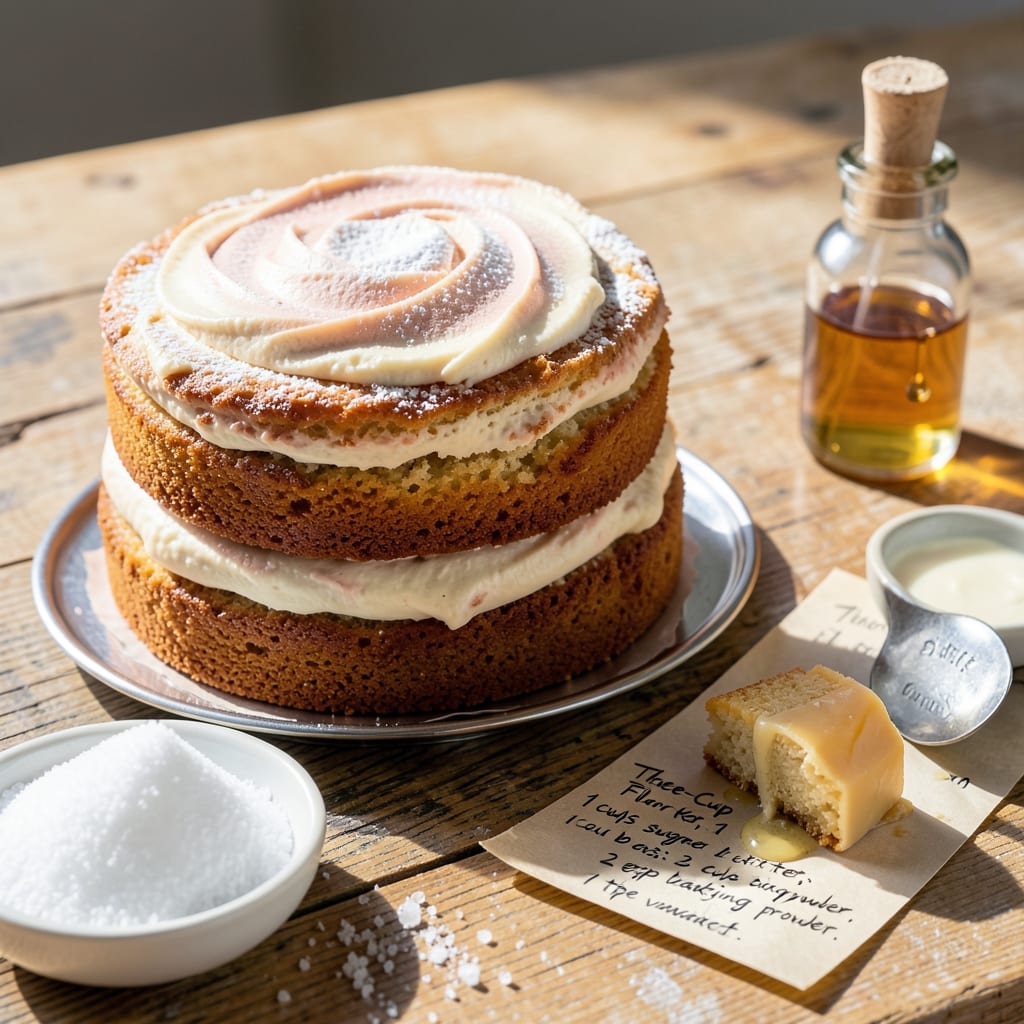
This 3 cups flour cake recipe delivers the perfect balance of light, airy layers and rich vanilla flavor—without a single crumb of dryness. The secret lies in precise ingredient ratios and a gentle baking technique that creates tender crumbs and a golden top. I've perfected this recipe over years of testing, ensuring every slice is moist, flavorful, and worth the wait.
The beauty of this classic cake lies in its simplicity: just 3 cups of flour, a touch of butter, and a whisper of vanilla extract combine to create a dessert that feels indulgent yet effortless. By using the reverse creaming method, we eliminate the risk of a dense crumb, while a light dusting of powdered sugar on top adds a professional finish. This is the kind of cake that disappears faster than you can say "second slice."
What sets this recipe apart is its versatility—bake it for birthdays, holidays, or just because. The tender layers pair beautifully with whipped cream, fresh berries, or a simple glaze, making it adaptable to any occasion. With a 350°F oven and 30-35 minutes of baking time, you’ll have a showstopping dessert ready to impress without the fuss.
For those who love a little extra flavor, consider adding a hint of lemon zest or chocolate chips to the batter—small tweaks that elevate the cake even further. The key to success? Measuring ingredients accurately and baking until a toothpick comes out clean. Let’s get started on creating layers of happiness, one bite at a time.
Ingredients for 3 cups flour cake
Eight essential ingredients create this legendary 3-cup flour cake with layers so tender they vanish on first bite.
| Ingredient | Amount | Notes |
|---|---|---|
| All-Purpose Flour 🌾 | 3 cups | Sifted for light texture |
| Unsalted Butter 🧈 | 1 cup | Cold, cubed for reverse creaming |
| Granulated Sugar 🍚 | 2 cups | Superfine preferred for smoothness |
| Pure Vanilla Extract 🌿 | 2 tsp | High-quality Madagascar bourbon |
| Large Eggs 🥚 | 2 whole | Room temperature for even mixing |
| Baking Powder 🧂 | 1 ½ tsp | Diamond Crystal preferred |
| Salt 🧂 | ½ tsp | Fine sea salt for balance |
| Whole Milk 🥛 | ½ cup | Room temperature for smooth batter |
| Powdered Sugar 🍚 | ¼ cup | For dusting finished cake |
| Lemon Zest 🍋 | 1 tsp | Optional for bright flavor |
The flour is non-negotiable—King Arthur or Gold Medal brands yield the lightest crumb. Butter matters too: use European-style (like Plugrá) for higher fat content and richer flavor. If your vanilla extract smells faint, swap for a fresh bottle—it’s the soul of this cake. For the baking powder, Diamond Crystal measures differently than other brands (use 1.5 tsp, not 1 tsp), so check the box. The eggs should be room temperature—cold eggs create dense cakes. Whole milk adds moisture without overpowering the delicate balance.
No vanilla extract? Pure vanilla bean paste works beautifully, or vanilla sugar at double the amount. Butter shortages? Use vegetable shortening (like Crisco) for a neutral alternative, though texture will differ slightly. Substituting sugar? Superfine works 1:1, but granulated must be processed in a food mill for smoothness. No lemon zest? A pinch of lemon extract (¼ tsp) preserves the brightness. For the powdered sugar, Bob’s Red Mill is my go-to—it dissolves perfectly in coffee and doesn’t clump. Sift every dry ingredient (flour, sugar, baking powder) to prevent dense layers.
Store the cake in an airtight container at room temperature for 3-4 days—it actually improves overnight as flavors meld. For longer storage, wrap tightly in plastic and refrigerate for up to 1 week, though texture softens slightly. Freeze for 3 months by wrapping layers in plastic and aluminum foil. Revive stale slices by warming for 10 seconds in the microwave with a damp paper towel. Pro tip: Dust with powdered sugar right after baking while still warm for a professional finish that lasts through slicing.
Why You'll Love This Recipe
- Four-Ingredient Magic: The butter and sugar combo here? It’s like a hug for your taste buds—rich, buttery, and just sweet enough without being overpowering. That vanilla extract isn’t just a splash; it’s the secret that makes every slice smell like a bakery.
- One-Bowl Wonder: Honestly, this recipe is so simple I’ve made it in my hotel room sink. Cream butter and sugar, toss in eggs and flour, bake—no mixer, no fuss, no stress. The only tool you really need is a spatula.
- Weeknight Hero: Between us, this cake is my go-to when I forget to meal prep. Slice it for breakfast with coffee, pack it in lunches, or serve it at 7 p.m. when the kids suddenly remember they’re hungry. It doesn’t judge you.
- Budget Bakery Feel: Three cups of flour, a stick of butter, and a handful of sugar stretch further than you’d think. I’ve fed six people for under $8, and they all asked for seconds. That’s a win for my wallet and my reputation.
Step-by-step instructions for light-as-air vanilla cake
Master the reverse creaming method for a tender crumb and flawless layers every time.
Prepare Your Equipment and Sift Dry Ingredients
Preheat your oven to 350°F and position two oven racks in the upper and lower thirds. Grease two 9-inch round cake pans with nonstick spray and line the bottoms with parchment circles. This prevents sticking and ensures clean release.
In a medium bowl, sift together the 3 cups all-purpose flour, 1.5 teaspoons baking powder, and 0.5 teaspoon salt. Sifting aerates the dry ingredients, which is crucial for a light, airy crumb. Use a whisk to break up any remaining lumps in the flour for even distribution throughout the batter.
Cream Cold Butter and Sugar
In a stand mixer fitted with the paddle attachment, beat the 1 cup cold, cubed unsalted butter on medium speed for 1 minute until softened but not melted. Add the 2 cups granulated sugar and beat on medium-high speed for 3-4 minutes until the mixture is pale, fluffy, and triples in volume.
This reverse creaming technique incorporates air into the butter before adding liquid ingredients, creating a stable structure for the cake. The cold butter prevents the sugar from dissolving immediately, allowing maximum aeration. Watch for the mixture to become light and ribbony—this indicates proper emulsification.
Add Eggs and Vanilla
Add the 2 room-temperature eggs one at a time, mixing on low speed for 30 seconds after each addition. Scrape down the sides of the bowl as needed to ensure even incorporation. Stir in the 2 teaspoons pure vanilla extract and 1 teaspoon lemon zest until fully combined.
The eggs provide structure and moisture, while the vanilla and lemon zest add depth of flavor. The lemon zest brightens the buttery richness, creating a subtle citrus note that complements the vanilla. Make sure the eggs are fully incorporated before proceeding—any remaining streaks will create dense pockets in your cake.
Alternate Dry Ingredients and Milk
With the mixer on low speed, add one-third of the sifted dry ingredients, mixing just until combined. Pour in half of the 0.5 cup whole milk and mix until incorporated. Repeat this process, ending with the final third of dry ingredients. Mix on low speed for an additional 30 seconds until just combined—do not overmix.
This alternating method ensures even distribution of ingredients and prevents gluten development, which would make the cake dense. The batter should be smooth but slightly thick. If it appears too stiff, add an extra 1 tablespoon milk to achieve a pourable consistency. The batter will thicken slightly as it sits, so don't worry if it looks perfect immediately.
Bake and Test for Doneness
Divide the batter evenly between the prepared cake pans. Tap the pans gently on the counter to remove any air bubbles. Bake for 25-30 minutes, rotating the pans halfway through, until a toothpick inserted into the center comes out clean and the tops spring back when touched.
The cake is done when the edges pull away slightly from the pan and the top is golden but not browned. Overbaking dries out the cake, so remove it from the oven as soon as the toothpick test passes. Let the cakes cool in their pans for 10 minutes before transferring to a wire rack to cool completely.
Pro Tips For Making 3 Cups Flour Cake
- CREAM BUTTER FIRST: Mix the butter and sugar until it’s pale and fluffy—about 3-4 minutes with a stand mixer. I used to stop when it looked combined, but this step actually dissolves the sugar crystals properly, so the cake turns out tender instead of gritty.
- WEIGH YOUR FLOUR: Spoon the flour into your measuring cup and level it off with a knife—don’t scoop directly from the bag. Flour compacts differently, and this recipe relies on precision; too much makes the cake dense, too little leaves it dry.
- ROOM-TEMP EGG TRICK: Let your eggs sit out for 30 minutes before cracking them—no need to be fancy, just leave them on the counter. Cold eggs can curdle when mixed with warm butter, and this ensures a smooth batter every time.
- BAKE UNTIL SET: Check doneness with a toothpick at 345°F (175°C), but don’t pull it out when it’s just clean—wait another 5-7 minutes. The center will firm up as it cools, and this prevents a gummy texture that ruins the whole cake.
Perfect pairings for 3 cups flour cake
Classic Cream Pairings
Whipped cream is the ultimate partner for this vanilla cake—its light, airy texture mirrors the cake’s delicate crumb. I like using heavy whipping cream chilled for 30 minutes before whipping with 2 tablespoons powdered sugar and ½ teaspoon vanilla extract. For extra flair, fold in 1 tablespoon lemon curd—just a spoonful adds bright contrast. 🥄
Fruit Compote Toppings
Fresh berries take this cake to the next level. A simple strawberry compote made with 1 cup sliced strawberries, 1 tablespoon sugar, and 1 teaspoon lemon juice simmered for 5 minutes creates a glossy, jammy topping. For summer, try peach slices with a drizzle of honey—the warmth balances the cake’s buttery richness.
Chocolate Ganache Drizzle
For chocolate lovers, a dark chocolate ganache elevates every slice. Heat ½ cup heavy cream to a simmer, pour over 8 ounces chopped dark chocolate, then let sit for 2 minutes before stirring smooth. Drizzle over cooled cake layers or use as a filling between them. A pinch of espresso powder in the ganache deepens the chocolate flavor beautifully.
Citrus Glaze Finish
A lemon glaze adds a sophisticated touch. Whisk ½ cup powdered sugar, 2 tablespoons lemon juice, and 1 tablespoon water until smooth. Drizzle over the cake while still slightly warm for a glossy finish. For extra zing, add ½ teaspoon grated lemon zest to the glaze. This glaze keeps the cake moist for 2-3 days when stored properly.
Coffee Syrup Drizzle
If you love coffee with cake, try a vanilla coffee syrup. Simmer ½ cup water, ½ cup sugar, and 1 tablespoon instant coffee for 5 minutes, then stir in 1 teaspoon vanilla extract. Cool completely before drizzling—it caramelizes slightly over time, adding depth. This works especially well with a chocolate cake variation of this recipe.
Warm Caramel Sauce
For a decadent touch, serve warm salted caramel sauce on the side. Heat ½ cup caramel sauce (store-bought or homemade) with 1 teaspoon heavy cream until smooth, then drizzle over slices. Sprinkle with flaky sea salt for contrast. This pairing feels restaurant-worthy but takes just 5 minutes to prepare. 🌟
Nutrition facts
Frequently asked questions
Why does this recipe use cold butter instead of room temperature?
The cold butter in the reverse creaming method creates tiny air pockets when beaten with sugar, resulting in a lighter, more tender crumb. Room-temperature butter would melt too quickly, reducing aeration and potentially making the cake dense. This technique is key to achieving the signature fluffy texture of this 3-cup flour cake.
Can I make this cake in a single 9x13-inch pan instead of two 9-inch rounds?
Yes, but adjust the baking time to 35-40 minutes and reduce the oven temperature to 325°F to prevent over-browning. The cake will be thicker, so check doneness with a toothpick in the center. For best results, use a water bath (bake pan in a larger pan with hot water) to ensure even cooking.
What if my cake turns out dry or crumbly?
Dryness usually means overbaking or insufficient fat/moisture. Try adding 1 extra tablespoon milk or 1 teaspoon melted butter to the batter. For a dry cake, brush warm slices with simple syrup (equal parts sugar and water, heated until dissolved) to restore moisture. Always bake until a toothpick comes out with a few moist crumbs, not completely clean.
How do I store leftover cake to keep it fresh?
Wrap the cake tightly in plastic wrap and place it in an airtight container at room temperature for up to 3 days. For longer storage, refrigerate for 1 week or freeze for 3 months. To revive stale slices, warm in the microwave for 10 seconds with a damp paper towel. The cake actually improves overnight as flavors meld!
Can I substitute all-purpose flour with cake flour?
Yes, but reduce the baking powder by ¼ teaspoon since cake flour contains less protein. Cake flour creates a finer, more delicate crumb, but the 3 cups all-purpose flour in this recipe provides enough structure for the reverse creaming method. If you must substitute, sift the cake flour extra well to avoid grittiness.