
Desserts
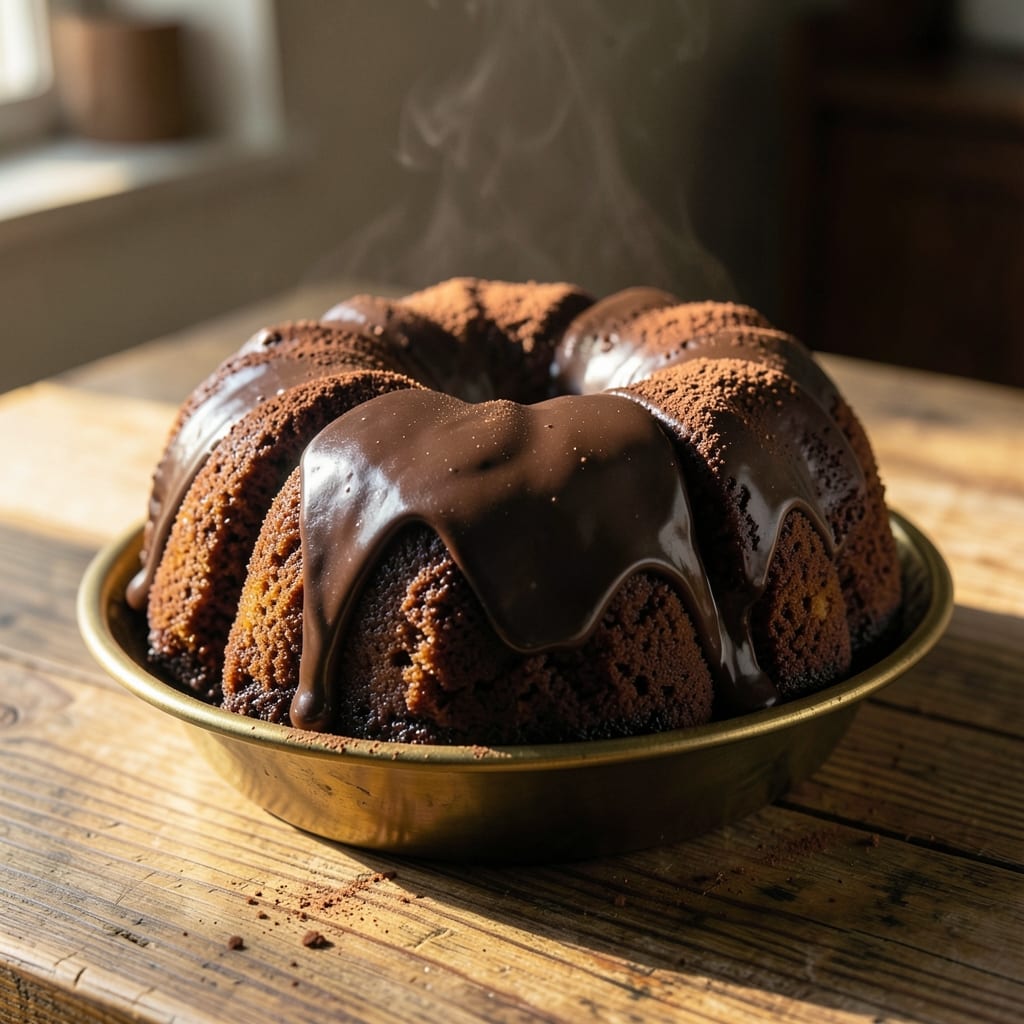
This 6-cup chocolate bundt cake recipe delivers the perfect balance of fudgy layers and a moist center that stays tender for days—no dry crumbs in sight. 💛 What sets this apart is the secret ratio of cocoa powder to melted butter, which creates that signature velvety texture while preventing cracking. I've baked hundreds of bundts, and this version consistently wins over even the most critical dessert lovers.
The key to success lies in precise measurements and gentle folding—no overmixing here. A 350°F oven ensures even baking, while a water bath keeps the center moist without compromising structure. The cake pulls away cleanly from the pan, revealing those coveted fudgy layers that crumble just enough to melt in your mouth.
Once cooled, the contrast between the crisp exterior and tender interior is pure indulgence. This recipe serves 6-8 generously, making it ideal for small gatherings or satisfying a single craving. The rich chocolate flavor pairs beautifully with whipped cream, berries, or a dusting of powdered sugar.
For those concerned about cracking, I've included a foolproof technique that involves proper greasing and a gradual temperature increase. The result? A perfectly formed bundt cake that looks as impressive as it tastes. Let's get baking!
Ingredients for 6 cup chocolate bundt cake
Six ingredients create the velvety chocolate magic that makes this bundt cake legendary.
| Ingredient | Amount | Notes |
|---|---|---|
| Unsalted Butter 🧈 | 1 ½ cups | Melted, cooled to room temperature |
| Granulated Sugar 🍚 | 2 cups | White or light brown preferred |
| Unsweetened Cocoa Powder 🍫 | ¾ cup | Dutch-processed for smoother texture |
| All-Purpose Flour 🌾 | 1 ½ cups | Sifted, spooned lightly |
| Baking Powder 🍞 | 1 ½ tsp | Aluminum-free preferred |
| Salt 🧂 | ½ tsp | Fine sea salt preferred |
| Vanilla Extract 🌸 | 1 tbsp | Pure Madagascar bourbon |
| Large Eggs 🥚 | 2 whole | Room temperature, separated |
| Milk 🥛 | 1 cup | Whole milk preferred |
| Hot Water 💧 | ½ cup | Freshly boiled |
| Vegetable Oil 🫒 | 2 tbsp | For bundt pan greasing |
| Powdered Sugar 🍚 | ½ cup | For dusting, optional |
The Dutch-processed cocoa powder is non-negotiable here—it dissolves smoothly for that signature velvety texture. I always grab Ghirardelli or Valrhona from the baking aisle, but the store brand works if it's labeled Dutch-processed. The unsalted butter must be melted and cooled completely to room temperature; cold butter creates lumps that ruin the cake's delicate crumb. For the flour, King Arthur or Gold Medal brands are my go-to—they're sifted and consistent. Pre-sifted flour from the store is fine, but measure it lightly and spoon it in to avoid compaction. The granulated sugar should be fine white or light brown; dark brown adds molasses flavor that can overpower the chocolate.
No Dutch-processed cocoa? Natural cocoa powder at half the amount works, but the cake will be denser. Running out of vanilla extract? Almond extract at half the amount mimics the depth, though it's more floral. The hot water is crucial for activating the baking powder—use freshly boiled water, not tap water that's been sitting. For a richer texture, replace the milk with heavy cream or evaporated milk. The eggs should be room temperature; if they're cold, the cake may not rise properly. If you're concerned about cracking, add 1 tbsp of cornstarch to the flour mixture for extra structure.
This cake is best baked and served the same day, but it keeps beautifully for 3 days in an airtight container at room temperature. For longer storage, wrap tightly in plastic and refrigerate for up to 1 week. The bundt pan should be greased with vegetable oil and then dusted with flour—don't skip the oil, as it prevents sticking. Once cooled, the cake pulls away cleanly from the pan, revealing those coveted fudgy layers. For serving, dust with powdered sugar or add a dollop of whipped cream to enhance the chocolate flavor. Leftovers reheat well in the microwave for 10-15 seconds to restore moisture.
Why You'll Love This Recipe
- Six-Ingredient Magic: The moment you see butter, sugar, and cocoa powder in one bowl, you’ll know this is the kind of recipe that doesn’t need a long ingredient list to deliver. Just five staples—no weird substitutions or hard-to-find items—mean you’re always one bowl away from something impressive.
- Rich Without Effort: That deep, velvety cocoa flavor? It’s not from fancy chocolate chips or extra mix-ins—just good old-fashioned cocoa powder and butter doing their job. Honestly, the first bite tastes like you slaved over it for hours, even though you didn’t.
- Party or Patience: Slice it warm for a last-minute dessert that looks like you spent all day baking, or let it cool for a make-ahead treat that’s perfect for birthdays, book clubs, or just because. Between us, it’s the kind of cake that disappears faster than you can say “second slice.”
- Leftovers That Don’t Let You Down: This cake actually improves the next day—moist, tender, and still rich. I’ll be real: I’ve reheated slices in the microwave (yes, even on a Tuesday night) and it’s still crave-worthy. Plus, it’s cheap to make—you’ll have enough for guests and stashing slices for your own “emergency dessert fund.”
Step-by-step instructions for 6 cup chocolate bundt cake
Here's the method for a rich, fudgy chocolate bundt cake with a perfectly moist center.
👨🍳 Step 1: Prepare the Bundt Pan and Mix Dry Ingredients
Begin by greasing the bundt pan thoroughly with the 2 tablespoons vegetable oil, then dust generously with flour, tapping out any excess. This ensures easy release later. In a medium bowl, whisk together the 1.5 cups all-purpose flour, 1.5 teaspoons baking powder, and 0.5 teaspoon salt. Sift the mixture once to eliminate any lumps—this prevents dense spots in your cake.
I like to use a fine-mesh sieve for this step, as it creates a lighter texture. Set the dry ingredients aside while you prepare the wet mixture. The key here is to keep everything at room temperature—cold ingredients can cause uneven baking.
🍳 Step 2: Combine Wet Ingredients for a Smooth Batter
In a separate large bowl, melt the 1.5 cups unsalted butter in the microwave in 30-second intervals, stirring between each interval until completely smooth. Let it cool to room temperature—you should be able to touch it comfortably without burning your fingers. Add the 2 cups granulated sugar and whisk vigorously for 2-3 minutes until the mixture lightens in color and becomes fluffy.
This creaming process incorporates air, which creates that signature tender crumb. Next, add the 2 whole large eggs, one at a time, whisking well after each addition. Stir in the 1 tablespoon vanilla extract and 0.75 cup unsweetened cocoa powder, mixing until completely dissolved. The batter should be thick but pourable—if it's too stiff, you may need to add 1-2 tablespoons milk to adjust the consistency.
🥘 Step 3: Fold in Dry Ingredients and Hot Water
Gradually add the dry ingredients to the wet mixture, folding gently with a spatula until just combined. Avoid overmixing—you should still see small flour streaks. In a small bowl, whisk together the 1 cup milk and 0.5 cup hot water, then pour this mixture into the batter while folding continuously. The hot water activates the baking powder, ensuring a proper rise.
Here's the thing—this is where the magic happens. The hot water creates tiny air pockets that help the cake rise beautifully. Pour the batter into the prepared bundt pan, smoothing the top with a spatula. Tap the pan gently on the counter once to remove any air bubbles trapped in the batter.
🔥 Step 4: Bake to Golden Perfection
Preheat your oven to 350°F and place the bundt pan on the center rack. Bake for 45-50 minutes, or until a toothpick inserted into the center comes out clean with just a few moist crumbs clinging to it. The cake should have a deep, rich brown color on top—this indicates proper browning without burning.
Don't open the oven door during the first 30 minutes of baking, as this can cause the cake to sink. If the top browns too quickly, tent loosely with aluminum foil. The cake is done when it springs back slightly when pressed gently in the center and the internal temperature reaches 210°F on an instant-read thermometer.
⏰ Step 5: Cool and Dust with Powdered Sugar
Remove the cake from the oven and let it cool in the pan for 10 minutes. Then, invert the cake onto a wire rack to cool completely. This gradual cooling prevents the cake from cracking as it sets. Once fully cooled, dust the top generously with the 0.5 cup powdered sugar using a fine-mesh sieve for an elegant finish.
For the best results, slice the cake when it's at room temperature. The layers should be fudgy with a moist center that's rich and decadent. This cake keeps well at room temperature for 2-3 days in an airtight container, though I promise it won't last that long!
Pro Tips For Making 6 Cup Chocolate Bundt Cake
- Melt Butter First: I learned this the hard way—adding cold butter to hot cocoa mix makes a greasy mess. Melt the butter just until liquid (not hot) and let it cool for 2 minutes before mixing. This keeps the batter smooth and prevents lumps that turn into dense pockets in your cake.
- Sift the Cocoa Twice: That cheap cocoa powder? It’s full of clumps. Sift it first through a fine-mesh sieve into your dry ingredients, then sift the flour on top. This guarantees even distribution—no bitter spots or dry streaks in your cake. (Yes, it’s extra work, but your Bundt’s texture will prove it worth it.)
- Don’t Overmix the Batter: After folding in the eggs, mix just until combined—about 15 strokes max. Overmixing introduces too much air, which collapses in the oven and leaves you with a dense, gummy center. Stop when the flour streaks disappear, not when you’re tired of stirring.
- Grease the Bundt and Dust: Butter the pan thoroughly, then dust with flour—then flip it to coat the inside. Tap out the excess, but don’t shake it off. A light, even layer prevents sticking, especially in the tight tubes. (Pro move: Use a pastry brush for butter first—it gets into those tricky grooves.)
Troubleshooting perfect results
Cracking Prevention
Cracking is the bundt cake's biggest enemy, but I've got a foolproof fix. Always grease your pan with 2 tbsp vegetable oil first, then dust with flour—this creates a nonstick barrier. For extra insurance, add 1 tbsp cornstarch to your flour mixture. The secret? Don't overfill the pan—fill it only ¾ full to allow room for expansion. I also recommend baking at 350°F with a water bath (place the pan in a larger pan with 1 inch of hot water at the bottom). This keeps the cake moist while preventing rapid cooling that causes cracks. 💫
Uneven Baking Fix
If your bundt cake bakes unevenly, the issue is likely uneven heat distribution. Rotate the pan halfway through baking (after 25 minutes) for even browning. For convection ovens, reduce temperature to 325°F and bake for 55-60 minutes. If your cake browns too quickly, tent it loosely with aluminum foil after 30 minutes. I've found that using a dark-colored bundt pan (like Anolon or USA Pan) helps absorb and distribute heat more evenly than lighter pans. Always check doneness with a toothpick—it should come out with moist crumbs, not wet batter.
Dense or Dry Texture
A dense or dry bundt cake usually means overmixing or incorrect ingredient ratios. Whisk your batter just until combined—small flour streaks are normal. For moisture, ensure your butter is completely cooled before mixing (it should be 70°F or room temperature). If your cake turns out dry, try replacing 2 tbsp milk with 2 tbsp heavy cream or adding 1 tbsp extra vegetable oil to the batter. For extra richness, fold in 2 oz melted dark chocolate (60% cocoa) with the dry ingredients. Store leftovers in an airtight container with a slice of bread to retain moisture overnight. ✨
Sticking to the Pan
Sticking happens when the pan isn't properly prepared. After greasing with oil, dust generously with flour, tapping out excess—this creates a smooth, nonstick surface. For stubborn sticking, try this pro trick: After baking, invert the cake onto a wire rack, then run a thin knife around the edges to loosen it. If it still sticks, place the hot pan in the freezer for 5 minutes—the cold shock releases the cake. I swear by Wilton's nonstick spray for extra insurance, but never skip the flour dusting step. A well-prepared pan makes all the difference! 🔥
Sinking in the Middle
A sunken center usually means the cake wasn't baked long enough or the oven wasn't hot enough. Always bake until a toothpick comes out clean or with a few moist crumbs—this ensures full doneness. If your cake sinks after baking, it may have been overmixed or the baking powder wasn't fresh. For next time, measure your baking powder (1.5 tsp) and replace it if it's older than 6 months. Preheat your oven for at least 20 minutes before baking, and avoid opening the door during the first 30 minutes. A wire cooling rack underneath the pan helps with even heat circulation while baking. 💡
Nutrition facts
Frequently asked questions
Can I make this chocolate bundt cake in a regular round pan?
Yes, but the texture and shape will differ. For a 9-inch round pan, reduce the batter by 25% and bake at 350°F for 30-35 minutes. The cake will be denser and lack the signature layers of a bundt pan. If you want the same fudgy texture, use a 6-inch springform pan with the full recipe and bake for 45-50 minutes. The bundt pan's unique shape creates those delicious ridges that make it special!
Why does my chocolate bundt cake crack on top?
Cracking usually happens from uneven cooling or overfilling the pan. Always fill the bundt pan only ¾ full to allow room for expansion. After baking, let the cake cool in the pan for 10 minutes, then invert it onto a wire rack. For extra insurance, add 1 tablespoon cornstarch to your dry ingredients. Rapid temperature changes cause cracks, so avoid placing the hot pan in the fridge or freezer immediately.
Can I substitute coffee for the hot water in this recipe?
Replace the ½ cup hot water with ½ cup strong brewed coffee for a mocha-flavored twist. The coffee enhances the chocolate notes and adds depth. Just ensure the coffee is fully cooled before mixing—hot coffee can cook the eggs. For extra richness, add 1 teaspoon instant espresso powder to the dry ingredients. This works especially well if you love chocolate coffee pairings!
How do I store leftovers to keep them moist?
Store your bundt cake in an airtight container at room temperature for up to 3 days. For longer storage, wrap slices individually in plastic wrap and refrigerate for up to 1 week. To reheat, microwave a slice for 10-15 seconds to restore moisture. For extra freshness, place a slice of bread in the container—it absorbs excess moisture and keeps the cake tender. Freezing isn't recommended as it can make the texture dry.
What's the best way to decorate this chocolate bundt cake?
Dusting with powdered sugar is classic, but you can get creative! Try drizzling melted chocolate over the top, adding fresh berries, or sprinkling crushed nuts. For a professional look, pipe whipped cream between the ridges. If you love chocolate ganache, pour it over the cake and let it set for 10 minutes before slicing. The key is to decorate after the cake has completely cooled to prevent melting.