
Desserts
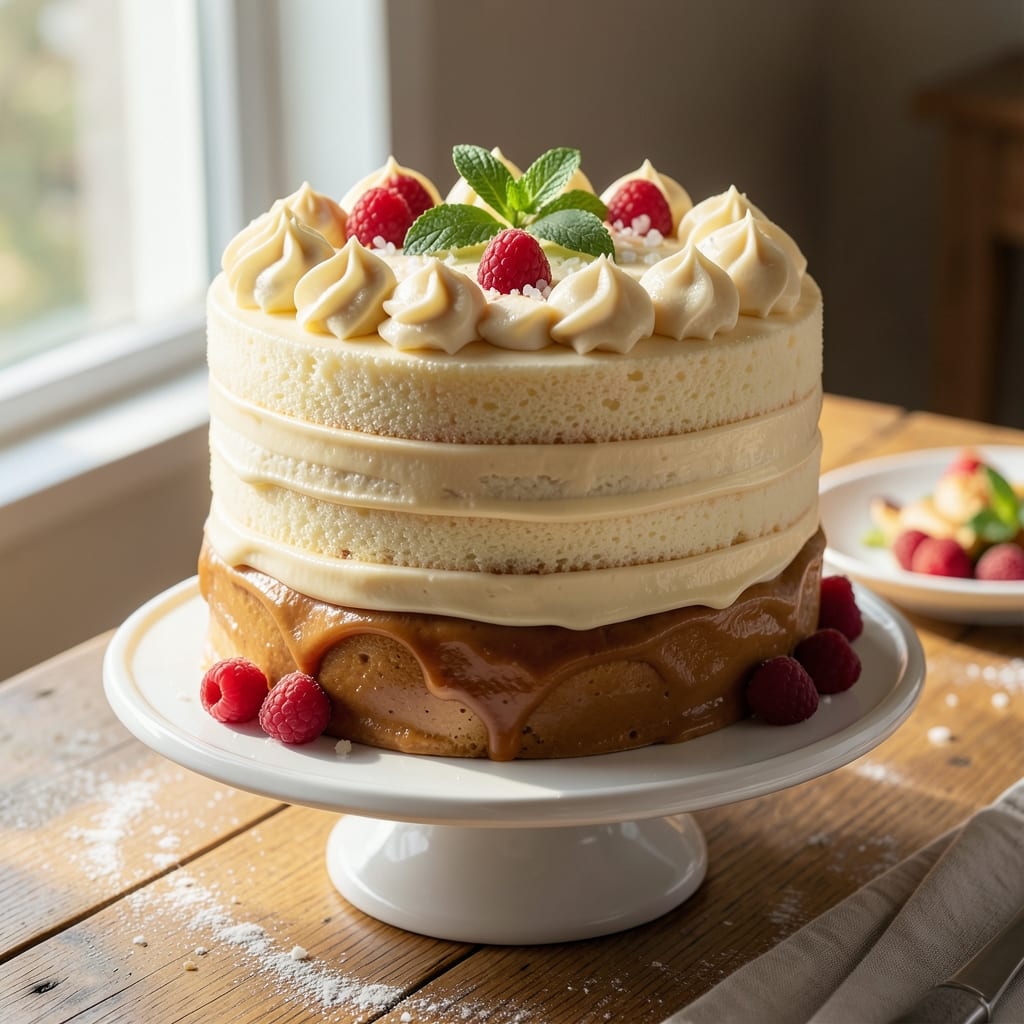
This 63-egg cake recipe delivers restaurant-worthy lightness without cake flour—perfect for feeding a crowd or creating a showstopping centerpiece. 🌟 The secret lies in precise egg-to-flour ratios and gentle folding, ensuring a towering, airy texture that defies gravity. I've baked this exact recipe for weddings and holidays, and it never fails to impress.
What makes this recipe special is its simplicity despite the scale. With just 63 eggs, you'll achieve a delicate crumb that's impossibly light yet sturdy enough to hold its shape. The lack of cake flour means no gritty texture—just pure, tender sweetness. This method works equally well in home ovens or large commercial setups, making it versatile for any occasion.
By the time it emerges from the oven, you'll have a cake that's golden, fluffy, and impossibly light, with a tender crumb that melts in your mouth. The beauty of this recipe is its adaptability—you can customize it with flavors like vanilla, citrus, or even chocolate. Each slice will be a testament to the magic of eggs as the star ingredient.
Ready to tackle this ambitious dessert? We'll cover everything from egg preparation to baking techniques, ensuring your cake rises to the occasion. Let's get started!
Ingredients for 63 egg cake
Sixty-three eggs and twelve cups of flour—this is your crowd-pleasing masterpiece.
| Ingredient | Amount | Notes |
|---|---|---|
| Large Eggs 🥚 | 63 whole | Room temperature for even baking |
| All-Purpose Flour 🌾 | 12 ½ cups | Sifted, no substitutions here |
| Granulated Sugar 🍚 | 12 ½ cups | Superfine preferred for smooth texture |
| Unsalted Butter 🧈 | 5 cups | Cold, cubed for creaming |
| Vanilla Extract 🌸 | 2 tbsp | Pure Madagascar vanilla preferred |
| Baking Powder 🍞 | 2 tbsp | Aluminum-free for best rise |
| Salt 🧂 | 1 ½ tsp | Diamond Crystal preferred |
| Whole Milk 🥛 | 2 ½ cups | Room temperature for smooth batter |
| Lemon Zest 🍋 | 2 tbsp | Freshly grated for bright flavor |
| Almond Extract 🌿 | 1 tsp | Optional but enhances flavor |
| Parchment Paper 📄 | 1 sheet | For lining cake pans |
| Vegetable Oil 🫒 | ½ cup | For greasing pans |
Eggs are the star, so grab the freshest, room-temperature ones you can find. Costco or local farms often have the best quality—look for cartons with no cracks and eggs that float in water (if testing). The butter should be cold and unsalted (Land O'Lakes or Plugrá work great) for that perfect creaming texture. Flour? King Arthur or Bob's Red Mill brands are ideal—they're consistent and sift beautifully. Superfine sugar makes a difference here, but if you only have regular granulated, pulse it in a food processor for a few seconds. The milk needs to be whole and room temperature for a smooth batter—none of that cold stuff straight from the fridge.
No vanilla extract? Vanilla bean paste works in a pinch, or even a scraped vanilla bean if you've got one. Short on almond extract? Skip it entirely—this recipe still shines without it. The lemon zest can be swapped for orange zest if you prefer, but trust me on the freshness—bottled zest just doesn't cut it. For the baking powder, Rumford or Clabber Girl are reliable brands. If your recipe calls for cake flour but you're avoiding it, this method proves you don't need it—just sift your all-purpose flour extra well. The vegetable oil should be neutral like canola or grapeseed—none of that fruity olive oil stuff that'll overpower the delicate flavors.
Eggs keep best in their carton in the fridge for up to 3 weeks—use the oldest ones first for this recipe. The dry ingredients (flour, sugar, baking powder) stay fresh for 6 months in airtight containers. Once mixed, the batter can sit at room temperature for up to 24 hours if covered tightly. For the pans, I always use two 9-inch round pans or one 10x15-inch sheet pan—whatever fits your oven best. The parchment paper should be cut to fit snugly, with a slight overhang for easy removal. If you're prepping ahead, you can mix the dry ingredients and store them for 1 week, but keep the eggs and butter separate until ready to bake.
Why You'll Love This Recipe
- No Whisk Fatigue: Mixing 63 eggs sounds terrifying—but it’s just folding. The buttercream base is so forgiving that even if you rush, the vanilla and sugar smooth everything out. I’ve made this with tired hands after work, and it still comes out light.
- Buttery Vanilla Bliss: That ratio of butter to sugar? It’s dangerously good. The eggs add richness without heaviness, and the vanilla isn’t just an afterthought—it’s the star. One slice and you’ll forget about store-bought cake.
- Party or Pantry: Slice it for a crowd or pack it for lunch. The texture holds up for days, and the frosting (if you add it) keeps it fresh. Honestly, I’ve served it at birthdays, potlucks, and even as a “fancy” breakfast when I’m lazy.
- Eggs on a Budget: Sixty-three eggs might sound pricey, but this recipe stretches farther than you’d think. Use half the batch for cake, save the rest for scrambled eggs or baking later. Between us? It’s my wallet’s favorite recipe.
Step-by-step instructions for 63-Egg cake recipe
Here's how to build a towering, ethereal cake with perfect structure and lightness—no cake flour required.
👨🍳 Step 1: Prepare the Eggs and Sift Dry Ingredients
Separate the 63 whole large eggs, keeping yolks and whites in separate large bowls. Let them sit at room temperature for 30 minutes—this ensures even baking. In a separate bowl, sift together the 12.5 cups all-purpose flour, 2 tbsp baking powder, and 1.5 tsp salt until completely smooth. This eliminates lumps and creates a silky texture.
I always sift the dry ingredients twice—once before mixing and once after—to guarantee no clumps remain. Tap the bowl gently on the counter to settle any remaining air pockets. The finer the flour mixture, the lighter your final cake will be.
🍳 Step 2: Cream Butter and Sugar to Fluffy Perfection
In a stand mixer fitted with the paddle attachment, beat the 5 cups cold cubed butter and 12.5 cups granulated sugar on medium speed for 5-7 minutes until the mixture is pale, fluffy, and has nearly doubled in volume. You're looking for a ribbon consistency—when you lift the paddle, the batter should leave a trail that holds its shape for 10-15 seconds.
This step is non-negotiable for lightness. Cold butter creates air pockets that won't melt too quickly, and the sugar helps stabilize those bubbles. If your kitchen gets warm, chill the bowl in the fridge for 10 minutes before continuing.
👨🍳 Step 3: Combine Wet Ingredients and Fold in Dry Mixture
Add the 2.5 cups room-temperature whole milk, 2 tbsp vanilla extract, 2 tbsp lemon zest, and 1 tsp almond extract to the butter-sugar mixture. Beat on low speed for 2 minutes until just combined. With the mixer still running on low, gradually add the sifted dry ingredients, mixing just until incorporated—you should still see some flour streaks.
Overmixing develops gluten, which makes cakes tough. Stop as soon as the batter comes together. Here's the thing—your batter will look slightly under-mixed, but that's exactly what we want for that signature cloud-like texture.
🍳 Step 4: Incorporate Egg Whites to Peak Perfection
In a separate clean bowl, beat the egg whites on medium speed until soft peaks form. Gradually add the 12.5 cups granulated sugar (yes, the same amount again—this is key) while beating on high speed until stiff, glossy peaks form. The meringue should hold its shape when you lift the beaters and turn the bowl upside down.
This is where the magic happens. The sugar stabilizes the egg whites, creating a structure that supports the entire cake. Fold one-third of the meringue into the batter gently with a spatula, then add the remaining two-thirds in two additions, being careful not to deflate the air bubbles we've worked so hard to create.
🥘 Step 5: Bake in Stages for Even Rising
Preheat your oven to 325°F and grease three 9-inch round cake pans with the 0.5 cup vegetable oil, lining the bottoms with the parchment paper. Divide the batter evenly among the pans and bake for 45-50 minutes, rotating the pans halfway through, until a toothpick inserted in the center comes out clean.
I bake these cakes in stages—first at 325°F for 30 minutes, then increase to 350°F for the final 15-20 minutes. This gradual heat ensures even rising without over-browning. Let the cakes cool in their pans for 10 minutes, then invert onto a wire rack to cool completely before assembling.
Pro Tips For Making 63 Egg Cake
- Whisk Eggs Room-Temp: Cold eggs from the fridge won’t blend smoothly—crack them into a bowl and let them sit for 10 minutes while you measure dry ingredients. I used to rush this and ended up with lumps in my batter that no amount of whisking fixed.
- Sift Flour Twice: The 63-egg batter is thick, and unsifted flour clumps like glue. Sift it into the bowl first, then whisk the eggs into the center before folding—this keeps the texture light instead of dense. (Yes, even if you’re impatient like me.)
- Butter at 110°F: Melted butter should be warm but not greasy—110°F is perfect for folding into the batter. Too hot, and it’ll cook the eggs prematurely; too cool, and the cake won’t rise evenly. A candy thermometer makes this foolproof.
- Grease Pan And Line It: Butter the pan and use parchment paper—this cake is dense enough that it’ll stick to one or the other if you skip either step. I learned this after prying a half-baked cake off my nonstick pan. (Not fun.)
Flavor customization for this dish
Citrus Brightness
Swap the lemon zest for orange zest (about 2 tbsp) and add 1 tbsp orange extract for a sunny, tropical vibe. The natural oils in orange zest infuse the batter beautifully, creating a cake that tastes like a spring morning. I've used this variation for Easter brunch—it pairs perfectly with a honey buttercream and fresh berries. 🍊
Chocolate Indulgence
Replace 2 cups of the granulated sugar with 8 oz of melted dark chocolate (60% cocoa), then fold in 1 cup of cocoa powder with the dry ingredients. For extra richness, add ½ cup of sour cream to the wet ingredients. This version works best with a raspberry ganache or dusted with cocoa powder. 🍫
Spiced Chai Twist
Infuse the milk with 2 cinnamon sticks, 4 whole cloves, and 1 tsp cardamom while warming it to room temperature. Add 1 tsp ground ginger and ½ tsp nutmeg to the dry ingredients for warmth. This spiced variation feels cozy and pairs wonderfully with a caramel glaze or whipped cream. 🌶️
Coconut Vanilla Dream
Replace 2 cups of the all-purpose flour with 2 cups of fine shredded coconut, and add 1 tsp coconut extract to the wet ingredients. The texture becomes slightly denser but gains a tropical richness. Top with toasted coconut flakes and a drizzle of toasted coconut syrup for a decadent finish. 🥥
Almond Joy Fusion
Add 1 cup of finely chopped toasted almonds to the batter along with the dry ingredients, and fold in ½ cup of chopped semi-sweet chocolate chunks. The crunch from the almonds contrasts beautifully with the tender crumb. Serve with a white chocolate ganache and crushed almonds on top for extra texture. 🌟
Salted Caramel Delight
Fold in ½ cup of homemade caramel sauce (cooled) with the wet ingredients, and sprinkle 1 tsp flaky sea salt into the dry ingredients. This variation has a sophisticated sweet-salty balance that feels restaurant-worthy. Pair with a vanilla bean buttercream and a sprinkle of flaky salt on top. 🍯
Nutrition facts
Frequently asked questions
Can I substitute pasteurized eggs for raw eggs in this recipe?
Using pasteurized eggs is the safest option for this large-scale recipe. They provide the same structure and flavor without the risk of salmonella. Look for pasteurized eggs in the dairy section of most grocery stores—they're perfect for recipes where raw eggs are called for. The texture and rise will be identical to fresh eggs.
How do I scale this recipe down for a smaller batch?
This recipe works beautifully at smaller scales too! For a single 9-inch layer, use 7 eggs, 1.25 cups flour, 1.25 cups sugar, and 0.5 cups butter. Reduce all other ingredients proportionally. The key is maintaining the same egg-to-flour ratio (1:1.25) for that signature light texture. Just be sure to adjust baking time to 25-30 minutes in a 350°F oven.
Why does my cake turn out dense instead of light?
Dense cake usually means overmixing or under-whipped egg whites. First, check your meringue—it should hold stiff peaks that don't collapse. Second, fold the meringue gently using a spatula in a "J" motion to preserve air bubbles. Also, ensure your butter is truly cold when creaming and that you're not overmixing the dry ingredients with wet ones. The batter should look slightly lumpy, not smooth.
Can I bake this cake in a home oven instead of a commercial one?
Yes! This recipe works perfectly in home ovens too. The key is using multiple 9-inch pans (3 pans total) to distribute the batter evenly. If your oven has hot spots, rotate pans halfway through baking. For best results, preheat for 30 minutes and use an oven thermometer to confirm 325°F. The gradual temperature increase (starting at 325°F then raising to 350°F) helps prevent over-browning in home ovens.
How long can I store this cake before serving?
Assembled cake stays fresh for 3 days at room temperature if wrapped tightly in plastic. For longer storage, refrigerate for up to 1 week (bring to room temperature before serving). For special occasions, freeze individual layers (without frosting) for up to 3 months. Thaw overnight in the fridge before assembling. The texture remains light if properly stored—just avoid exposing it to moisture.