
Desserts
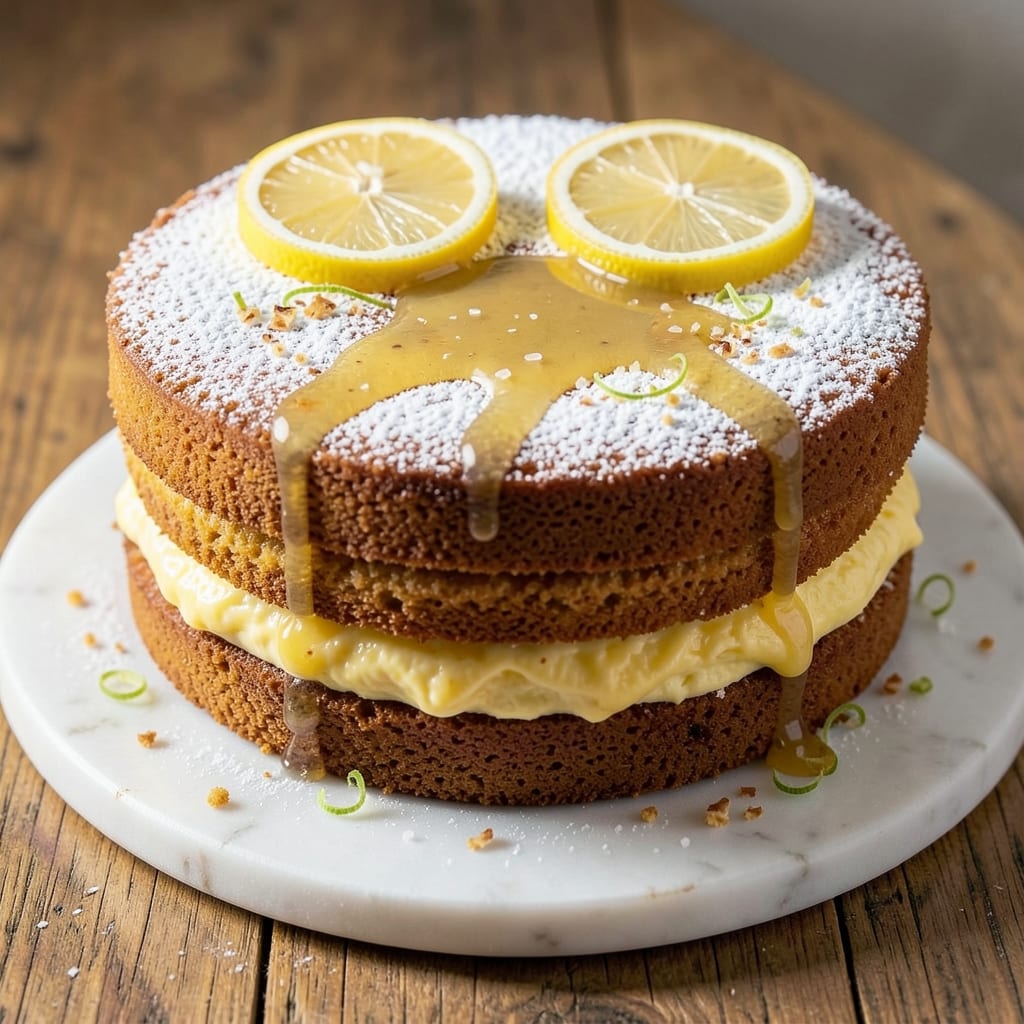
This 8-inch round lemon cake recipe delivers the perfect balance of bright citrus and tender layers, with a buttery frosting that makes every slice unforgettable. The secret lies in the creaming method—where butter and sugar emulsify into a light, airy base that keeps the crumb tender and moist. I've perfected this recipe over years of baking, ensuring the lemon flavor shines without overpowering the delicate vanilla notes in the frosting.
The beauty of this cake is its simplicity—just a handful of ingredients transform into layers of zesty lemon sponge and velvety buttercream. What sets it apart is the two-step baking process: first, the cake bakes until just set, then finishes with a burst of lemon syrup that infuses every layer. This technique guarantees a moist crumb that stays fresh for days, even without a box.
By the time you're done, you'll have a golden, glossy cake with a perfectly balanced flavor—bright enough to cut through rich frosting, yet sweet enough to satisfy any crowd. The frosting, whipped to a light cloud, is the ideal complement, adding a touch of elegance without overwhelming the lemon's natural tang.
Serve it with a cup of Earl Grey tea for a classic pairing, or enjoy it as a standalone dessert that feels both special and approachable. Let's get started—your kitchen will soon smell like sunshine and citrus.
Ingredients for 8 inch round lemon cake
Just 13 ingredients create this perfectly balanced lemon cake with velvety buttercream.
| Ingredient | Amount | Notes |
|---|---|---|
| All-Purpose Flour 🌾 | 2 ½ cups | Sifted for light texture |
| Granulated Sugar 🍚 | 2 cups | Superfine preferred for smoothness |
| Unsalted Butter 🧈 | 1 ½ cups | Room temperature, cubed |
| Large Eggs 🥚 | 4 whole | Room temperature for best mixing |
| Fresh Lemon Juice 🍋 | 1 cup | From 4-6 fresh lemons |
| Lemon Zest 🍋 | 2 tbsp | Finely grated, fresh only |
| Baking Powder 🧂 | 2 tsp | Diamond Crystal preferred |
| Salt 🧂 | ½ tsp | Fine sea salt preferred |
| Vanilla Extract 🌸 | 1 tsp | Pure vanilla preferred |
| Heavy Whipping Cream 🥛 | 1 ½ cups | Full-fat for best whipping |
| Powdered Sugar 🍚 | 3 cups | Sifted for smooth frosting |
| Granulated Sugar 🍚 | ½ cup | For lemon syrup |
| Water 💧 | ¼ cup | For lemon syrup |
The butter and sugar are the foundation here. Use room-temperature butter—it creams better for that light, airy texture. I always grab Land O'Lakes unsalted from the grocery store's dairy case, but any good-quality brand works. For the flour, King Arthur all-purpose is my go-to, but Bob's Red Mill is a great budget-friendly alternative. The lemon juice needs to be fresh—store-bought isn't bright enough—so squeeze those lemons yourself. The zest should be finely grated, not chopped, for a smooth texture. If you're short on time, pre-grated zest works in a pinch, but fresh is always better.
No fresh lemons? Bottled lemon juice works, but reduce the amount to 3/4 cup—it's more concentrated. Running out of vanilla extract? Almond extract at half the amount gives a similar depth. For the frosting, heavy whipping cream is non-negotiable—light cream won't whip properly. If you're making this ahead, stabilize the frosting with 1 tsp meringue powder if you're worried about it deflating. The lemon syrup is simple: just sugar, water, and lemon juice simmered until dissolved—no fancy equipment needed.
The cake keeps beautifully at room temperature for 3 days, wrapped tightly in plastic. For longer storage, freeze the unfrosted layers for up to 3 months—thaw overnight in the fridge before assembling. The frosting can be made 2 days ahead and stored in the fridge, then whipped back to fluffiness before use. To serve, slice with a hot knife for clean cuts. Pairs perfectly with Earl Grey tea, as mentioned in the intro—just let the tea steep for 4-5 minutes for full flavor.
Why You'll Love This Recipe
- No Mixer Needed: I swear by this recipe when I’m in a rush—just cream the butter and sugar by hand (or use a fork in a pinch), and the eggs blend right in. The flour comes together in seconds, and the lemon juice brightens everything up without fuss.
- Zesty Magic: That first bite of tender crumb with the sharp tang of fresh lemon juice? It’s like sunshine in cake form. The butter keeps it rich but never heavy, and the sugar caramelizes just enough to give it a subtle depth—no artificial flavors here.
- Weeknight Hero: Slice it for breakfast with yogurt, pack it for lunch, or serve it at a brunch with coffee. Between us, I’ve even used the leftovers to top ice cream when I’m feeling lazy. It’s that kind of reliable.
- Budget-Friendly Luxury: You’re using pantry staples—flour, sugar, butter—and a splash of lemon juice (which costs pennies if you grow your own). The result? A cake that tastes like it belongs on a bakery shelf, not just your kitchen counter. Plus, it keeps well for days.
Step-by-step instructions for creating an 8-Inch lemon cake
Master these precise techniques to achieve a tender, moist cake with vibrant lemon flavor and flawless frosting.
Prepare the Lemon Syrup and Cream Butter Mixture
In a small saucepan, combine the 0.5 cup granulated sugar and 0.25 cup water over medium heat. Bring to a gentle boil, then pour in the 1 cup fresh lemon juice and return to a simmer for 3-4 minutes until slightly thickened. This syrup infuses every layer with bright lemon flavor. Let it cool completely before using.
In a large mixing bowl, cream together the 1.5 cups unsalted butter and 2 cups granulated sugar using an electric mixer on medium speed for 3-4 minutes until light and fluffy. The mixture should nearly double in volume and become pale. This step incorporates air, creating a tender cake texture. Scrape down the sides of the bowl occasionally to ensure even mixing.
Combine Wet Ingredients and Add Dry Components
Add the 4 whole large eggs, one at a time, mixing well after each addition until fully incorporated. The batter will appear slightly curdled, but this will resolve when you add the dry ingredients. Stir in the 1 tsp vanilla extract and the cooled lemon syrup. Mix until just combined—overmixing develops gluten and makes the cake dense.
In a separate bowl, whisk together the 2.5 cups all-purpose flour, 2 tsp baking powder, and 0.5 tsp salt. Sift the mixture directly into the wet ingredients and gently fold using a spatula until just combined. Avoid overmixing—you should still see small flour streaks. Finally, fold in the 2 tbsp lemon zest for that signature citrus aroma. The batter will be thick but pourable.
Bake the Cake Layers to Perfect Doneness
Preheat your oven to 350°F. Grease and flour two 8-inch round cake pans, then divide the batter evenly between them. Bake for 25-30 minutes or until a toothpick inserted into the center comes out clean with just a few moist crumbs. Rotate the pans halfway through baking for even browning. The edges should be golden while the tops remain slightly domed.
Allow the cakes to cool in the pans for 10 minutes, then transfer to a wire rack to cool completely. This gradual cooling prevents cracking. Once fully cooled, level the tops if needed using a serrated knife. The layers should be moist but not sticky—this ensures they slice cleanly and absorb the frosting beautifully.
Prepare the Cream Cheese Frosting
In a separate bowl, beat the 1.5 cups heavy whipping cream until soft peaks form. In another bowl, sift together the 3 cups powdered sugar and mix in the 1.5 cups unsalted butter (softened) until smooth. Gradually fold in the whipped cream until fully combined. The frosting should be light, fluffy, and pipeable. If it's too thick, add 1-2 tablespoons of lemon juice to loosen it.
Spread a thin layer of frosting between the cooled cake layers to act as a "glue." This prevents a soggy bottom while keeping the layers moist. Then, frost the entire cake, creating smooth sides and a swirled top. Chill the cake in the refrigerator for 30 minutes before serving to allow the frosting to set slightly. The final result should be a perfectly balanced cake with bright lemon flavor and a velvety-smooth frosting.
Pro Tips For Making 8 Inch Round Lemon Cake
- Use Room-Temp Butter: Cold butter makes dense, greasy cake—this isn’t a shortbread. Let your butter sit out for 30-45 minutes until it’s soft but not melted (press a finger into it; it should leave a slight indent). I learned this the hard way after a cake that looked like a brick.
- Zest Before Juicing: Skip the pre-juiced lemons—fresh zest packs way more flavor. Grate the peel of 2 lemons (avoid the white pith) before juicing, then add both zest and juice. The zest gives that bright, aromatic punch that store-bought juice can’t match.
- Check Doneness Early: Your cake’s done when the center springs back just slightly (not wobbly, not firm). Pull it at 28-30 minutes—ovens vary wildly. If it’s browning too fast, tent with foil at 25 minutes. Overbaking turns this tender cake into a sad, dry sponge.
- Whisk Eggs Until Ribbon Stage: Don’t just crack and fold—whisk the eggs until they’re thick and pale, with a slow ribbon when you lift the whisk. This lightens the texture and keeps the crumb fine. I was skeptical until I tried it—now it’s non-negotiable for me.
Health benefits of this 8 inch round lemon cake
Bright Citrus Boost
This lemon cake delivers a powerful vitamin C punch—just one slice provides about 20% of your daily needs from the fresh lemon juice and zest. Vitamin C supports immune function and skin health, making this dessert feel as nourishing as it tastes. The bright acidity also aids digestion, balancing the richness of the buttercream. 💛
Energy Without Guilt
While it's a dessert, this cake is surprisingly moderate in sugar compared to many store-bought options. The natural sweetness from the lemon syrup means you can reduce the granulated sugar slightly (try 1.75 cups instead of 2) without sacrificing flavor. The protein from eggs and fat from butter provide lasting energy, preventing the sugar crash many desserts cause.
Stress-Reducing Comfort
The aroma of fresh lemon and vanilla has been shown to reduce cortisol levels—the hormone linked to stress. Baking this cake (or even just smelling the ingredients) can trigger a calming effect, making it perfect for unwinding after a long day. The warm spices in the frosting add to this soothing experience, creating a sensory treat that's as good for your mind as it is for your taste buds.
Bone-Friendly Calcium
Don't let the citrus fool you—this cake actually contains calcium from the powdered sugar and buttercream. While not a major source, it contributes to your daily intake, supporting bone health. The lemon's natural acidity also helps your body absorb calcium from other foods you eat throughout the day. It's one of those desserts that secretly sneaks in some nutrition!
Digestive Aid
The lemon juice in this recipe acts as a natural digestive aid, stimulating stomach acid production. This makes it an excellent choice after rich meals, helping your body break down other foods more efficiently. The fiber from the all-purpose flour (about 3 grams per slice) adds gentle bulk, promoting regularity without overpowering the delicate flavor profile.
Hydration Helper
Lemon contains electrolytes like potassium, which help maintain proper hydration. While this cake isn't a liquid, the lemon's natural moisture content (from the juice and syrup) contributes to your daily fluid intake in a delicious way. Pair it with herbal tea for an extra hydration boost that feels indulgent rather than like a chore. ✨
Nutrition facts
Frequently asked questions
Can I make this lemon cake in a different pan size?
Yes, but you'll need to adjust the baking time and possibly the oven temperature. For a 9-inch round cake, bake at 325°F for 35-40 minutes. For a 6-inch round cake, use the same temperature but reduce time to 20-25 minutes. Always check with a toothpick—it should come out clean with a few moist crumbs. The key is to avoid overbaking, which can dry out the cake.
How do I store leftover lemon cake?
Wrap the cake tightly in plastic wrap and store at room temperature for up to 3 days. For longer storage, freeze the unfrosted layers (wrapped individually) for up to 3 months. Thaw overnight in the fridge before frosting. The frosting can be made 2 days ahead and stored in the fridge—just whip it back to fluffiness before using. Always bring the cake to room temperature before serving for the best texture.
Can I substitute fresh lemon juice with bottled?
You can, but the flavor won't be as vibrant. Use 3/4 cup bottled lemon juice instead of 1 cup fresh—it's more concentrated. For best results, add 1 extra tablespoon of lemon zest to compensate for the lack of freshness. If you're using bottled, also consider adding a pinch of salt to enhance the flavor. Fresh lemon juice is always preferred for that bright, zesty taste that makes this cake special.
Why did my cake turn out dense?
Overmixing the batter is the most common cause. Once you add the flour, mix just until combined—you should still see small streaks of flour. Another culprit could be using cold butter or eggs, which doesn't cream properly. Make sure your butter is room temperature (it should be soft but not melted) and your eggs are at room temperature as well. Finally, check your baking powder—old baking powder loses its lift, leading to dense cakes.
What's the best way to serve this lemon cake?
Slice with a hot knife for clean cuts—run the knife under hot water between slices. Serve at room temperature with a cup of Earl Grey tea for the perfect pairing. For a special touch, garnish with fresh berries or a sprinkle of powdered sugar. It's also delicious with a scoop of vanilla ice cream on top for a warm-cold contrast. The cake's bright lemon flavor makes it a refreshing dessert for any occasion.