
Desserts
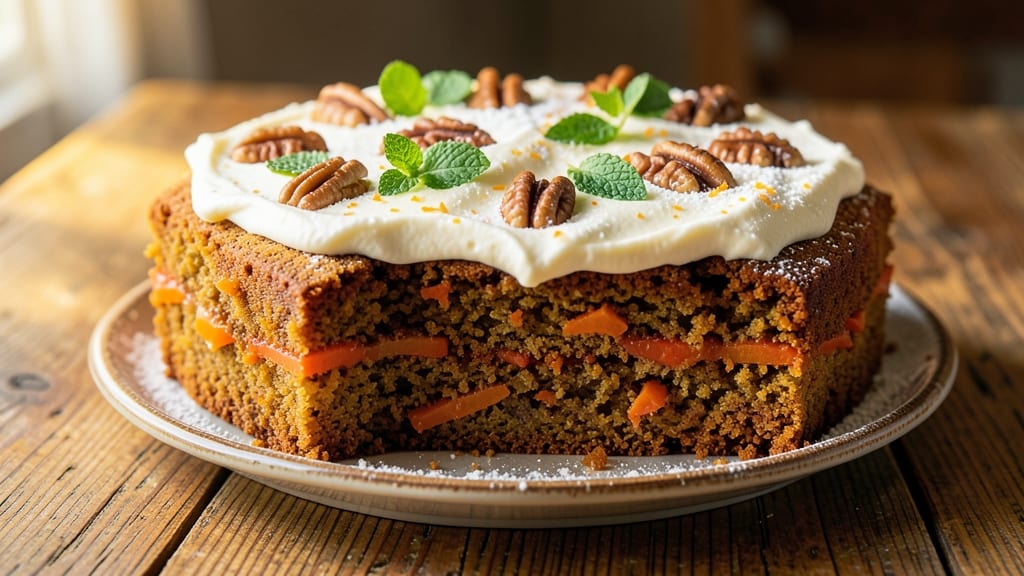
Alton Brown’s carrot cake recipe delivers moist, tender layers that stay fresh for days—no dry crumbs in sight. The secret lies in his precise spice blend and a clever mix of grated carrots and puree for that signature texture.
I’ve baked this version countless times, and it never disappoints, especially when paired with his signature cream cheese frosting. 💛
What makes this recipe stand out is the balance of wet and dry ingredients, which creates a cake that’s both rich and light. Alton’s method includes a warm spice mix that adds depth without overpowering the natural sweetness of the carrots.
The frosting, made with cream cheese and butter, adds a velvety finish that ties everything together beautifully.
By following these steps, you’ll achieve layers that are moist and perfectly spiced, with a frosting so creamy it’ll have everyone asking for seconds. The cake holds its shape while staying tender, making it ideal for celebrations or a cozy dessert at home. Let’s get baking!
This recipe works equally well as a single-layer cake or stacked layers, depending on your preference. The frosting can also be adjusted for a lighter glaze if you prefer something less rich. Trust me—once you try this version, you’ll never go back to store-bought again.
Ingredients for alton brown carrot cake
Pantry staples meet carrot magic—moist layers and velvety frosting guaranteed.
| Ingredient | Amount | Notes |
|---|---|---|
| All-Purpose Flour 🌾 | 2 ½ cups | Sifted for light texture |
| Granulated Sugar 🍚 | 1 ½ cups | White or light brown |
| Packed Brown Sugar 🍚 | ½ cup | For moisture and depth |
| Orange Zest 🍊 | 1 tbsp | Freshly grated for brightness |
| Large Eggs 🥚 | 4 whole | Room temperature preferred |
| Vegetable Oil 🫒 | ¾ cup | Light-tasting, like canola |
| Unsalted Butter 🧈 | 1 cup | Melted, full-fat for richness |
| Water 💧 | ½ cup | For carrot puree blend |
| Fresh Carrots 🥕 | 3 cups | Grated, organic preferred |
| Ground Cinnamon 🌿 | 2 tsp | Freshly ground for warmth |
| Ground Ginger 🌿 | 1 ½ tsp | Freshly ground for zing |
| Ground Nutmeg 🌿 | ½ tsp | Freshly grated for depth |
| Ground Cloves 🌿 | ¼ tsp | Lightly toasted for aroma |
| Baking Soda 🧂 | 1 ½ tsp | Fresh for proper rise |
| Salt 🧂 | ½ tsp | Kosher or sea salt |
| Vanilla Extract 🌸 | 1 tbsp | Pure, high-quality extract |
| Cream Cheese 🧀 | 16 oz | Full-fat, room temperature |
| Powdered Sugar 🍚 | 3 cups | Sifted for smooth frosting |
| Heavy Cream 🥛 | ½ cup | Cold for whipped texture |
The carrots are the star, so organic is worth it here—they’re sweeter and less gritty. I always grab the bright orange variety at Whole Foods or the regular grocery store’s fresh produce section. For the spices, Penzeys or bulk bins are your best bet—pre-ground spices lose flavor fast. The ginger and nutmeg are non-negotiable for that classic Alton Brown warmth, but if you’re short on time, a good quality spice blend works. The cream cheese? Philadelphia is the gold standard—don’t even think about the tub kind.
No fresh ginger? Ground ginger at half the amount works in a pinch. The vanilla extract can be imitation, but pure Madagascar or Tahitian makes all the difference. For the frosting, if you’re watching sugar, you can swap half the powdered sugar for confectioners’ sugar—just add a splash of milk to keep it smooth. The heavy cream can be whipped separately if you’re not using it right away—just make sure it’s cold and chilled before whipping. And if you’re feeling fancy, add a pinch of salt to the frosting for extra flavor.
This cake keeps beautifully—3-4 days in an airtight container at room temperature, or up to 1 week in the fridge. The frosting can be made 2 days ahead and stored in the fridge, then whipped back to fluffiness with a hand mixer. For serving, I like to dust the top with a little extra powdered sugar and a sprinkle of cinnamon. The layers stay moist for days, so it’s perfect for making ahead for gatherings—just bring it to room temperature before slicing.
Why You'll Love This Recipe
- No Fuss, Just Flavor: That orange zest and freshly grated carrots? The secret to why this cake tastes like a hug. The packed brown sugar keeps it moist, while the cinnamon and ginger make every bite sing—no fancy techniques, just pure comfort.
- Frosting That’s Actually Worth It: The cream cheese frosting here isn’t just sweet—it’s light and fluffy, thanks to that cold heavy cream and room-temperature cream cheese. I’ll be real: most homemade frostings are either too dense or too sweet, but this one? It’s the perfect balance, and it makes the cake feel extra special without any extra effort.
- Weekend Prep, Weeknight Win: Make the frosting two days ahead, and you’ve got zero stress on serving day. The cake itself keeps like a dream—three to four days at room temp, or even a week in the fridge. Bring it to potlucks, pack slices for lunch, or just enjoy it cold. It’s the kind of recipe that actually pays off.
- Budget-Friendly Luxury: You’re using pantry staples like flour, sugar, and butter, but the result? A showstopper. The fresh carrots and spices add depth without breaking the bank, and the frosting relies on basic ingredients that stretch far. It’s the kind of cake that makes you feel fancy without spending like it.
Step-by-step instructions for alton brown's carrot cake
Here's the method that guarantees moist layers and that signature cream cheese frosting.
👨🍳 Step 1: Make the Carrot Puree and Prepare the Cake Batter
First, let's handle the carrots. Peel and grate 3 cups fresh carrots using a box grater or food processor. Transfer the grated carrots to a clean kitchen towel and press firmly to remove excess moisture—this keeps the cake from getting soggy. In a small saucepan, combine the grated carrots with ½ cup water and cook over medium heat for 5 minutes until softened. Let cool completely.
While the carrots cook, preheat your oven to 350°F and grease two 9-inch round cake pans with 1 cup unsalted butter, reserving some for the batter. In a large mixing bowl, whisk together 2½ cups all-purpose flour, 1½ cups granulated sugar, ½ cup packed brown sugar, 2 tsp ground cinnamon, 1½ tsp ground ginger, ½ tsp ground nutmeg, ¼ tsp ground cloves, 1½ tsp baking soda, and ½ tsp salt. In a separate bowl, beat 4 large eggs until frothy, then add ¾ cup vegetable oil and 1 tbsp vanilla extract. Mix until just combined.
🥘 Step 2: Combine Wet and Dry Ingredients for Perfect Texture
Gradually add the dry ingredients to the wet ingredients, mixing just until combined—do not overmix. Fold in the cooled carrot puree and 1 tbsp orange zest until evenly distributed. The batter should be thick but pourable. Divide the batter evenly between the two prepared cake pans and smooth the tops with a spatula. Bake for 25-30 minutes or until a toothpick inserted in the center comes out clean. The cakes should spring back gently when pressed.
Here's the thing—don't open the oven during baking. The steam is what creates that moist texture, and peeking too early can cause the cakes to dry out. Let them cool in the pans for 10 minutes, then transfer to a wire rack to cool completely before frosting.
🍳 Step 3: Whip the Cream Cheese Frosting to Perfection
While the cakes cool, let's make the frosting. In a large mixing bowl, beat 16 oz cream cheese and 1 cup unsalted butter (softened) on medium speed until smooth and creamy—about 3-4 minutes. Gradually add 3 cups powdered sugar, mixing until fully incorporated. Finally, add ½ cup cold heavy cream and 1 tbsp vanilla extract, beating until light and fluffy. The frosting should hold its shape when spread—this ensures clean, professional-looking layers.
I like to add a pinch of ½ tsp salt at this stage to balance the sweetness, but only if your cream cheese wasn't already salted. Taste as you go—this is the moment that matters. If it's too thick, add ½ cup water at a time until it reaches a spreadable consistency.
🥘 Step 4: Assemble and Frost for Maximum Moisture
Once the cakes are completely cool, level the tops if needed. Place one cake layer on a serving plate and spread a generous layer of frosting on top. Place the second cake layer on top and spread the remaining frosting over the entire cake, sealing the edges. For extra moisture, I like to pipe a ring of frosting around the outer edge to create a dam that keeps the layers from drying out.
Chill the cake in the refrigerator for at least 1 hour before serving. This resting period allows the frosting to set and the flavors to meld. The result? A moist, tender carrot cake with a velvety cream cheese frosting that's the perfect balance of sweet and spiced.
Pro Tips For Making Alton Brown Carrot Cake
- Squeeze Those Carrots: I learned this the hard way—skipping the towel squeeze leaves your cake denser than a brick. Wrap the grated carrots in a clean kitchen towel and press hard to remove moisture before cooking. That 5-minute steam in the saucepan is non-negotiable for texture, but the real magic happens when you wring out the excess water first.
- Resist the Mixer: Overmixing turns your cake into a chewy wall. Once you fold in the carrot puree and orange zest, stop when the batter just comes together—lumps are fine. I used to beat it until smooth, and the result? A cake that tasted more like glue than spice. Trust the process, even if it looks uneven.
- Butter the Pans Right: Don’t just grease those pans with a paper towel—use all 1 cup of melted butter specified, rubbing it in thoroughly. The recipe calls for it for a reason: the butter creates a barrier that keeps the cakes from sticking, and it adds richness that butter spray can’t match. (Yes, even if you’re impatient like me.)
- Chill the Frosting: Whipping the frosting when the cream cheese and butter are just soft (not melted) is crucial, but the real upgrade? Chill the assembled cake for at least an hour before slicing. I used to skip this, and the frosting would slide off like a sad fondue. The wait makes the difference between a cake that holds together and one that falls apart at the seams.
Common mistakes when making your alton brown carrot cake
Overmixing the Batter
This is the #1 mistake I see—overmixing the batter turns your cake dense and tough. When you combine the dry and wet ingredients, mix just until the flour disappears. Overmixing develops gluten, which creates a chewy texture instead of the tender crumb we want.
I always stop mixing when the batter looks just combined and has a few dry spots. 💡
Skipping the Carrot Prep
Pressing out excess moisture from grated carrots is non-negotiable for a moist cake. If you skip this step, your cake will be soggy instead of tender.
After grating, squeeze the carrots through a clean kitchen towel or cheesecloth to remove all the water. Trust me, it makes a world of difference!
Opening the Oven Too Soon
The steam created during baking is what keeps your cake moist. If you open the oven before the 25-30 minutes are up, you’ll let that steam escape and risk drying out your cake.
I know it’s tempting to check for doneness, but resist the urge until the very end. The 10 minutes of cooling in the pan is crucial too!
Underbaking or Overbaking
Underbaked cake will be gummy, while overbaked cake will be dry. Use a toothpick to test doneness—it should come out with a few moist crumbs, not wet batter.
I always set my timer for 25 minutes and check at 28 minutes to be safe. Your oven temperature can vary, so keep an eye on it!
Frosting Too Soon
Frosting a cake while it’s still warm is a recipe for disaster—it’ll melt and slide right off. Let your cakes cool completely on a wire rack before frosting. I always wait until they’re totally cool to the touch. This ensures clean layers and prevents the frosting from sliding down.
Nutrition facts
Frequently asked questions
Why does Alton Brown’s recipe use both grated and cooked carrots?
The grated carrots add texture and moisture, while the cooked puree enhances sweetness and tenderness. Pressing out excess moisture from the grated carrots ensures the cake stays moist, not soggy. This two-step method creates that perfect balance of flavor and consistency.
Can I make this cake in a single layer instead of two?
This recipe works beautifully as a single 9-inch layer or a two-layer cake. Just reduce the baking time to 30-35 minutes for a single layer. The frosting will still cover it generously, and the moisture stays intact. It’s a great option for smaller gatherings!
What’s the best way to store the frosting if I’m not using it right away?
The frosting can be made up to 2 days ahead and stored in an airtight container in the fridge. Before using, let it sit at room temperature for 10-15 minutes, then whip it back to fluffiness with a hand mixer. This keeps it smooth and ready for your cake.
How do I know if my cake is done without cutting into it?
Use the toothpick test: Insert a toothpick into the center of the cake. If it comes out with a few moist crumbs but no wet batter, it’s done. The edges should also pull away slightly from the pan. Overbaking dries it out, so trust the timer and test at 28 minutes if needed.
Can I substitute any of the spices if I don’t have them on hand?
For a pinch of ginger or nutmeg, use ground versions at half the amount, but the fresh spices are ideal. If you’re missing cloves, omit them—they’re mostly for aroma. Always prioritize cinnamon and ginger for that classic carrot cake warmth.