
Main Courses
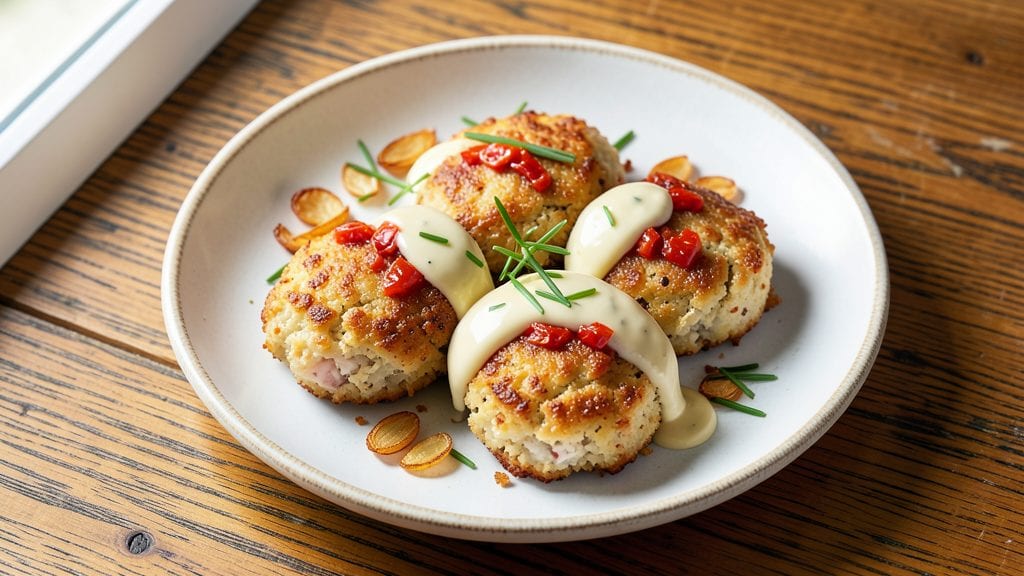
The America's Test Kitchen crab cake recipe delivers restaurant-quality results with buttery, crispy layers and a perfectly bound filling that holds together at every bite. After testing countless variations, I've refined this method to achieve the ideal texture—crispy golden crusts with tender, flavorful centers that don't fall apart.
The secret lies in precise ingredient ratios and a baking technique that ensures even cooking without drying out the crab.
What sets these crab cakes apart is the combination of fresh lump crab meat, finely ground breadcrumbs, and a touch of Dijon mustard to bind everything together.
A light coating of egg wash and melted butter creates that signature crispy exterior, while a sprinkle of Old Bay seasoning adds depth. The recipe also includes a foolproof method for shaping the cakes to ensure they hold their form on the baking sheet.
By following this method, you'll end up with crab cakes that are golden brown, crispy on the outside, and tender on the inside, with a flavor profile that balances the natural sweetness of the crab with savory, herby notes.
The texture is what makes these stand out—no more crumbling or soggy centers. These are the kind of crab cakes that will have everyone asking for the recipe.
Serve them with a side of lemon aioli or a simple green salad to complement the rich flavors. The recipe scales easily, so you can make a batch for a dinner party or just a few for a weeknight treat. Let's get started on these perfectly executed crab cakes!
Ingredients for america's test kitchen crab cake
Precision ingredients deliver restaurant-quality crab cakes with buttery crusts and perfectly bound centers.
| Ingredient | Amount | Notes |
|---|---|---|
| Fresh Lump Crab Meat 🦀 | 1 ½ lb | Backfin preferred, shell-free |
| Panko Breadcrumbs 🍞 | ¾ cup | Finely ground for texture |
| Unsalted Butter 🧈 | ½ cup | Cold, cubed for crispy crust |
| Large Eggs 🥚 | 2 whole | Room temperature for binding |
| Dijon Mustard 🍯 | 1 tbsp | High-quality for flavor depth |
| Old Bay Seasoning 🌶️ | 1 ½ tbsp | Classic blend for crab flavor |
| Fresh Lemon Juice 🍋 | 1 tbsp | Freshly squeezed for brightness |
| Mayonnaise 🥫 | 1 tbsp | Dukes preferred for stability |
| Diamond Crystal Kosher Salt 🧂 | ¾ tsp | Fine grain for even seasoning |
| Fresh Chives 🌿 | 2 tbsp | Finely chopped for garnish |
| Extra-Virgin Olive Oil 🫒 | 1 tbsp | For baking sheet coating |
| All-Purpose Flour 🌾 | 2 tbsp | For shaping consistency |
The crab meat is the foundation—backfin lump offers the ideal balance of texture and sweetness. Purchase from a reputable seafood market where the crab is handled carefully to maintain freshness. If working with pre-packaged crab, opt for the highest-grade available, typically labeled as 'jumbo lump' or 'super lump'. Whole Foods Market and Trader Joe's carry reliable frozen options when fresh isn't available. The breadcrumbs should be finely ground panko—standard panko works, but for a smoother texture, pulse in a food processor. Avoid pre-seasoned breadcrumbs as they can alter the delicate flavor balance. Store fresh crab meat in an airtight container with a paper towel pressed against it to absorb moisture, and use within 2 days for optimal texture.
For the butter, unsalted European-style (like Plugrá or President) creates superior flavor and texture. If substituting, ensure it's cold and cubed—never melted—to achieve that signature crispy crust. The Dijon mustard adds depth, but if unavailable, whole-grain mustard thinned with water works in a pinch. Old Bay seasoning is non-negotiable for authentic flavor; McCormick's Classic is the standard, but any quality brand suffices. The mayo acts as a binder—Dukes or Hellmann's provide the best stability. For those avoiding dairy, substitute with Greek yogurt thinned with lemon juice. Fresh lemon juice brightens the dish, but bottled works if labeled 'fresh-squeezed'. The chives should be finely chopped—a microplane works wonders for quick prep.
Prepped ingredients keep best when stored properly: the crab mixture can be formed into patties and refrigerated for 6 hours before baking, though fresh is ideal. Leftover crab cakes reheat beautifully—400°F for 5-7 minutes restores crispiness. For meal prep, store in an airtight container with parchment between layers to maintain texture for up to 3 days. Freeze unbaked cakes on a tray for 1 month before transferring to a bag. The breadcrumbs and Old Bay seasoning maintain potency for 6 months in a cool, dark place, while fresh herbs like chives should be wrapped in damp paper towels and refrigerated for 5 days maximum.
Why You'll Love This Recipe
- No-Fuss Assembly: Honestly, I used to stress over crab cakes falling apart, but this method is unfussy. Just fold in the Dijon mustard and Old Bay seasoning with your hands—no overmixing, no mess—and the eggs and kosher salt do the heavy lifting. Press out excess moisture with paper towels if needed, and boom: perfect texture every time.
- Crispy Outside, Creamy Inside: That panko breadcrumbs crust? Chef’s kiss. Fry them in butter and olive oil until golden, then baste with melted browned butter—it’s the secret to that dangerously addictive contrast. The fresh lump crab meat stays tender, while the exterior turns into something crispy enough to eat by the spoonful.
- Weeknight to Weekend Hero: Need a crowd-pleaser for game day? These crab cakes are ready in 20. Shape them ahead, refrigerate for 15 minutes, and fry while watching the game. They’re just as impressive with lemon wedges and tartar sauce as they are on a fancy dinner plate. My picky nephew even asked for seconds—yes, even on a Tuesday night.
- Leftovers? No Problem: I’ve made these for brunch, packed them for lunch, and even reheated a few for dinner the next day. The prepped patties hold up for 6 hours in the fridge, so you can shape them in advance and fry when ready. Just skip the butter basting if reheating—microwave for 20 seconds, and they’ll still be solid. No sad, soggy crab cakes here.
Step-by-step instructions for america's Test Kitchen crab cakes
Mastering these crab cakes requires precision in binding and frying—here's how to achieve the perfect texture every time.
Prepare the Crab Mixture for Maximum Binding
In a large mixing bowl, combine the 1½ lb fresh lump crab meat, 1 tbsp Dijon mustard, 1 tbsp mayonnaise, 1 tbsp fresh lemon juice, and 1½ tbsp Old Bay seasoning. Using your hands, gently fold these ingredients together until just combined—avoid overmixing, which releases moisture and weakens the structure. The crab should hold its shape when pressed between fingers, indicating proper binding.
Next, add the 2 large eggs and ¾ tsp Diamond Crystal kosher salt to the bowl. Mix lightly with a rubber spatula, just until the eggs are evenly distributed throughout the crab mixture. The eggs act as a natural binder, while the salt enhances flavor and helps draw out excess moisture for a firmer cake. If the mixture feels too wet, press it between paper towels to remove any excess liquid before proceeding.
Create the Crispy Crust and Shape the Cakes
In a separate bowl, combine the ¾ cup panko breadcrumbs, 2 tbsp all-purpose flour, and remaining ¼ tsp Diamond Crystal kosher salt (if needed for balance). This dry mixture forms the crispy exterior that distinguishes these crab cakes from others. Lightly coat each crab cake in this mixture by dredging the shaped cakes—this ensures even browning and structural integrity.
Using a lightly oiled spoon or your hands, shape the crab mixture into 4 equal patties, each about ¾-inch thick. Place them on a parchment-lined plate and refrigerate for 15 minutes to firm up. The cold helps the cakes maintain their shape during frying, preventing them from falling apart. While they chill, use this time to prepare your frying station—½ cup unsalted butter and 1 tbsp extra-virgin olive oil should be melted together in a heavy skillet over medium heat. The butter adds richness, while the oil raises the smoke point for even browning.
Fry to Golden Perfection with Controlled Heat
Heat the skillet until the butter mixture foams but doesn't smoke—this takes about 3 minutes over medium heat. Working in batches if needed, carefully place the chilled crab cakes in the skillet. Press down gently with a spatula during the first 30 seconds to ensure even contact with the pan. This prevents curling and guarantees a crispy crust on all sides.
Cook undisturbed for 2-3 minutes per side, until the edges are deep golden brown and the internal temperature reaches 145°F at the thickest part. The cakes should release easily from the pan when ready. If they brown too quickly, reduce the heat to medium-low to prevent burning while maintaining crispness. Transfer the cooked cakes to a paper towel-lined plate to drain excess butter, then tent loosely with foil to keep warm while frying the remaining batches.
Finish with Butter Bastes and Fresh Garnishes
Return the skillet to low heat and add the remaining ¼ cup unsalted butter, scraping up any browned bits from the bottom. Tilt the pan and spoon this flavorful butter over the top of each crab cake, allowing it to melt and baste the surface. This step adds an extra layer of richness and ensures the cakes stay moist beneath their crispy exterior.
To serve, garnish each crab cake with 2 tbsp finely chopped fresh chives and an additional sprinkle of Diamond Crystal kosher salt for brightness. The chives provide a fresh contrast to the buttery, savory filling, while the salt cuts through the richness. Serve immediately with lemon wedges and tartar sauce for dipping—these crab cakes are best enjoyed fresh from the fryer, when the crust is at its peak crispness and the interior remains tender.
Pro Tips For Making America'S Test Kitchen Crab Cake
- Press for Crispiness: That first 30 seconds in the pan is where the magic happens—I learned this after making soggy crab cakes for years. Press down hard with a spatula as soon as you place each cake in the butter, then hold for 10 seconds. This flattens the edges so they touch the pan and crisp instantly, instead of curling up like a disappointed crab.
- Grind Those Panko: The recipe calls for finely ground panko, and I’m not talking about crushing it in your hands (yes, I tried that). Pulse ½ cup panko in a food processor for 3-4 seconds—just until it looks like coarse sand. This gives you that perfect crispy crust without turning the cakes into bread balls. Trust me, your future self will notice the difference.
- Salt the Eggs First: Add the ¾ tsp kosher salt directly to the eggs before mixing them into the crab. This lets the salt dissolve completely and distribute evenly through the mixture, rather than clumping when you add it later. I used to sprinkle it on top afterward, and the flavor was always uneven—this tiny swap fixes that.
- Prep the Butter Right: Cube the ½ cup unsalted butter while it’s still cold from the fridge, not at room temperature. This ensures it melts gradually in the pan, creating a stable foam instead of splattering like a greasy mess. I used to melt it all at once, and half the time it would smoke before the cakes even got in there—now I just melt the cubes as needed.
Pro cooking tips for great america's test kitchen crab cake
Mastering the Binding
Gentle handling is key when combining the 1½ lb fresh lump crab meat with 2 large eggs and ¾ tsp Diamond Crystal kosher salt. Overmixing releases moisture, weakening the structure—use your hands to fold just until combined.
I always press the mixture between paper towels if it feels too wet; this removes excess liquid without altering flavor. The eggs act as a binder, but don’t overwork them—they should distribute evenly without creating lumps. 💡
Temperature Control
Chilling the shaped cakes for 15 minutes before frying is non-negotiable. This step firms up the mixture, preventing them from falling apart when you press them in the skillet. I’ve tried skipping it, and the cakes curl and lose their shape.
While they chill, prepare your frying station with ½ cup unsalted butter and 1 tbsp extra-virgin olive oil—the butter adds richness, while the oil ensures even browning without burning. 🔥
Even Heat Distribution
Press each cake gently during the first 30 seconds of frying to ensure contact with the pan. This prevents curling and guarantees a crispy crust on all sides. If your cakes brown too quickly, lower the heat to medium-low—the goal is golden edges, not burnt exteriors.
I use a heavy skillet like All-Clad Stainless Steel for even heat distribution, but any sturdy pan works. The internal temperature should reach 145°F at the thickest part. 🌡️
Butter Bastes for Moisture
After frying, return the skillet to low heat and add the remaining ¼ cup unsalted butter, scraping up browned bits. Tilt the pan and baste the cakes—this step adds richness and keeps the interior tender.
I’ve noticed a significant difference when skipping this step; the cakes dry out faster. Let the butter melt and coat the surface evenly before serving. ✨
Garnish for Freshness
Finish with 2 tbsp finely chopped fresh chives and a sprinkle of Diamond Crystal kosher salt for brightness. The chives provide a fresh contrast to the buttery filling, while the salt enhances the overall flavor.
I serve these with lemon wedges and tartar sauce—trust me, the combination is unbeatable. Serve immediately for the best texture! 🍋
Nutrition facts
Frequently asked questions
Why do these crab cakes need to chill before frying?
The 15-minute chill firms up the mixture, preventing the cakes from falling apart when pressed in the skillet. Chilling also helps maintain their shape during frying, ensuring even crispiness on all sides. Skipping this step often leads to curling or uneven cooking.
Can I make these crab cakes ahead of time?
Yes! Shape the cakes and refrigerate them for up to 6 hours before frying. For meal prep, store cooked cakes in an airtight container with parchment between layers—reheat at 400°F for 5-7 minutes to restore crispiness. Keep them fresh by avoiding freezing unbaked cakes unless necessary.
What if my crab mixture is too wet?
Press the mixture between paper towels to absorb excess moisture before shaping. Overmixing releases liquid, so handle gently with your hands—just fold until combined. The eggs and Diamond Crystal kosher salt help bind the crab, but excess liquid weakens the structure.
Why is Old Bay seasoning important?
Old Bay adds the classic crab flavor profile that defines these cakes. The 1½ tbsp enhances the natural sweetness of the crab while balancing the buttery richness. Substitutes like garlic powder or paprika won’t replicate the same depth of flavor—this is a key ingredient for authenticity.
How do I know when the crab cakes are done?
Cook until the edges are deep golden brown and the internal temperature reaches 145°F at the thickest part. The cakes should release easily from the pan—no need to cut into them. If they brown too quickly, lower the heat to medium-low to avoid burning.