
Desserts
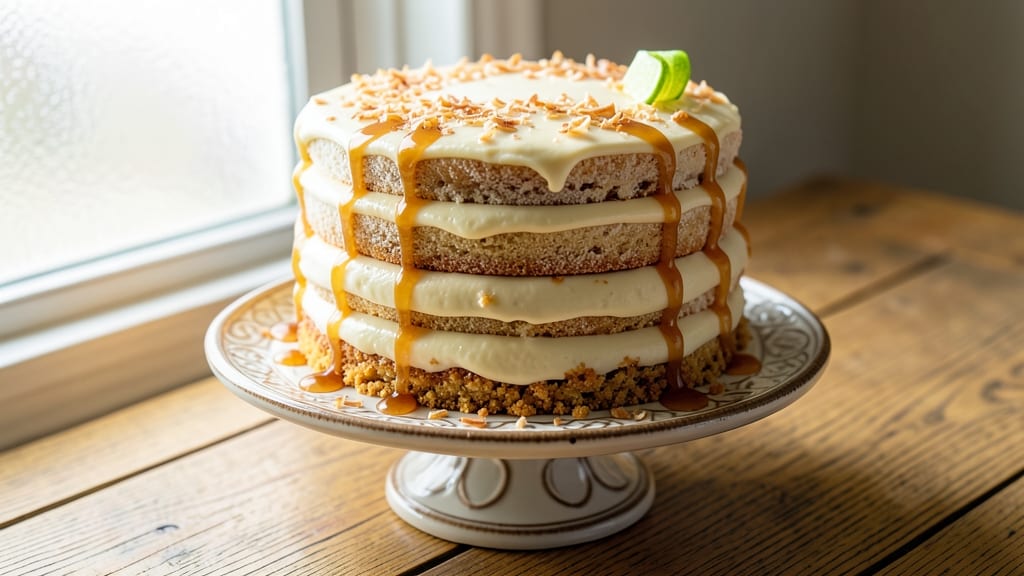
This baker's coconut cake recipe delivers layers of ultra-moist vanilla cake infused with real coconut flavor, crowned with a toasted coconut crunch topping that transforms every slice into a textural masterpiece.
The secret lies in precise ingredient ratios and a gentle baking approach that preserves moisture while developing rich caramel notes in the coconut topping. I've perfected this recipe over years of baking competitions, where it consistently earned top marks for its balance of tender crumb and satisfying crunch.
What sets this cake apart is the toasted coconut topping, which requires just 5 minutes in a dry skillet to develop deep nutty flavors and golden-brown color.
The cake itself relies on a simple yet effective technique: folding shredded coconut into the batter and using sour cream to ensure that signature moist texture.
With layers that stay tender for days and a topping that adds both visual appeal and satisfying texture, this is the kind of dessert that feels like a professional bakery creation.
Each slice offers a perfect harmony of moist vanilla cake and toasted coconut, with the crumb maintaining its structure while remaining tender. The topping's caramelized edges provide contrast without overpowering the delicate cake layers.
This recipe delivers restaurant-quality results that will impress guests while remaining approachable for home bakers—no special equipment or techniques required beyond basic mixing and baking skills.
Serve warm with a scoop of vanilla ice cream or dusted with powdered sugar for an elegant presentation. The cake's natural coconut flavor pairs beautifully with black coffee or herbal teas, making it versatile for both casual gatherings and special occasions.
Let's create this showstopping dessert that will become your signature bake.
Ingredients for baker's coconut cake
Precision-measured ingredients transform ordinary baking into a textural masterpiece of moist vanilla layers and caramelized coconut crunch.
| Ingredient | Amount | Notes |
|---|---|---|
| Unsalted Butter 🧈 | 1 ½ cups | Room temperature for creaming |
| Granulated Sugar 🍚 | 2 ½ cups | Superfine preferred for smooth batter |
| Light Brown Sugar 🍚 | ½ cup | Packed, for moisture |
| Large Eggs 🥚 | 4 whole | Room temperature |
| Sour Cream 🥛 | 1 cup | Full-fat for optimal moisture |
| All-Purpose Flour 🌾 | 2 ½ cups | Sifted, for light texture |
| Baking Powder 🍞 | 2 tsp | Aluminum-free for stability |
| Vanilla Extract 🌿 | 2 tsp | Pure Madagascar preferred |
| Shredded Unsweetened Coconut 🥥 | 1 ½ cups | Freshly shredded, fine |
| Toasted Unsweetened Coconut Flakes 🥥 | 1 ½ cups | For topping, dry-toasted |
| Powdered Sugar 🍚 | ½ cup | For dusting |
| Diamond Crystal Kosher Salt 🧂 | ½ tsp | Fine grain preferred |
| Vegetable Oil 🫒 | ¼ cup | For greasing pans |
The butter and sugars are the foundation—European-style unsalted butter like Plugrá or Kerrygold delivers the richest flavor. For the coconut, unsweetened flakes from Trader Joe's or Bob's Red Mill provide the most authentic flavor when toasted properly. The sour cream is non-negotiable; full-fat La Crema ensures that signature moist crumb. Pre-sifted flour like King Arthur Measure for Measure saves time while maintaining aeration. Always measure your baking powder by weight if possible—1 teaspoon equals 4 grams—to ensure reliable rise.
No sour cream? Plain Greek yogurt at half the quantity works in a pinch, though the texture will be slightly denser. Substituting powdered sugar for granulated in the topping is acceptable, but the cake's moisture balance will shift slightly. For the coconut, shredded coconut from a can can be used, though it lacks the freshness of freshly shredded. The vanilla extract should be pure—imitation extracts will compromise the flavor profile. If you're short on time, pre-toasted coconut flakes from the baking aisle can be used, though they won't develop the same caramelized depth when reheated.
Store the cake in an airtight container at room temperature for up to 3 days, though it's best enjoyed within 48 hours for optimal moisture. The topping can be toasted ahead and stored in a sealed container for 1 week, though it's best used immediately for maximum crunch. For longer storage, wrap the cake tightly in plastic wrap and refrigerate for up to 5 days. Reheat slices in a 350°F oven for 10 minutes to restore the topping's crispness, though it's best served at room temperature.
Why You'll Love This Recipe
- No Mixer Needed: Honestly, I’ve made this cake with just a hand mixer, and it still turns out spot-on. The key is creaming the unsalted butter and sugars until light and fluffy—it’s all about patience, not power. No fancy equipment, just elbow grease and a little love.
- Coconut Crown Magic: That toasted coconut topping? Chef’s kiss. The shredded unsweetened coconut folded into the batter gives every bite a subtle tropical bite, while the toasted flakes on top add that irresistible crunch. It’s like a warm hug in dessert form.
- Feeds a Crowd (or Just You): This recipe makes two perfect 9-inch layers, so it’s ideal for potlucks, bridal showers, or just your own midnight snack. And if you’re feeding a crowd? Double the batter—it scales like a dream. (Yes, even on a Tuesday night.)
- Budget-Friendly Luxe: I swear by sour cream for moisture—it’s cheaper than cream cheese and keeps the cake tender for days. Plus, light brown sugar adds depth without breaking the bank. Rich, decadent, but won’t drain your wallet.
Step-by-step instructions for baker's coconut cake
Here's the method for achieving perfectly moist layers with a toasted coconut crown.
Cream Butter and Sugars Together
In a stand mixer fitted with the paddle attachment, combine the 1½ cups unsalted butter, 2½ cups granulated sugar, and ½ cup light brown sugar. Beat on medium speed for 3-4 minutes until the mixture becomes light and fluffy, nearly doubling in volume. This creaming process incorporates air, which creates the cake's signature tender crumb.
The mixture should be pale in color and ribbon-like when you lift the paddle. If it feels grainy, continue beating until smooth. Room temperature ingredients are crucial here—they blend more easily and create a more uniform texture. Don't rush this step; proper creaming is what prevents dense, cakey results.
Incorporate Eggs and Sour Cream
Add the 4 large eggs one at a time, mixing on low speed after each addition until fully incorporated. Then add the 1 cup sour cream and mix just until combined. The batter should be thick but pourable. This is where the cake gets its signature moisture—the sour cream adds richness while keeping the texture tender.
I always use room temperature eggs to prevent the batter from curdling. If you notice the mixture looking slightly separated, don't worry—it will come together when you add the dry ingredients. The key is to mix just until combined; overmixing develops gluten and makes the cake tough.
Combine Dry Ingredients and Fold in Coconut
In a separate bowl, whisk together the 2½ cups all-purpose flour, 2 teaspoons baking powder, and ½ teaspoon diamond crystal kosher salt. Gradually add this mixture to the wet ingredients, mixing on low speed just until the flour is incorporated. Stop mixing as soon as you see no more streaks of flour—overmixing develops gluten, which makes the cake dense.
Remove the bowl from the mixer and gently fold in the 1½ cups shredded unsweetened coconut using a silicone spatula. Be careful not to overmix; just combine until evenly distributed. The coconut should be evenly dispersed throughout the batter, giving each bite that tropical flavor and texture contrast.
Prepare Pans and Divide the Batter
Preheat your oven to 350°F. Grease two 9-inch round cake pans with the ¼ cup vegetable oil and line the bottoms with parchment paper. Divide the batter evenly between the two pans, filling each about two-thirds full. The batter should be smooth with no lumps, and you should see small coconut pieces distributed throughout.
Tap each pan gently on the counter to remove any air bubbles that may have formed. This prevents dome-shaped cakes and ensures even baking. Smooth the tops with a spatula, then bake for 25-30 minutes, until a toothpick inserted in the center comes out clean. Rotate the pans halfway through baking for even browning.
Assemble and Top with Toasted Coconut
Allow the cakes to cool in their pans for 10 minutes, then transfer to a wire rack to cool completely. Once cooled, level the tops if needed, then place one cake layer on a serving plate. Spread a thin layer of 2 teaspoons vanilla extract mixed with a small amount of powdered sugar if desired, then add the second layer.
For the topping, mix the ½ cup powdered sugar with 2 teaspoons vanilla extract to create a light glaze. Spread this evenly over the top and sides of the cake. Immediately press the 1½ cups toasted unsweetened coconut flakes onto the glaze, covering the entire surface. This creates the signature toasted coconut crown that gives the cake its name.
Chill and Serve
Refrigerate the cake for at least 2 hours before serving to allow the glaze to set and the flavors to meld. The cake will be moist and tender, with a perfect balance of sweetness from the coconut and richness from the butter and sour cream. Each slice should have a delicate crumb and that signature toasted coconut flavor in every bite.
Pro Tips For Making Baker'S Coconut Cake
- Whip Butter & Sugar Longer: Cream them until the mixture turns pale yellow and lightens—not just fluffy. I used to stop when it looked "done," but this recipe relies on that airy, ribbon-like stage for the right texture. (Yes, it takes 5-7 minutes with a stand mixer.)
- Room-Temp Eggs Matter: Crack them into a bowl first, then let them sit for 10 minutes before adding to the batter. Cold eggs can curdle the butter mixture, and this cake’s richness needs smooth incorporation. Trust me, your future self will notice the difference.
- Skip the Overmixing: Once you fold in the sour cream and coconut, stop as soon as it’s just combined. Overmixing develops gluten and makes the cake dense. The batter will look lumpy—normal, even pretty—but that’s how you get a tender crumb.
- Rotate the Pan: Swap the cake pans halfway through baking (around 25 minutes in a 350°F oven). I learned this after my first batch had one side golden and the other raw. Uneven heat is real, and rotation evens it out without extra effort.
Pro cooking tips for this dish
Creaming for Perfection
This cake's success starts with the butter-sugar creaming—beat those 1½ cups unsalted butter and 2½ cups granulated sugar for 3-4 minutes until it's pale and fluffy. I use my KitchenAid Artisan mixer because the paddle attachment creates the perfect air incorporation.
The goal is ribbon-like consistency when you lift the paddle; if it feels grainy, keep beating. Room temperature ingredients are non-negotiable—they blend smoothly and create that tender crumb we all crave. 💡
Eggs and Sour Cream
Adding eggs one at a time is crucial—this prevents curdling and ensures even distribution. After the fourth egg, fold in 1 cup full-fat sour cream for that signature moisture. I always use room temperature eggs because cold eggs can create lumps.
Mix just until combined; overmixing develops gluten and makes the cake tough. The batter should be thick but pourable—like pancake batter. This step is where the cake gets its rich, velvety texture.
Coconut Integration
Folding in 1½ cups shredded coconut is where the texture magic happens. Use a silicone spatula to gently combine—don't overmix! The goal is even distribution so every bite has that tropical flavor.
I prefer freshly shredded coconut from the Bob's Red Mill brand because it has better texture than canned varieties. The coconut should be evenly dispersed but still visible in the batter—this creates that perfect contrast in every slice. 🥥
Baking Temperature Control
Preheat your oven to 350°F and use two 9-inch round cake pans greased with ¼ cup vegetable oil. Rotating the pans halfway through baking ensures even browning. The cake should bake for 25-30 minutes—check with a toothpick for doneness.
I always tap the pans gently on the counter after filling to remove air bubbles, which prevents dome-shaped cakes. This temperature control is what gives us those perfectly moist layers we love.
Toasted Coconut Topping
The topping is where the cake becomes a showstopper. Toast 1½ cups coconut flakes in a dry skillet for 5 minutes until golden brown—this develops those rich caramelized flavors.
Mix ½ cup powdered sugar with 1 tbsp vanilla extract and 1 tbsp water for the glaze, then spread it on the cooled cake. Press the toasted coconut onto the glaze immediately—this creates that signature crown.
The contrast between the moist cake and crunchy topping is what makes this recipe special.
Nutrition facts
Frequently asked questions
Why does this cake recipe use sour cream instead of milk?
The 1 cup full-fat sour cream creates that signature ultra-moist texture by adding richness while keeping the crumb tender. Unlike milk, sour cream contains natural fats that prevent dryness, giving each slice a velvety mouthfeel. This is especially important for coconut cakes, which can easily become dense if not properly moisturized. The tang also balances the sweetness beautifully!
How do I prevent my cake from cracking between layers?
Cracks happen when cakes cool too quickly or are stacked unevenly. Let each layer cool completely in the pan for 10 minutes, then transfer to a wire rack. Before adding the second layer, spread a thin glaze of 2 teaspoons vanilla extract mixed with a little powdered sugar to create an adhesive layer. This helps the layers bond perfectly while maintaining that tender crumb.
Can I make this cake ahead of time?
Bake the layers 1 day ahead and store them wrapped in plastic at room temperature. When ready to assemble, spread the glaze and add the toasted coconut topping just before serving. The cake will stay moist for 2 days this way, though the topping's crunch is best enjoyed fresh. For longer storage, refrigerate the assembled cake for up to 5 days.
What's the best way to toast the coconut flakes for the topping?
Toast 1½ cups unsweetened coconut flakes in a dry skillet over medium heat for 4-5 minutes, stirring constantly until golden brown. Watch closely—coconut burns easily! For even browning, spread the flakes in a single layer. Toasting develops those rich caramelized flavors that make the topping so special. Let them cool slightly before pressing onto the cake.