
Appetizers
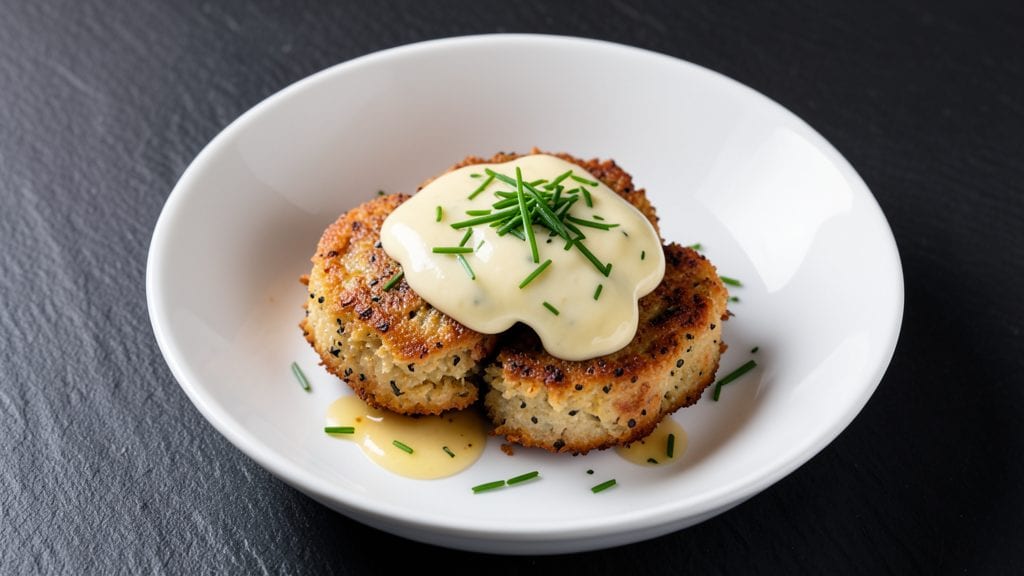
Bobby Flay's crab cakes recipe delivers the perfect balance of crispy shells and juicy centers that rival any seafood restaurant. I've recreated his signature technique after years of perfecting the art—starting with high-quality crab meat and a precise mix of breadcrumbs for that golden crust.
The secret lies in chilling the mixture before forming the cakes, ensuring they hold together without falling apart when seared.
What sets these crab cakes apart is Flay's method of double-searing: first in the oven to set the shape, then in a screaming-hot pan to achieve that restaurant-worthy crust. The combination of Dijon mustard, Old Bay seasoning, and fresh herbs adds depth without overpowering the delicate crab flavor.
This isn't just another crab cake recipe—it's a foolproof technique that transforms simple ingredients into something extraordinary.
By the time you serve them with lemon wedges and tartar sauce, you'll have crab cakes that are crispy on the outside, tender and flavorful within, and impossible to resist.
The aroma alone will have everyone gathered around your table, anticipating that first bite. This recipe delivers professional results with just a few key techniques and quality ingredients.
Whether you're hosting a dinner party or simply craving seafood night, these crab cakes will become your new signature dish. The best part? They're easier to make than you might think—once you know the secrets.
Let's get started on creating crab cakes that taste like they came straight from Bobby Flay's kitchen.
Ingredients for bobby flay crab cake
High-quality seafood and a few key techniques transform simple ingredients into restaurant-style crab cakes.
| Ingredient | Amount | Notes |
|---|---|---|
| Lump Crab Meat 🦀 | 1 ½ lb | Backfin or claw meat preferred |
| Panko Breadcrumbs 🍞 | 1 cup | Japanese-style for extra crunch |
| Mayonnaise 🥫 | ¼ cup | Dijon-infused preferred |
| Fresh Lemon Juice 🍋 | 2 tbsp | From 1 medium lemon |
| Old Bay Seasoning 🌶️ | 1 tbsp | Classic blend for signature flavor |
| Fresh Chives 🌿 | 2 tbsp | Finely chopped for garnish |
| Fresh Parsley 🌿 | 2 tbsp | Finely chopped for freshness |
| Extra-Virgin Olive Oil 🫒 | 2 tbsp | For pan searing |
| Unsalted Butter 🧈 | 2 tbsp | For oven preheating |
| Large Eggs 🥚 | 1 whole | Lightly beaten for binding |
| Dijon Mustard 🍯 | 1 tsp | For depth of flavor |
| Sea Salt 🧂 | ½ tsp | Kosher preferred for seasoning |
| Ground Black Pepper 🌶️ | ¼ tsp | Freshly ground for texture |
| Vegetable Oil 🫒 | ½ cup | For frying (high smoke point) |
The crab meat makes or breaks these crab cakes. Backfin or claw meat is ideal—it holds together better than imitation blends. Look for fresh, pre-picked lump crab meat at specialty seafood markets like Whole Foods or Trader Joe's, where it's typically sold in 16-ounce containers. If you can't find lump, a mix of lump and claw works too, but avoid anything with fillers or additives. The meat should be bright white and slightly moist, not gray or dry. For the best results, keep it refrigerated until ready to use, and pat it dry with paper towels before mixing to ensure a crispy crust.
No lump crab meat? High-quality imitation crab (like Crown Prince) works in a pinch, though it won't have the same texture. The Old Bay seasoning is non-negotiable—it's the signature flavor of Bobby Flay's version. If you can't find it, a mix of celery salt, paprika, and black pepper can mimic it, but it won't be the same. For the breadcrumbs, Japanese-style panko is a must—it's lighter and crunchier than regular breadcrumbs, which helps create that perfect golden crust. If you're out of panko, crush plain bread into fine crumbs and toast them in the oven for 5 minutes to dry them out. The Dijon mustard adds a subtle tang that balances the sweetness of the crab, so don't skip it—it's what elevates these from basic to extraordinary.
Once mixed, the crab cake batter needs to chill for at least 30 minutes before forming patties—this ensures they hold together when searing. Store any unused batter in an airtight container in the fridge for up to 2 days, or freeze for 1 month by portioning into small containers. The cooked crab cakes reheat beautifully in a 350°F oven for 10-12 minutes, covered with foil to keep them moist. For serving, keep them warm in a 200°F oven while you finish the rest of the meal. The crust loses its crispiness quickly, so serve them immediately after searing for that restaurant-quality bite.
Why You'll Love This Recipe
- No-Fuss Assembly: I mix everything in my hands—no fancy gadgets—just the 1.5 lb lump crab meat, that ¼ cup Dijon-infused mayo, and a splash of lemon juice. The panko breadcrumbs come next, and honestly? It’s that simple. No measuring madness, just toss and press. The chilled egg binds it all together, and boom—ready to shape in under 10 minutes.
- Old Bay Magic: The 1 tbsp Old Bay seasoning isn’t just a sprinkle; it’s the secret sauce. That blend of spices—paprika, celery salt, black pepper—turns these crab cakes into something almost like a seafood comfort hug. And the lemon juice? It brightens the richness of the mayo and crab, keeping it from tasting too heavy. Trust me, the flavor balance is spot-on.
- Weeknight Hero: These crab cakes reheat like a dream—just pop them in the oven at 350°F for 10-12 minutes, covered in foil, and they’re back to crispy perfection. Need to meal prep? The batter keeps for 2 days in the fridge, or freeze portions for up to a month. Perfect for when you’re craving seafood but don’t want to spend an hour in the kitchen. (Yes, even on a Tuesday night.)
- Budget-Friendly Luxury: You’d think lump crab meat and panko would break the bank, but here’s the thing: a little goes a long way. That 1.5 lb batch makes four generous cakes, and they’re so satisfying, you won’t feel like you’re skimping. Plus, the Old Bay and lemon juice are pantry staples—no extra cost, just pure flavor. It’s the kind of dish that makes you feel fancy without the fancy price tag.
Step-by-step instructions for Bobby Flay's crab cakes
Here's how to craft golden-brown crab cakes with a perfect balance of crunch and tenderness.
Prepare the Crab Cake Mixture
In a large mixing bowl, combine the 1½ lb lump crab meat with the ¼ cup mayonnaise, 2 tbsp fresh lemon juice, 1 tsp Dijon mustard, ½ tsp sea salt, and ¼ tsp ground black pepper. Use your hands to gently mix until fully incorporated—this ensures even distribution of flavors without breaking down the crab meat.
Next, fold in the 1 cup panko breadcrumbs and 1 tbsp Old Bay seasoning. The panko should absorb the moisture slightly, creating a cohesive but not wet mixture. If the mixture feels too dry, add 1 tbsp fresh lemon juice to help bind it. The texture should resemble wet sand—moist enough to hold together but not sticky.
Bind and Chill the Mixture
In a separate small bowl, lightly beat the 1 large egg until just combined. Add the egg to the crab mixture and gently fold until fully incorporated. The egg acts as a binder, helping the crab cakes maintain their shape during cooking. Avoid overmixing—just enough to combine everything evenly.
Cover the bowl with plastic wrap and refrigerate for at least 30 minutes (up to 2 hours). Chilling firms up the mixture, making it easier to handle and ensuring a more compact cake when cooked. This step also allows the flavors to meld, resulting in a more cohesive taste.
Form and Pan-Fry the Crab Cakes
Heat ½ cup vegetable oil in a large skillet over medium heat until it reaches 350°F—just before it starts to shimmer. Divide the chilled crab mixture into 4 equal portions (about 4 oz each) and gently shape them into ½-inch thick patties, pressing firmly to ensure they hold together. The edges should be slightly thicker than the centers to prevent cracking.
Carefully add the crab cakes to the skillet, being mindful not to overcrowd. Cook for 3-4 minutes per side until the bottoms are golden brown and crispy, and the internal temperature reaches 145°F. The oil should sizzle gently, indicating the right heat level. If the oil smokes excessively, reduce the heat slightly to maintain a steady temperature.
Finish with Butter and Garnish
Remove the crab cakes from the skillet and transfer them to a paper towel-lined plate to drain any excess oil. Reduce the heat to low and add the 2 tbsp unsalted butter and 2 tbsp extra-virgin olive oil to the skillet. Let the butter melt and foam for 1 minute, then carefully spoon the butter mixture over the crab cakes, basting both sides for 30 seconds. This step adds richness and enhances the crispy texture.
Garnish each crab cake with 2 tbsp fresh chives and 2 tbsp fresh parsley, pressing them gently into the top. Serve immediately while the crust is still crisp and the centers remain juicy. The basting ensures a glossy finish and deepens the flavor, while the herbs add a fresh contrast to the savory crab.
Pro Tips For Making Bobby Flay Crab Cake
- Prep the Crab First: Drain the 1.5 lb lump crab meat thoroughly before mixing—even the fanciest backfin or claw meat hides moisture. I used to skip this, and my cakes turned soggy. Pat it dry with paper towels, and you’ll get that perfect "wet sand" texture the recipe wants.
- Don’t Rush the Chill: The 30-minute (up to 2-hour) fridge rest isn’t optional. I learned this the hard way—skipping it makes shaping messy and frying a nightmare. Cover the bowl tightly, and let the mixture firm up. Your future self will thank you when the cakes hold together.
- Oil at 350°F—Not Guessing: Use a thermometer for the ½ cup vegetable oil—medium heat isn’t precise enough. Too hot, and the panko burns before the center cooks; too cool, and you’ll end up with greasy, pale cakes. That 145°F internal temp is your golden rule.
- Thick Edges, Thin Center: When shaping, press the edges of each ½-inch thick patty slightly thicker than the middle. I used to make them uniform, but the edges crack and fall apart. This trick keeps them intact while frying—just like Bobby’s.
Storing and reheating this dish
Refrigerator Storage
Keep any leftover crab cake batter in an airtight container in your fridge for up to 2 days. I use glass Pyrex containers with snap-on lids—they keep flavors fresh and prevent drying out.
If storing longer than a day, pat the mixture dry with a paper towel before sealing to avoid soggy breadcrumbs. This method preserves the texture perfectly for quick last-minute cooking. ❄️
Freezer Prep
For longer storage, freeze the batter in small silicone molds or portion it into freezer-safe bags (about 4 oz per portion). Flatten the portions slightly to save space. Wrap each portion tightly in plastic wrap before sealing the bag to prevent freezer burn.
Frozen batter keeps for up to 1 month—just thaw overnight in the fridge before shaping. I always label my freezer bags with the date!
Cooked Cakes Reheating
The best way to reheat cooked crab cakes is in a 350°F oven for 10-12 minutes, covered with foil. This maintains their juiciness without making the crust soggy. If reheating in a skillet, use low heat with 1 tsp vegetable oil to prevent sticking.
Avoid the microwave—it turns crispy crusts into rubbery messes. Serve immediately after reheating for that restaurant-quality texture. 🔥
Serving Temperature
Keep cooked crab cakes warm in a 200°F oven while you finish plating the rest of your meal. This prevents them from getting cold or losing their crispness.
If you're serving them as part of a larger spread, I recommend cooking them just before serving—these cakes are best enjoyed fresh out of the pan. The warmth enhances the flavors and ensures that first bite is always perfect.
Leftovers Strategy
If you have leftovers, store them in airtight containers and reheat gently in the oven. For extra crispiness, place them on a wire rack in the oven to allow air circulation. I also like to add a splash of lemon juice when reheating to refresh the flavors.
These crab cakes hold up surprisingly well—just don't let them sit at room temperature for more than 2 hours to maintain safety. 💡
Nutrition facts
Frequently asked questions
Why does Bobby Flay's recipe call for chilling the crab cake mixture?
Chilling the mixture for at least 30 minutes firms up the texture, making it easier to shape into perfect patties without falling apart. This step also lets flavors meld together, creating a more cohesive taste and ensuring your crab cakes hold their shape beautifully during cooking.
Can I use imitation crab instead of lump crab meat?
Yes, but the texture will differ slightly. High-quality imitation crab like Crown Prince works in a pinch, though it won't have the same delicate bite as lump crab. The Old Bay seasoning and Dijon mustard will still enhance the flavor, but expect a slightly different mouthfeel. For best results, stick with Backfin or claw meat if possible.
What if my crab cake batter is too wet or too dry?
If it's too wet, add 1 tbsp panko breadcrumbs to absorb moisture. If it's too dry, mix in 1 tbsp fresh lemon juice to bind everything together. The ideal texture should resemble wet sand—moist but not sticky. Adjust gradually until you reach the perfect consistency.
How do I keep my crab cakes crispy after cooking?
Serve them immediately after cooking for that perfect crispy crust. If you need to hold them, keep them warm in a 200°F oven on a wire rack to maintain crispiness. Avoid stacking them directly on plates, which can make them soggy. For leftovers, reheat in a 350°F oven covered with foil.
Can I make these crab cakes ahead of time?
You can prepare the batter up to 2 days ahead and store it in an airtight container. For longer storage, freeze the batter in portions for up to 1 month. Just thaw overnight in the fridge before shaping. Cooking them fresh is ideal, but this method works great for busy nights!