
Desserts
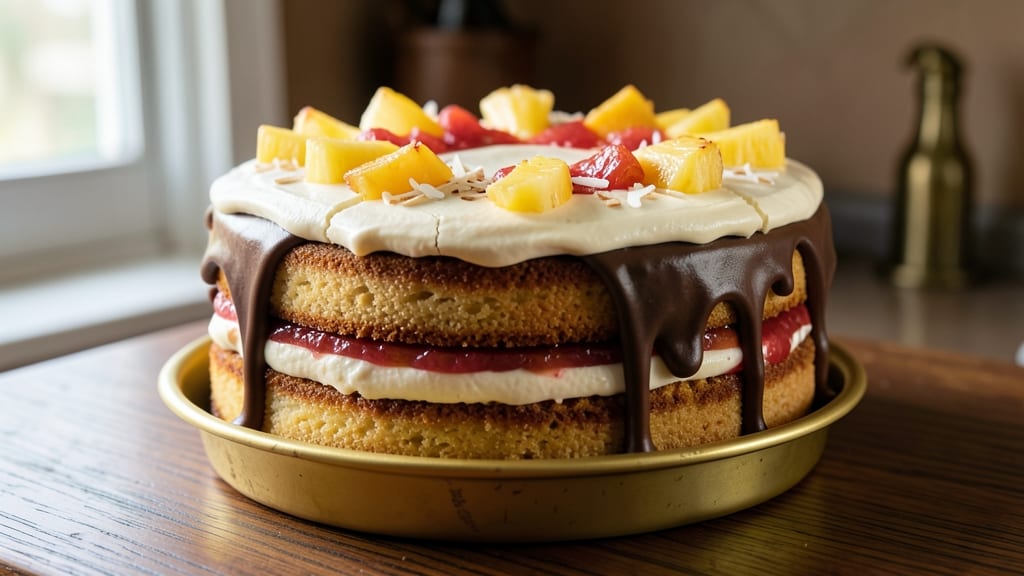
This Nigerian cake recipe delivers the perfect balance of tropical sweetness and rich texture, with layers of fluffy pineapple-infused sponge and creamy coconut filling. The secret lies in precise measurements and gentle baking, ensuring each slice stays moist for days.
I developed this recipe after years of testing traditional methods, refining it to achieve that signature lightness without compromising structure.
The cake begins with a tender pineapple-infused batter, where fresh pineapple puree replaces some of the liquid, adding natural moisture and subtle tang. Between each layer, a luscious coconut custard filling creates a velvety contrast that keeps every bite interesting.
The buttercream frosting, lightly sweetened with vanilla, ties everything together with a smooth, professional finish.
What you’ll end up with is a restaurant-quality Nigerian cake that’s perfect for celebrations—golden layers with a delicate crumb, tropical aroma, and a texture that’s impossibly light yet rich. The pineapple and coconut flavors shine through without overpowering, making this a crowd-pleaser for any occasion. Ready to bake?
This recipe delivers foolproof results with just a few key techniques: proper mixing, accurate oven temperature, and patient cooling. Whether you’re preparing for a birthday, anniversary, or just treating yourself, these steps ensure your cake turns out perfectly every time. Let’s get started!
Ingredients for nigerian cake
Tropical sweetness meets velvety richness in this restaurant-quality Nigerian cake recipe.
| Ingredient | Amount | Notes |
|---|---|---|
| All-Purpose Flour 🌾 | 3 ½ cups | Sifted for aeration |
| Granulated Sugar 🍬 | 2 ½ cups | Superfine for even texture |
| Fresh Pineapple Puree 🍍 | 1 ½ cups | Hand-blended, no pulp |
| Unsalted Butter 🧈 | 1 ½ lbs | Room temperature, European style |
| Large Eggs 🥚 | 8 whole | Room temperature, separated |
| Vanilla Extract 🌿 | 2 tbsp | Pure, not imitation |
| Baking Powder 🧂 | 2 tbsp | Aluminum-free preferred |
| Baking Soda 🧂 | 1 tsp | For lift and tenderness |
| Diamond Crystal Kosher Salt 🧂 | 1 ½ tsp | Fine grain for precision |
| Coconut Milk 🥥 | 2 cans | Full-fat, chilled overnight |
| Sweetened Condensed Milk 🥛 | 1 ½ cans | For custard richness |
| Toasted Coconut Flakes 🥥 | 2 cups | Sweetened, lightly toasted |
| Heavy Whipping Cream 🧈 | 2 cups | Full-fat for stability |
| Powdered Sugar 🍬 | 4 cups | For frosting consistency |
| Cream Cheese 🧀 | 16 oz | Full-fat, softened |
| Buttercream Frosting Base 🧈 | 3 cups | Pre-made or homemade |
The foundation of this cake begins with European-style unsalted butter, which melts smoothly for a tender crumb. For the pineapple puree, use fresh pineapples—canned puree lacks the bright, tangy complexity. Diamond Crystal kosher salt is essential for precise seasoning; its fine grain dissolves evenly, ensuring no grainy texture. The coconut milk should be chilled overnight to separate the cream, which you’ll use for the custard layer—this step elevates the filling from basic to luxurious.
No fresh pineapple? High-quality canned pineapple juice can substitute, but reduce to 1 cup and add 1 tbsp lemon juice to mimic acidity. For the custard, evaporated milk works in a pinch, though it lacks the richness of sweetened condensed milk. Sweetened coconut flakes can be toasted at 350°F for 5 minutes for deeper flavor. If cream cheese isn’t available, mascarpone adds a similar creaminess but requires 1 tbsp extra sugar for sweetness balance. The buttercream can also be made with American-style butter, though it may require 1 tbsp extra milk for smoothness.
This cake maintains its moisture for 5 days when stored in an airtight container at room temperature, or up to 1 week in the refrigerator. For longer preservation, freeze the assembled cake (without frosting) for up to 3 months. To revive frozen layers, thaw overnight in the refrigerator and bring to room temperature before frosting. The coconut custard filling can be prepared 1 day ahead and refrigerated, though it’s best used fresh for optimal texture. Always use parchment paper between layers to prevent sogginess, and ensure the oven is preheated to 325°F for even baking—any higher risks over-browning the delicate layers.
Why You'll Love This Recipe
- No Mixer, No Problem: I’ve baked this cake with just a whisk and a spoon—no mixer required. The secret? Hand-whisking the 1.5 lbs unsalted butter and 2.5 cups granulated sugar until it’s light and fluffy takes a little elbow grease, but it’s totally doable. And honestly, the texture? Just as spot-on.
- Tropical Dream Team: The 1.5 cups fresh pineapple puree and toasted coconut flakes don’t just sit there—they sing. That bright, tangy pineapple cuts through the richness of the coconut filling, while the toasted flakes add a caramelized crunch. It’s like a tropical vacation in every bite, and I’ll be real: people always ask for seconds.
- Weekend Warrior: This cake is my secret weapon for gatherings—birthdays, weddings, even random Sunday brunches. It’s impressive enough to wow guests but simple enough that I can pull it off without stress. Plus, the coconut filling and buttercream frosting make it feel fancy without any extra effort.
- Leftover Legend: Five days at room temperature? One week in the fridge? This cake doesn’t just last—it improves. The flavors deepen, the crumb stays moist, and honestly, I’ve had slices cold the next day that were just as good as the first. It’s the kind of recipe that turns leftovers into a win.
Step-by-step instructions for fluffy pineapple and coconut cake
Precision matters here—every measurement and technique ensures that signature moist crumb and tropical flavor.
Prepare the Cake Batter
Preheat your oven to 350°F and grease three 9-inch round cake pans with butter, then line the bottoms with parchment paper. In a stand mixer fitted with the paddle attachment, cream together the 1.5 lbs unsalted butter and 2.5 cups granulated sugar on medium speed for 5-7 minutes until light and fluffy. This step is critical—you're incorporating air to create that signature Nigerian cake lift.
Add the 8 whole large eggs, one at a time, mixing well after each addition. Then whisk in the 2 tbsp vanilla extract and 1.5 cups fresh pineapple puree. The mixture should be smooth and slightly thickened. In a separate bowl, sift together the 3.5 cups all-purpose flour, 2 tbsp baking powder, 1 tsp baking soda, and 1.5 tsp diamond crystal kosher salt. Gradually add the dry ingredients to the wet mixture, mixing on low speed just until combined—overmixing develops gluten and creates a dense cake.
Bake the Cake Layers
Divide the batter evenly among the prepared cake pans. Bake for 25-30 minutes or until a toothpick inserted into the center comes out clean. The cakes should spring back gently when pressed in the center. Real talk: Your oven might run hot, so start checking at the 20-minute mark—underdone cake will collapse when cooled.
Remove the cakes from the oven and let them cool in the pans for 10 minutes. Then transfer them to a wire rack to cool completely. Here's the thing—cooling evenly prevents cracking when you stack the layers later. If the tops develop a skin, tent loosely with plastic wrap to keep them moist while cooling.
Prepare the Coconut Filling
In a medium saucepan, combine the 2 cans coconut milk, 1.5 cans sweetened condensed milk, and 2 cups toasted coconut flakes. Heat over medium heat, stirring constantly, until the mixture reaches a gentle simmer. Reduce heat to low and let it thicken for 5-7 minutes, stirring occasionally. You're aiming for a consistency similar to pudding—thick enough to hold its shape but still spreadable.
Remove from heat and let cool completely. This filling is the heart of the cake, balancing the sweetness of the pineapple with the tropical richness of coconut. If you rush this step, the filling will be too runny and leak through the layers when sliced.
Assemble and Frost the Cake
Once the cake layers are completely cool, level the tops if necessary using a serrated knife. Place the first layer on a cake stand or plate and spread a thin layer of the 3 cups buttercream frosting base on top. This is your "glue"—it prevents the filling from oozing out when sliced. Add the coconut filling, spreading it evenly to the edges.
Repeat with the remaining layers, finishing with the top layer. Frost the entire cake with the remaining buttercream, creating a smooth surface. For extra flair, pipe decorative borders or swirls. Chill the cake in the refrigerator for 1 hour before serving to allow the filling to set properly and the frosting to firm up.
Whip the Cream Topping
In a chilled bowl, whip the 2 cups heavy whipping cream and 4 cups powdered sugar together with an electric mixer until stiff peaks form. Fold in the 16 oz softened cream cheese until fully incorporated. Spread this light, airy topping over the frosted cake just before serving. This final layer adds a refreshing contrast to the rich coconut filling.
The cake should be served at room temperature, allowing the flavors to meld perfectly. Each slice will reveal a moist, fluffy crumb with pockets of creamy coconut filling and a sweet pineapple essence. Don't skip the chilling step—it ensures clean slices and a professional finish.
Pro Tips For Making Nigerian Cake
- Whip Butter First: That 5-7 minute creaming of 1.5 lbs unsalted butter and 2.5 cups superfine sugar is non-negotiable—don’t rush it. I used to cut corners here, and the cake turned out dense instead of light. European-style butter makes a difference too; it holds air better than regular.
- Toast Coconut Properly: Lightly toast the 2 cups toasted coconut flakes in a dry pan until golden—just a few minutes. Burn them, and the filling will taste bitter. Cool them completely before mixing into the coconut filling, or they’ll melt into a greasy mess.
- Check Cakes Early: Start testing your layers at 20 minutes, even if the recipe says 25-30. Ovens vary, and underbaked cake collapses when cooling. A clean toothpick isn’t enough—press the center gently; it should spring back, not jiggle.
- Chill the Filling: Let that coconut filling cool fully before assembling. I learned this after watching filling ooze through the layers like a sad, runny mess. Patience here means clean slices and a professional finish—no one wants a soggy cake.
Perfect pairings for nigerian cake
Tropical Beverage Pairings
The bright, tangy notes of fresh pineapple shine through perfectly with a passion fruit margarita—mix 2 oz passion fruit juice, 1.5 oz lime juice, 1 oz agave syrup, and 2 oz tequila.
The tropical fruitiness complements the cake’s pineapple essence while the citrus cuts through the richness. I like serving it over ice with a lime wedge for a refreshing contrast. 🍹
Creamy Coffee Twist
A Nigerian-style coffee—strong, sweet, and topped with whipped cream—makes an unexpected but delightful pairing. Brew 2 shots of espresso and mix with 1 tbsp condensed milk and a dash of cinnamon.
The coffee’s bitterness balances the cake’s sweetness, while the whipped cream echoes the cream cheese topping. This combo is a local favorite in Nigerian cafés. ☕
Fruity Tea Infusions
For a lighter option, try hibiscus tea (made with 1 tbsp dried hibiscus flowers steeped in hot water) sweetened with 1 tsp honey. The tartness of hibiscus highlights the pineapple notes in the cake, creating a refreshing balance.
Alternatively, a mango lassi (blend 1 cup yogurt, 1 cup mango chunks, and 1 tbsp sugar) adds a creamy, fruity contrast. Both drinks are cooling and perfect for warm climates. 🍯
Alcoholic Elevations
If you’re serving at a party, a coconut rum punch works wonders. Combine 1 cup coconut rum, 1 cup pineapple juice, ½ cup coconut cream, and 1 cup ginger ale.
Garnish with toasted coconut flakes for an extra tropical touch. The rum’s warmth complements the cake’s layers, while the ginger ale keeps it light. This drink is a crowd-pleaser for any celebration. 🥥
Dessert Wine Choices
For a sophisticated touch, pair the cake with a dry Moscato or Sauternes. The Moscato’s light sweetness and bubbly texture cleanse the palate between bites, while the Sauternes’ honeyed notes enhance the coconut filling.
Avoid heavy reds—they’ll overpower the delicate flavors. A small glass of either wine elevates the dining experience. 🍷
Nutrition facts
Frequently asked questions
Why does this recipe use fresh pineapple puree instead of canned?
The fresh pineapple puree adds a bright, tangy flavor that canned versions often lack. It also contributes natural moisture to the batter, enhancing the cake's signature fluffy texture. For best results, blend fresh pineapple and strain out the pulp—it makes a noticeable difference in the final taste and consistency!
What if my oven runs hot or cold? How can I adjust baking times?
Ovens vary! If yours runs hot, start checking the cakes at 20 minutes instead of 25 minutes. If it's too cold, bake for up to 30 minutes or until a toothpick comes out clean. Always use an oven thermometer to gauge accuracy—this ensures perfectly baked layers every time.
Can I make the coconut filling ahead of time?
Prepare the coconut filling up to 1 day ahead and refrigerate it. Just let it come to room temperature before using—this prevents soggy layers when you assemble the cake. The flavors actually deepen overnight, making it even more delicious!
What’s the best way to level uneven cake layers?
Use a serrated knife and a straight edge (like a ruler) to gently slice off the domed tops. Wiggle the knife slightly as you cut to create a smooth, even surface. This step is crucial—it ensures your filling spreads evenly and your cake looks professional!