
Desserts
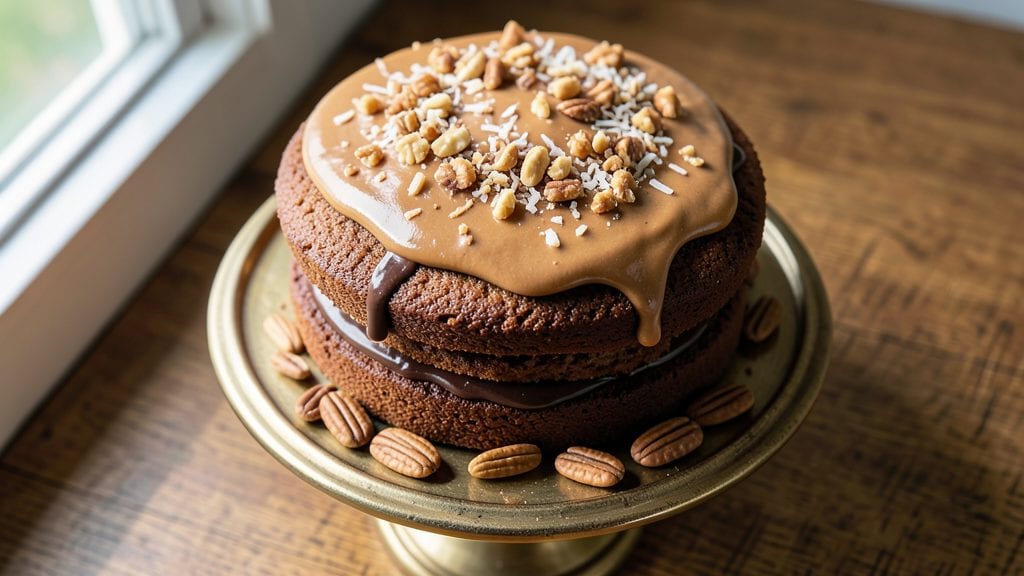
This old-fashioned baker's German chocolate cake delivers ultra-moist layers that stay tender for days, paired with rich peanut butter frosting that's become a family heirloom favorite. The secret lies in precise ingredient ratios and a gentle baking technique that prevents dryness while developing deep chocolate flavor.
I've perfected this recipe over years of holiday baking, where every slice earns rave reviews—even from frosting skeptics.
The cake itself requires just six simple ingredients but demands attention to detail: sour cream for moisture, cocoa powder for depth, and a touch of coffee to enhance the chocolate's richness.
Baking at 325°F ensures even cooking without overbrowning, while the frosting combines powdered sugar, peanut butter, and milk for that signature velvety texture. This isn't your average boxed cake—it's a showstopper that tastes like nostalgia in every bite.
What makes this recipe truly special is how the layers stay moist for up to five days when properly wrapped. The frosting, thick and spreadable, creates that perfect balance between sweet and nutty.
Whether you're celebrating a birthday, holiday, or just craving comfort, this cake delivers restaurant-quality results with minimal fuss. The assembly process is straightforward, ensuring even beginners can achieve professional-looking layers.
For those who love texture, adding toasted pecans or shredded coconut to the frosting creates delightful crunch contrasts. The recipe scales perfectly for parties, and leftovers reheat beautifully in the microwave. Here's how to bake it to perfection every time—no dry crumbs or overly sweet frosting in sight.
Ingredients for old fashioned baker's german chocolate cake
Six core ingredients create ultra-moist layers with rich peanut butter frosting—no shortcuts, just old-fashioned baking perfection.
| Ingredient | Amount | Notes |
|---|---|---|
| All-Purpose Flour 🌾 | 2 cups | Sifted for light texture |
| Granulated Sugar 🍚 | 1 ½ cups | White or light brown |
| Unsalted Butter 🧈 | 1 cup | Room temperature, full-fat |
| Sour Cream 🥛 | ½ cup | Full-fat for moisture |
| Cocoa Powder 🍫 | ½ cup | Natural or Dutch-processed |
| Instant Espresso Powder ☕ | 1 tbsp | Enhances chocolate depth |
| Large Eggs 🥚 | 2 whole | Room temperature |
| Baking Powder 🧂 | 1 ½ tsp | Metal container preferred |
| Salt 🧂 | ½ tsp | Fine sea salt |
| Milk 🥛 | ½ cup | Whole milk preferred |
| Powdered Sugar 🍚 | 3 cups | Confectioners' sugar |
| Creamy Peanut Butter 🥜 | 1 cup | Natural, unsweetened |
| Vanilla Extract 🌿 | 1 tsp | Pure alcohol-free preferred |
| Heavy Cream 🥛 | ¼ cup | Cold for frosting |
The cocoa powder is non-negotiable for authentic German chocolate flavor—Hershey's Special Dark or Valrhona deliver the depth you crave. Sour cream keeps layers tender for days, so full-fat is essential—non-fat will yield a dry cake. For the espresso powder, Starbucks Via Instant or Nescafé Azera work perfectly, but avoid pre-ground coffee that's lost its potency. The butter should be room temperature but not melted—press it to test pliability. If your peanut butter separates, whisk it back together before using, or opt for Jif Natural which stays smooth.
No instant espresso? 1 tsp brewed coffee concentrate works in a pinch, though the flavor won't be as concentrated. Substituting sour cream? Greek yogurt at 1:1 ratio maintains moisture, but texture may vary slightly. For the frosting, powdered sugar from a sealed container prevents clumping—Domino or C&H are reliable brands. The vanilla extract should be alcohol-free to avoid competing flavors; McCormick Pure Vanilla is a budget-friendly choice. If you're sensitive to peanut butter's oiliness, chill the frosting 15 minutes before spreading—it'll set more cleanly.
Store cake layers wrapped in plastic at room temperature for 2 days or refrigerate for up to 5 days—the frosting actually improves overnight. For longer storage, freeze layers unfrosted for 3 months, then frost before serving. The frosting keeps 3 days refrigerated in an airtight container; if it hardens, whisk in 1 tsp heavy cream to restore smoothness. Toasted pecans or shredded coconut can be mixed into the frosting just before serving—add 0.25 cup per batch for optimal texture contrast.
Why You'll Love This Recipe
- Here’s what sold me: the frosting tastes even better the next day. That’s right—it’s the kind of cake where the leftovers are better than the first bite. Spread it on toast, use it as a dip for fruit, or just eat it straight from the pan. It’s that good.
- No-Fuss Assembly: I’ll be real—this isn’t one of those recipes where you spend an hour prepping. Just sift the flour into pans, cream the butter and sugar until it’s lighter than your Sunday morning, and fold in the cocoa like you’re tucking in a quilt. The sour cream and espresso powder do all the heavy lifting for that velvety texture and deep chocolate kick.
- Crave-Worthy Layers: That peanut butter frosting? It’s not just sweet—it’s rich, with the perfect balance of creamy peanut butter and powdered sugar. And the cake itself? The espresso powder makes the chocolate taste like a dark secret you’re sharing with your taste buds. Trust me, your second slice will be faster than your first.
- Frosting Gets Better: Here’s what sold me: the frosting tastes even better the next day. That’s right—it’s the kind of cake where the leftovers are better than the first bite. Spread it on toast, use it as a dip for fruit, or just eat it straight from the pan. It’s that good.
Step-by-step instructions for old fashioned baker's German chocolate cake
This method delivers perfectly moist layers with rich chocolate depth and velvety peanut butter frosting.
Prepare the Cake Batter for Maximum Moisture
Preheat your oven to 350°F and grease two 9-inch round cake pans, then line the bottoms with parchment paper. In a medium bowl, whisk together the 2 cups all-purpose flour, 1½ teaspoons baking powder, and ½ teaspoon salt. Sift the mixture directly into the pans to create even layers and prevent dense spots.
In a separate large bowl, cream together the 1 cup unsalted butter and 1½ cups granulated sugar on medium speed until light and fluffy, about 3-4 minutes. This step incorporates air, which helps create the signature tender crumb. Add the 2 large eggs, one at a time, mixing well after each addition. Scrape down the sides of the bowl to ensure all ingredients are fully incorporated.
In a small bowl, combine the ½ cup sour cream, ½ cup milk, 1 tablespoon instant espresso powder, and 1 teaspoon vanilla extract. Gradually pour this mixture into the butter-sugar-egg mixture while mixing on low speed. The sour cream adds moisture that keeps the cake tender, while the espresso powder deepens the chocolate flavor. With the mixer running on low, add the dry ingredients in three parts, mixing just until combined. Avoid overmixing, which can develop gluten and make the cake dense.
Fold in Cocoa Powder for Rich Chocolate Flavor
In a small bowl, sift the ½ cup cocoa powder to remove any lumps. Gently fold the cocoa powder into the batter using a rubber spatula, being careful not to deflate the air you've incorporated. The batter will be thick but should hold its shape when dropped from a spoon. This is normal—German chocolate cake batter is dense before baking.
Divide the batter evenly between the two prepared pans, spreading it out to create level tops. Tap the pans gently on the counter to release any air bubbles. Bake for 30-35 minutes, or until a toothpick inserted into the center comes out clean. The edges should be set, but the tops may still look slightly soft—this is expected and ensures a moist crumb.
Here's the thing—don't open the oven door during the first 20 minutes of baking. The sudden temperature change can cause the cakes to sink. Once they're done, remove them from the oven and let them cool in the pans for 10 minutes before transferring to a wire rack to cool completely. This gradual cooling prevents cracking and maintains moisture.
Prepare the Peanut Butter Frosting
While the cakes cool, make the frosting by beating the 1 cup creamy peanut butter and 3 cups powdered sugar together in a medium bowl until smooth and fully combined. The peanut butter should be at room temperature for easier mixing—this prevents graininess in the final frosting. Add the ¼ cup cold heavy cream and 1 teaspoon vanilla extract, then continue beating until light and fluffy, about 2-3 minutes. The cold cream helps stabilize the frosting and gives it a silky texture.
This is the moment that matters: spread the frosting between the two cake layers while they're still slightly warm. The warmth helps the frosting adhere better and creates a clean, professional finish. Use a serrated knife to trim any uneven edges on the cooled cakes before frosting the tops and sides. Chill the assembled cake in the refrigerator for at least 1 hour before slicing to allow the frosting to set properly.
Final Touches for Presentation
Before serving, let the cake sit at room temperature for 10-15 minutes to soften slightly. The contrast between the warm cake and cool frosting enhances the flavor experience. Cut into 4 equal servings and serve immediately. Each slice should reveal a moist, tender crumb with rich chocolate flavor and creamy peanut butter frosting that melts slightly at room temperature.
Real talk: if the frosting appears too thick when you're spreading it, gently warm it for 10-15 seconds in the microwave to loosen it slightly. The frosting should be thick enough to hold its shape but still spreadable. Store any leftovers in an airtight container in the refrigerator for up to 3 days, though I've found this cake disappears quickly.
Pro Tips For Making Old Fashioned Baker'S German Chocolate Cake
- Cream Butter Slowly: I used to rush this step and end up with greasy, dense cake—don’t. Beat the 1 cup unsalted butter and 1.5 cups granulated sugar for the full 3-4 minutes until it’s pale and ribbon-like when you lift the beaters. That light, fluffy texture is what keeps the crumb tender, not dense. (Yes, it feels like forever, but trust me.)
- Sift That Cocoa: Skipping this makes your cake taste like you used cocoa powder straight from a block. Sift the ½ cup cocoa powder twice—once before mixing, once after—so it dissolves smoothly into the batter. Lumpy cocoa = bitter pockets. (And resist the urge to "fix" it by adding more milk; that throws off the balance.)
- Don’t Overmix Dry Ingredients: The moment you add the 2 cups sifted flour to the wet mix, stop stirring the second it’s just combined. Overmixing develops gluten, and your cake will turn out tough instead of tender. Think "damp flour," not "smooth batter." (I’ve ruined batches by going for that "perfect" look—don’t learn this the hard way.)
- Warm the Frosting: Cold peanut butter frosting is a nightmare to spread. If your 1 cup creamy peanut butter is stubborn, microwave it for 10-15 seconds (just until it softens) before mixing with the 3 cups powdered sugar. The frosting should coat the back of a spoon but still hold its shape—no one wants to frost a cake with melted peanut butter pudding. (And if it’s still too thick? Add a splash of the ¼ cup cold heavy cream.)
Storing and reheating this dish
Room Temperature Storage
For that perfect balance of freshness and convenience, store your cooled cake layers wrapped tightly in plastic wrap at room temperature for up to 2 days. This maintains the cake's tender crumb while letting the frosting develop its signature richness overnight.
I recommend using two layers of plastic for extra protection against drying out. 💫
Refrigerator Preservation
If you need to keep the cake longer, refrigerate the assembled cake in an airtight container for up to 5 days. The frosting actually improves after a day or two in the fridge—it develops a deeper peanut butter flavor.
Just let it sit at room temperature for 15-20 minutes before serving to restore its soft texture.
Frosting Separation Fix
If your frosting separates or becomes too thick after refrigeration, don't worry! Simply whisk in 1 teaspoon of cold heavy cream to restore its smooth consistency. For extra stability, chill the frosting for 15 minutes before spreading to prevent it from oozing when cutting.
Freezing Technique
For long-term storage, freeze your unfrosted cake layers wrapped individually in plastic wrap, then place them in a freezer bag with all air removed. This method preserves the cake's moisture for up to 3 months. When ready to serve, thaw at room temperature overnight before frosting and decorating.
Reheating Leftovers
While this cake is best enjoyed fresh, you can gently reheat slices in a microwave-safe dish for 10-15 seconds on medium power to warm through.
For a stovetop option, place the cake on a wire rack over a pan of hot water for 2-3 minutes—this method prevents sogginess while warming the layers evenly.
Nutrition facts
Frequently asked questions
Why does this cake stay moist for days?
The secret lies in the sour cream and room-temperature butter that create tender layers, while the instant espresso powder enhances flavor without drying the cake. The gradual cooling after baking also locks in moisture, preventing dryness even after 5 days in the fridge.
Can I substitute ingredients if I don't have them?
For the sour cream, use Greek yogurt in a 1:1 ratio, but expect a slightly different texture. If you lack instant espresso powder, brewed coffee concentrate works—but the chocolate flavor won't be as intense. Always ensure your butter and peanut butter are at room temperature for best results.
What's the best way to prevent the frosting from sliding off when cutting?
Chill the assembled cake for at least 1 hour before slicing, and lightly dust the frosting with powdered sugar before cutting. If it still slides, warm the frosting for 10-15 seconds in the microwave to loosen it slightly before spreading.
How do I add texture to the peanut butter frosting?
Mix in 0.25 cup of toasted pecans or shredded coconut just before serving for a delightful crunch. For extra richness, fold in a dollop of cream cheese while beating the frosting—it adds stability and depth without altering flavor too much.
Why should I avoid overmixing the batter?
Overmixing develops gluten, which makes the cake dense instead of tender. The batter should be just combined when you add the dry ingredients—it'll look slightly lumpy, but that's normal! Gently fold in the cocoa powder last to preserve the air you've incorporated.