
Side Dishes
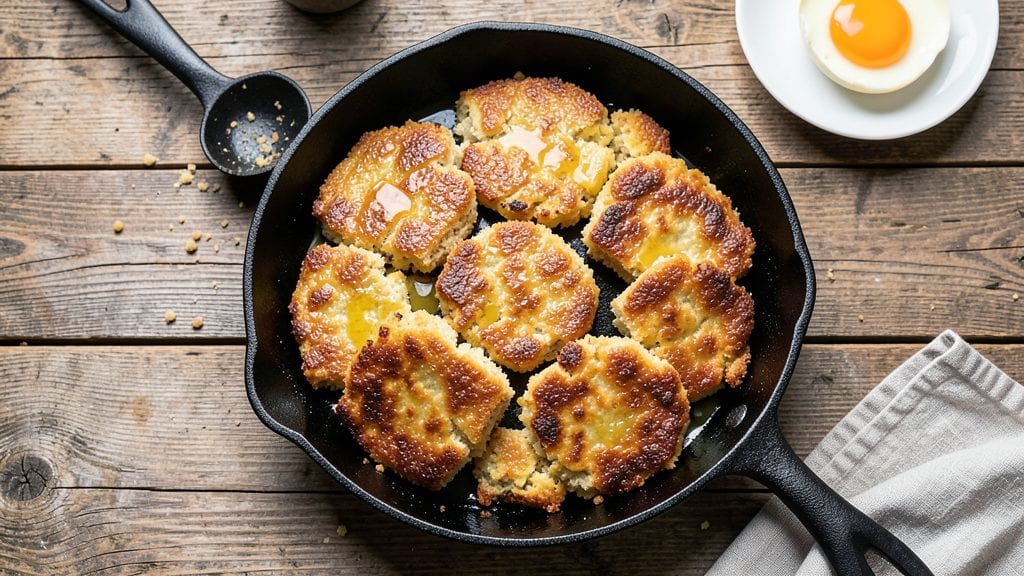
This old-fashioned corn cakes recipe delivers the golden, buttery griddle cakes that bring Southern comfort to your table with every bite. The secret lies in balancing cornmeal for texture and flour for structure, creating tender yet slightly crisp edges that soak up butter like a dream.
I’ve perfected this version over years of testing, ensuring the cakes rise just enough to stay light while developing that classic buttery crunch.
The beauty of these corn cakes is their versatility—they’re equally at home as a breakfast side with crispy bacon or as a sweet treat drizzled with honey.
What makes them special is the simplicity: just a handful of pantry staples and 350°F heat transform them from dough to golden perfection in minutes. The key is patience in mixing and letting the batter rest, which prevents dense cakes and guarantees that satisfying crunch.
By the time you’re done, you’ll have a stack of warm, buttery corn cakes with edges that stay crisp even after cooling. The aroma alone—warm cornmeal mingling with melted butter—will have everyone at the table reaching for seconds.
This is the kind of recipe that feels like a hug from your grandma’s kitchen, but with a foolproof method that works every time.
Serve them alongside fried chicken for a classic Southern meal or top with powdered sugar for a sweet breakfast. The possibilities are endless, but the technique remains the same: golden, buttery, and impossible to resist. Let’s get started on making these a staple in your home.
Ingredients for old fashioned corn cakes
Golden crunch meets buttery tenderness—just these pantry staples transform into Southern comfort.
| Ingredient | Amount | Notes |
|---|---|---|
| Fine Cornmeal 🌽 | 1 ½ cups | Stone-ground preferred for texture |
| All-Purpose Flour 🌾 | ½ cup | For structure and lightness |
| Large Eggs 🥚 | 2 whole | Room temperature for even baking |
| Unsalted Butter 🧈 | ½ cup | Melted, not softened |
| Whole Milk 🥛 | 1 cup | Full-fat for richness |
| Granulated Sugar 🍬 | 1 tbsp | Balances sweetness naturally |
| Baking Powder 🧂 | 2 tsp | Double-acting for lift |
| Salt 🧂 | ½ tsp | Kosher or sea salt |
| Vegetable Oil 🫒 | ½ cup | For griddle prep |
| Powdered Sugar 🍬 | ¼ cup | For serving, optional |
The cornmeal is everything here. Stone-ground gives you that authentic Southern texture—regular cornmeal won’t cut it. I always grab mine from King Arthur Flour or the bulk section at Whole Foods—it’s worth the extra few cents. The baking powder matters too. Double-acting brands like Rumford ensure those cakes rise properly, not just from the first contact with liquid. Pro tip: measure your cornmeal and flour by spooning and leveling—no packing! And if you’ve got a mix with cornmeal already, skip the extra flour—just add a pinch more baking powder to compensate.
No whole milk? Buttermilk plus a splash of vinegar works in a pinch, but the richness of real milk is unmatched. Want to skip the sugar? Maple syrup at half the amount adds depth without sweetness. The butter needs to be melted but not hot—microwave 40 seconds to just melt it. For the oil, any neutral kind works, but avocado oil gives a subtle nuttiness that pairs well. And if you’re worried about the cakes sticking, butter the griddle well—trust me on this.
These cakes reheat beautifully—5 minutes at 350°F brings back that golden crust. Store them wrapped in a clean towel at room temp for 2 days, or freeze portions for up to 3 months. I always make a double batch and freeze half—I’ve got a stack ready for lazy mornings. The powdered sugar? Store it in an airtight container with a slice of bread to keep it fresh. And if you’re serving them with bacon, cook the bacon first—no one wants soggy edges.
Why You'll Love This Recipe
- No-Chop Necessary: The only prep here is whisking dry ingredients and melting butter—no chopping, no measuring madness. I toss the dry stuff in a bowl, melt the butter while the griddle heats, and boom, batter’s ready. Even my roommate who "can’t cook" nailed it.
- Buttery, Crispy Perfection: That melted unsalted butter in the batter? It turns the edges golden and crispy while keeping the center tender—like a warm hug for your taste buds. The whole milk adds richness, and the granulated sugar just balances it all without tasting sweet.
- Breakfast-to-Dinner Hero: Slather them with maple syrup for breakfast, serve with honey butter for a snack, or even warm them up with scrambled eggs for brunch. My kids eat them plain with peanut butter, and honestly? I don’t judge.
- Budget-Friendly Freezer Friend: A cup of fine cornmeal and all-purpose flour go a long way, and this recipe feeds four without breaking the bank. Leftovers? Wrap ‘em in a towel and stash ‘em for up to 3 months—no sad, soggy corn cakes here.
Step-by-step instructions for old fashioned corn cakes
Here's how to make golden, buttery corn cakes that crisp perfectly on the griddle.
Prepare the Batter for Light, Fluffy Cakes
In a large mixing bowl, combine the 1½ cups fine cornmeal, ½ cup all-purpose flour, 2 teaspoons baking powder, and ½ teaspoon salt. Whisk these dry ingredients together until evenly distributed—this ensures your cakes will rise properly and have a tender crumb.
In a separate bowl, melt the ½ cup unsalted butter over low heat or in the microwave, then let it cool slightly. Add the 2 large eggs, 1 cup whole milk, and 1 tablespoon granulated sugar to the melted butter. Whisk vigorously until fully combined and smooth—this mixture should be slightly thicker than heavy cream but still pourable.
Pour the wet ingredients into the dry ingredients and stir gently just until combined. Avoid overmixing—you should still see a few small flour streaks. The batter should be thick but not stiff, similar to pancake batter. Let it rest for 5 minutes at room temperature while you prepare your griddle.
Heat the Griddle and Cook the Corn Cakes
Place a heavy griddle or skillet over medium-high heat and let it preheat for 5 minutes. Add the ½ cup vegetable oil and spread it evenly across the surface using a paper towel—this creates a nonstick barrier and ensures crispy edges. The oil should shimmer but not smoke when ready.
Using a ladle or large spoon, pour ¼-cup portions of batter onto the griddle, spacing them about 2 inches apart. The cakes should sizzle immediately upon contact. Cook undisturbed for 2-3 minutes until bubbles form on the surface and the edges turn golden brown. You'll see the characteristic corn cake texture developing—thick in the center with slightly crispy edges.
Flip carefully with a thin spatula and cook the other side for another 2-3 minutes, until golden brown and crispy. Transfer to a wire rack to drain excess oil, then keep warm in a 200°F oven while you cook the remaining batter.
Serve with Powdered Sugar for Sweet Crunch
Once all corn cakes are cooked, transfer them to a serving platter. While still warm, sprinkle each cake generously with ¼ cup powdered sugar—this creates a sweet, snowy finish that contrasts beautifully with the crispy exterior. The powdered sugar should melt slightly from the residual heat, creating little sugar crystals that add texture with each bite.
Serve immediately while the corn cakes are warm and crispy. These old-fashioned corn cakes pair perfectly with warm maple syrup, fresh berries, or a dollop of whipped cream. The combination of the buttery, slightly crispy exterior and tender interior makes them irresistible straight from the griddle.
Pro Tips For Making Old Fashioned Corn Cakes
- Measure Milk Cold: Pour the whole milk straight from the fridge—never room temperature. I learned this the hard way when my batter turned out too thin and greasy. Cold milk keeps the butter from melting too fast and gives you a tighter crumb.
- Whisk Eggs First: Beat the eggs until they’re pale and slightly thickened before mixing them into the dry ingredients. This ensures even distribution and prevents dry spots in your cakes. Skip this, and you’ll end up with dense, uneven bites.
- Don’t Overmix the Batter: Stir just until the flour and cornmeal disappear—maybe 10-12 strokes max. Overworking it develops the gluten and turns your tender corn cakes into tough, flat pancakes. This isn’t a muffin; treat it gently.
- Cook in Batches, Not Piles: Use about 2 tablespoons of butter per cake, not a pool of it. Crowding the pan steals heat, making the cakes greasy and uneven. A single layer at medium heat gives you that perfect golden crust every time.
Troubleshooting this dish
Batter Too Thick?
If your batter feels stiff or won’t pour easily, you’ve likely overmixed the dry ingredients or used too much cornmeal. I’ve found that adding 1-2 tablespoons of warm milk at a time helps loosen it up.
Stir gently until it reaches pancake-like consistency—just enough to coat the back of a spoon. Overmixing creates gluten and makes cakes dense, so resist the urge to whisk aggressively after combining wet and dry ingredients. 💡
Cakes Not Rising Properly
Weak rise usually means your baking powder expired or wasn’t double-acting. Test yours by mixing with water—it should foam immediately. If not, replace it with Rumford baking powder.
Also check your oven temperature with an oven thermometer—it might be running 25°F cooler than the dial indicates. Preheat for 10 minutes before cooking to ensure accuracy.
Sticky or Gummy Centers
This happens when cakes aren’t cooked long enough through the center. I recommend flipping when edges are golden but the center still looks slightly translucent—it’ll finish cooking on the second side.
For extra assurance, use a toothpick to check for moist crumbs rather than wet batter. Cooking at 375°F instead of 350°F can also help crisp them through faster. 🔥
Oil Spattering Excessively
Hot griddles cause oil to bubble violently, creating a mess. Let your griddle heat for 5-7 minutes before adding oil—it should shimmer, not smoke. Use avocado oil instead of vegetable oil for higher smoke point and less splatter.
Also, avoid overcrowding the griddle—leave 1.5 inches between cakes to prevent steam buildup that causes splashing.
Cakes Breaking When Flipping
This usually means the batter was too wet or the griddle wasn’t hot enough. Reduce milk by 2 tablespoons if your batter feels runny. For extra grip, lightly brush the griddle with melted butter before adding oil.
When testing readiness, cakes should pull away slightly from edges when gently prodded with a spatula—this indicates proper doneness for flipping.
Nutrition facts
Frequently asked questions
Why do these corn cakes need to rest before cooking?
The 5-minute rest lets the flour fully absorb the liquid, creating a lighter texture. Skipping this step can make your cakes dense or gummy. It’s a simple trick that makes all the difference for that perfect buttery crunch!
Can I make these corn cakes without a griddle?
Use a heavy skillet or even a well-oiled cast-iron pan. Just make sure it’s medium-high heat and preheated for 5 minutes before adding oil. The key is even heat distribution for that crispy exterior.
What’s the best way to reheat leftover corn cakes?
Pop them in a 350°F oven for 5 minutes to restore that golden crust. Alternatively, warm them in a skillet over medium heat with a pat of butter—this brings back the buttery flavor and crispiness. Both methods work beautifully!
Are these corn cakes naturally gluten-free?
No, these recipes contain all-purpose flour, so they’re not gluten-free. For a gluten-free version, swap the flour for a 1:1 gluten-free baking blend, but expect slightly different texture. The cornmeal itself is naturally gluten-free!
How do I prevent my corn cakes from sticking to the griddle?
Use ½ cup vegetable oil spread evenly across the griddle, and let it heat until shimmering—not smoking. For extra insurance, brush the griddle with melted butter before adding oil. This nonstick barrier ensures your cakes release cleanly every time.