
Desserts
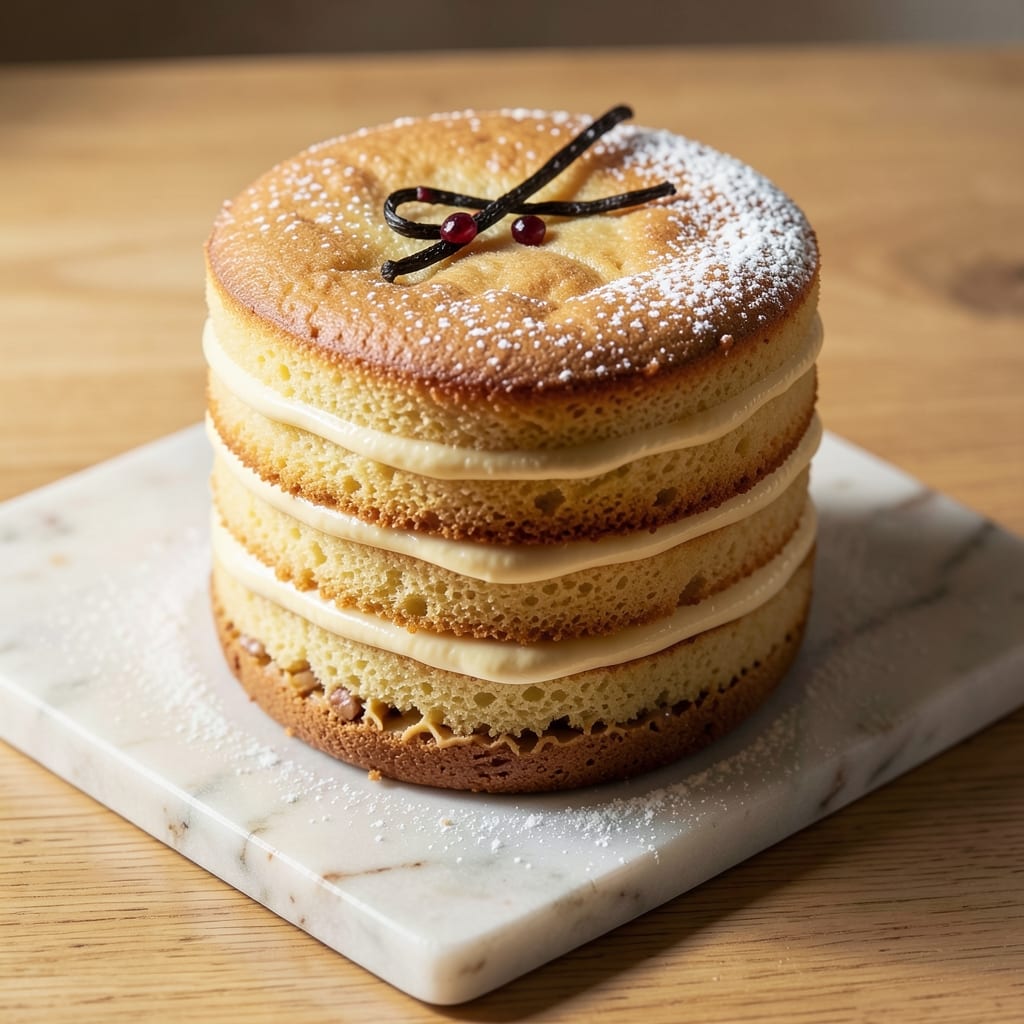
This 12 egg yolk sponge cake delivers the lightest, most luxurious texture you’ll ever taste—like biting into a cloud with just a hint of buttery crispness. The secret lies in those rich yolks, which create a tender crumb and golden edges that defy the "dry sponge cake" myth. I’ve perfected this recipe through years of baking, ensuring every layer rises evenly and stays impossibly moist for days.
What sets this apart is the gentle folding technique, where egg yolks are incorporated just enough to maintain airiness without deflating the batter. Baked at 325°F for 30–35 minutes, the cake emerges with a delicate crust and a center that’s still springy to the touch. The result? A dessert so light it feels almost sinful—yet every bite is pure, buttery perfection.
This recipe is ideal for special occasions or when you want to impress without fuss. The foolproof method ensures no cracks or dense spots, and the cake holds its shape beautifully for slicing. Serve it plain with powdered sugar, layer it with cream, or top it with fresh berries—it’s that versatile. Let’s get started on creating your signature airy masterpiece.
For those worried about egg yolks making the cake too rich, don’t be—this recipe balances them with just enough flour and sugar to keep it tender yet stable. The key is room-temperature ingredients and a light hand when folding. Trust the process, and you’ll have a cake so good, no one will believe it’s homemade.
Ingredients for 12 egg yolk sponge cake
Twelve rich yolks and a whisper of butter create this legendary, cloud-light sponge cake.
| Ingredient | Amount | Notes |
|---|---|---|
| Large Egg Yolks 🥚 | 12 whole | Room temperature, separated from whites |
| All-Purpose Flour 🌾 | 2 ½ cups | Sifted, plus extra for dusting |
| Granulated Sugar 🍚 | 2 ½ cups | Superfine preferred for smooth texture |
| Unsalted Butter 🧈 | 1 ½ cups | Room temperature, cubed |
| Vanilla Extract 🌿 | 2 tsp | Pure vanilla preferred |
| Baking Powder 🍞 | 1 tsp | Diamond Crystal preferred |
| Salt 🧂 | ½ tsp | Fine sea salt preferred |
| Large Egg Whites 🥚 | 12 whole | Room temperature, separated |
| Powdered Sugar 🍚 | 1 cup | For dusting finished cake |
| Lemon Zest 🍋 | 1 tbsp | Fresh, finely grated |
The yolks are non-negotiable here—room temperature is critical. Kirkland brand or Vital Farms eggs work best for their rich yolks, but any large eggs will do. Butter should be soft but not melted—press a finger into it; if it leaves a slight indent, it's ready. The flour is best sifted with the baking powder and salt to avoid lumps. For the ultimate texture, Bob's Red Mill all-purpose flour is my go-to, but any high-quality brand works. Lemon zest adds brightness without overpowering the delicate crumb.
No superfine sugar? Pulse granulated sugar in a food processor for 30 seconds to break up the crystals. Running short on egg whites? Aquafaba (chickpea brine) works at 3 tbsp per egg white, though texture will differ slightly. For a richer flavor, swap half the butter for European-style butter like Plugrá. The vanilla extract should be pure—McCormick or Nielsen-Massey are reliable brands. If you're baking at high altitude, reduce the baking powder by one-quarter teaspoon to prevent over-rising.
This cake is best served the day it's made, but it keeps 2 days at room temperature wrapped tightly in plastic. For longer storage, slice and freeze portions for up to 3 months. Reheat slices at 350°F for 5 minutes to restore crispness. The batter can be prepped a day ahead and refrigerated—bring all ingredients to room temperature before baking. For a showstopper presentation, dust with powdered sugar and serve with fresh berries or a dollop of whipped cream.
Why You'll Love This Recipe
- No Mixer Needed: I swear by this recipe when I’m too tired for stand mixers. Twelve yolks whipped with butter and sugar? That’s it—just fold in flour, bake, and watch it rise like magic. No electric mess, no extra bowls.
- Rich Without Overpowering: The yolks and butter create this unfairly tender crumb, but the vanilla keeps it bright. Honestly, it’s the kind of cake that tastes like a hug—moist enough to cut cleanly, but not heavy like some sponge cakes.
- Leftover Goldmine: This cake stays fresh for days, and I’ve turned slices into desserts, breakfast pastries, or even a quick trifle. (Yes, even on a Tuesday night.) The flavor only gets better as it sits—proof it’s worth baking extra.
- Budget-Friendly Luxury: You’re basically making a fancy cake for pennies. Egg yolks stretch further than whole eggs, and butter adds richness without breaking the bank. My go-to for potlucks or when I want to impress without stressing.
Step-by-step instructions for 12 egg yolks sponge cake
Mastering this sponge cake comes down to precise technique and patience—every step builds that signature lightness.
Whip Egg Yolks and Butter to Ribbon Stage
In a stand mixer fitted with the whisk attachment, combine the 12 whole large egg yolks and 1.5 cups unsalted butter (cubed and room temperature). Beat on medium-high speed for 5-7 minutes until the mixture becomes pale yellow and thickens into a ribbon consistency. You'll know it's ready when the whisk leaves a clear trail that slowly dissolves back into the mixture—this incorporates air that creates the cake's signature lightness.
Stop mixing occasionally to scrape down the sides of the bowl with a silicone spatula. The butter should be fully incorporated with no visible lumps, and the mixture should be able to hold its shape when the whisk is lifted. This step is critical—overmixing will create a dense cake, while undermixing will leave it flat and heavy.
Gradually Add Sugar and Flour
With the mixer still running on medium-high speed, gradually add the 2.5 cups granulated sugar (superfine preferred) and the 2.5 cups all-purpose flour (sifted) in three equal additions, mixing for 1-2 minutes between each. The batter should become smooth and slightly thick, resembling a thick pudding. Add the 2 teaspoons vanilla extract, 1 teaspoon baking powder, 0.5 teaspoon salt, and 1 tablespoon lemon zest, mixing just until fully combined—no more than 30 seconds total.
Here's the thing—don't overmix after adding the dry ingredients. The moment the flour disappears and the batter looks uniform, stop. Overmixing develops gluten, which makes the cake tough instead of tender. The batter should be smooth, slightly glossy, and thick enough to leave a trail on the spatula when lifted.
Whip Egg Whites to Stiff Peaks
In a separate, clean, grease-free bowl, whip the 12 whole large egg whites on high speed until soft peaks form. Gradually add the 1 cup powdered sugar and continue whipping until the egg whites form stiff, glossy peaks that hold their shape when the whisk is lifted. The peaks should stand straight up and not flatten when you tilt the bowl. This step ensures the cake rises high and stays light—don't rush it or the cake will collapse.
I like to add the powdered sugar in two additions, whipping for 30 seconds between each. The sugar stabilizes the egg whites and adds sweetness without weighing the cake down. If your kitchen is humid, chill the bowl for 10 minutes before whipping to prevent the egg whites from absorbing too much moisture and becoming difficult to whip.
Fold Egg Whites Into Yolk Mixture
Using a spatula, gently fold one-third of the whipped egg whites into the yolk mixture in three additions, mixing just until combined. This step is delicate—avoid deflating the egg whites by overmixing. Once the first third is incorporated, fold in the remaining egg whites in two more additions, again mixing just until no white streaks remain. The batter should be thick, airy, and hold its shape when the spatula is lifted.
This is the moment that matters: Fold gently but thoroughly to distribute the egg whites evenly. If you see large pockets of white, the cake will rise unevenly. The final batter should be smooth, slightly glossy, and thick enough to hold its shape when you lift the spatula. Don't be tempted to overmix—this is where most sponge cakes go wrong.
Bake in a Preheated Oven
Preheat your oven to 350°F and grease a 10-inch round cake pan (or line with parchment paper for easier removal). Pour the batter into the prepared pan and smooth the top with a spatula. Bake for 35-40 minutes until the top is golden brown and a toothpick inserted into the center comes out clean. The cake should spring back slightly when pressed gently in the center—this indicates it's fully baked.
Don't open the oven door during the first 25 minutes of baking—this causes the cake to sink. If the top browns too quickly, loosely tent the pan with aluminum foil. The cake is done when it pulls away from the sides of the pan and has a springy texture. Let it cool in the pan for 10 minutes, then transfer to a wire rack to cool completely before dusting with powdered sugar.
Pro Tips For Making 12 Egg Yolk Sponge Cake
- Whisk Yolks Like a Maniac: Beat those 12 yolks with sugar on medium-high until the mixture triples in volume and leaves a ribbon trail for 2 full seconds. I used to stop at "pale yellow"—big mistake. Push past the point where it looks like it’s never going to happen; that’s when the cake gets light, not dense.
- Sift Flour Twice: Dump that flour into a sifter and shake it through twice—once before folding, once after resting the batter. The first time removes lumps; the second ensures no settled flour sinks to the bottom while you’re waiting. (Yes, even if you’re impatient like me.)
- Butter Should Be Cool: Let that unsalted butter sit out for 30 minutes before creaming—just until it’s soft enough to press a fingerprint into. Too warm, and your cake will taste greasy; too cold, and the texture turns gummy. Room temp is the Goldilocks zone.
- Don’t Overmix After Flour: Fold in the flour just until no streaks remain—maybe 10 gentle turns with a spatula. I learned this the hard way: overmixing develops gluten, and suddenly your tender sponge turns into a chewy brick. Less is more.
Pro cooking tips for this dish
Egg Yolk Temperature
Room-temperature egg yolks are non-negotiable for this recipe—they emulsify better with the butter, creating that signature ribbon stage. I pull my eggs from the fridge 30 minutes before baking and place them in a bowl of warm water to speed up the process. Cold yolks won't incorporate air properly, leading to a dense cake. Pro tip: Test the temperature by pressing a finger into a yolk—it should feel slightly warm, not icy. 🥚
Butter Consistency
The butter must be soft but not melted—press your finger into it and leave a slight indent. I use Plugrá European-style butter because it has a higher fat content, which adds richness without overpowering the delicate texture. If your butter is too cold, microwave it for 10 seconds to soften, then let it sit for 5 minutes to stabilize. Never use melted butter; it won't create the same light, airy crumb.
Folding Technique
Folding the egg whites into the yolk mixture is where the magic happens. Use a spatula and work in three additions, mixing just until combined—overmixing deflates the air and ruins the cake's structure. I like to use a flexible silicone spatula because it gently cuts through the batter without tearing the egg whites. The goal is to maintain as much air as possible while ensuring even distribution. Think of it like folding whipped cream into batter: gentle but thorough. ✨
Oven Preheating
Preheat your oven to 350°F for at least 20 minutes before baking—this ensures even heat distribution and prevents the cake from sinking. I place an oven thermometer inside to confirm accuracy, as home ovens often run hot or cold. For a foolproof bake, avoid opening the oven door during the first 25 minutes—temperature fluctuations cause the cake to collapse. If the top browns too quickly, loosely tent it with aluminum foil.
Baking Time
Bake for 35-40 minutes, or until a toothpick inserted into the center comes out clean. The cake should pull away from the sides of the pan and have a springy texture when pressed gently in the center. I test doneness by tapping the top—it should sound hollow, not dull. Overbaking dries out the cake, so keep an eye on it after 30 minutes. Once done, let it cool in the pan for 10 minutes before transferring to a wire rack to prevent cracking. 💫
Cooling and Serving
Never rush cooling—allow the cake to sit in the pan for 10 minutes before transferring to a wire rack. This helps it set properly and prevents it from collapsing. Once fully cooled, dust with powdered sugar for a classic finish. For extra flair, serve with fresh berries or a dollop of whipped cream. The cake keeps well at room temperature for 2 days wrapped tightly in plastic, or you can freeze slices for up to 3 months. Reheat briefly at 350°F for 5 minutes to restore crispness.
Nutrition facts
Frequently asked questions
Why does this recipe use 12 egg yolks instead of whole eggs?
The yolks create an ultra-rich, moist crumb while keeping the texture impossibly light. Whole eggs would make the cake denser—this method balances richness with airiness. The yolks' fat content also helps create that signature buttery crunch on the edges.
Can I substitute butter with oil for a lighter texture?
Not recommended! The butter adds flavor and structure that oil can't replicate. If you must, use 1 cup melted butter + 0.5 cup neutral oil, but the cake will be less rich. For a lighter version, try half butter, half whipped cream cheese—it keeps moisture while reducing fat slightly.
How do I prevent cracks in the finished cake?
Cracks happen from uneven cooling or overbaking. Let the cake cool in the pan for 10 full minutes before removing, and avoid opening the oven door during the first 25 minutes of baking. For extra insurance, bake at 325°F instead of 350°F—slower baking reduces stress on the structure.
Is this cake suitable for layering with cream or jam?
This sponge is sturdy enough for filling but still tender. For best results, cut layers 1/2-inch thick and assemble with whipped cream or jam between layers. Dust with powdered sugar between layers to prevent sogginess. The cake's neutral flavor makes it perfect for any filling.
What's the secret to getting that perfect golden crust?
Preheat your oven to 350°F for 20+ minutes and use a lightly greased pan (or parchment-lined). The butter's fat content naturally browns beautifully when baked at this temperature. For extra shine, brush the top with simple syrup (equal parts sugar and water) after baking.