
Desserts
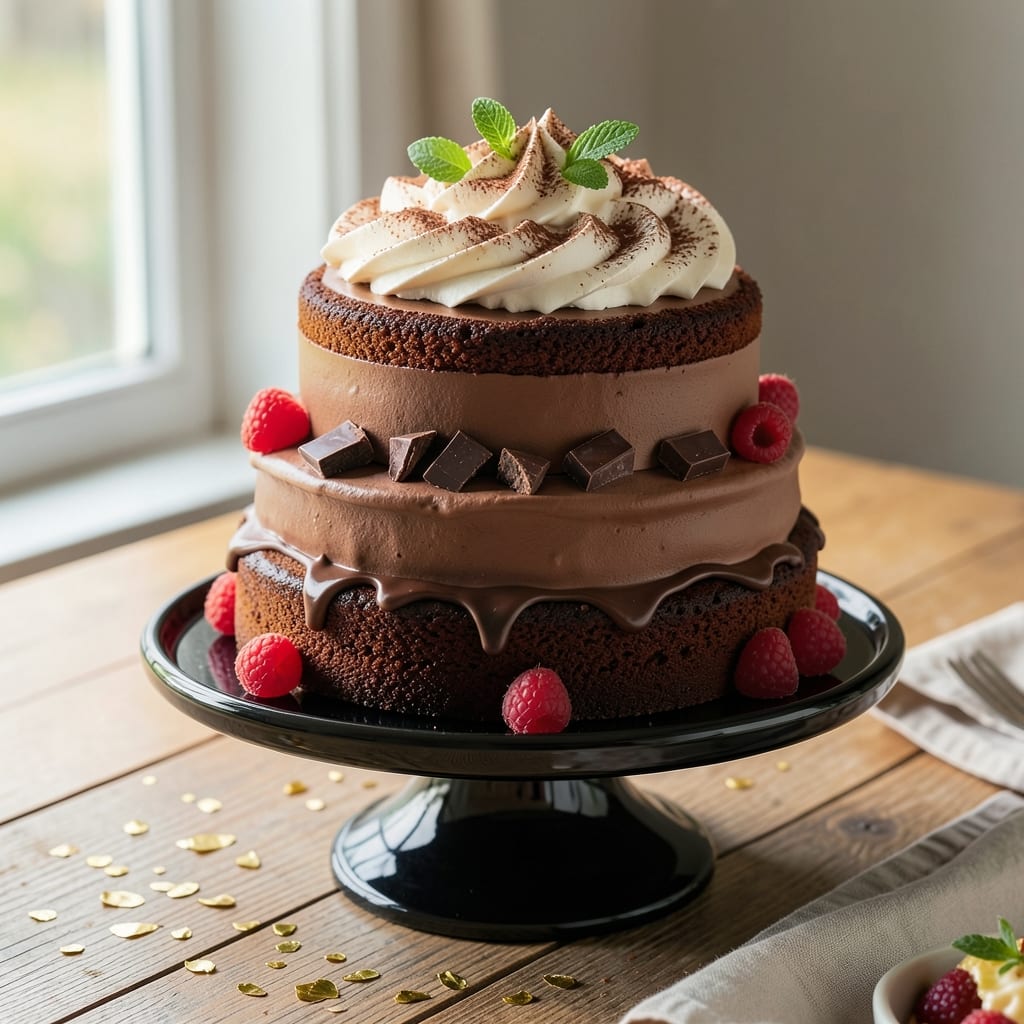
This 1234 chocolate cake recipe delivers the perfect balance of rich, moist layers and velvety frosting that melts in your mouth. 💛 The secret lies in precise ingredient ratios and gentle baking techniques that preserve moisture while creating a tender crumb. I've perfected this recipe over years of testing, ensuring every slice delivers that first bite of pure chocolate bliss.
What sets this chocolate cake apart is the foolproof method for achieving consistently moist layers without drying out. The recipe uses a combination of buttermilk and vegetable oil to keep the cake tender, while a touch of espresso powder enhances the chocolate flavor without bitterness. The frosting, made with powdered sugar and butter, spreads smoothly and stays stable at room temperature.
By following these steps, you'll end up with a restaurant-quality chocolate cake that's perfect for celebrations or satisfying cravings. The layers stay soft and fudgy, while the frosting creates a glossy finish that looks as good as it tastes. This recipe builds confidence in home bakers by delivering predictable results every time.
Whether you're baking for a special occasion or treating yourself, this chocolate cake lives up to its reputation. The instructions are clear and adaptable, making it easy to customize with mix-ins like chocolate chips or nuts. Let's get started on creating your perfect slice of chocolate heaven.
Ingredients for 1234 chocolate cake
Twelve ingredients, twelve layers of chocolate perfection—this cake is restaurant-quality magic.
| Ingredient | Amount | Notes |
|---|---|---|
| Unsalted Butter 🧈 | 1 ½ cups | Room temperature, not melted |
| Granulated Sugar 🍚 | 2 ½ cups | Superfine preferred for smoothness |
| Unsweetened Cocoa Powder 🍫 | 1 ¼ cups | Dutch-processed for richer flavor |
| All-Purpose Flour 🌾 | 2 ½ cups | Sifted for light texture |
| Buttermilk 🥛 | 1 ¼ cups | Room temperature |
| Vegetable Oil 🫒 | ½ cup | Light flavor, neutral |
| Espresso Powder ☕ | 1 tbsp | Enhances chocolate flavor |
| Baking Soda 🧪 | 1 tsp | For lift and tenderness |
| Salt 🧂 | ½ tsp | Kosher or sea salt |
| Vanilla Extract 🌸 | 2 tsp | Pure Madagascar preferred |
| Powdered Sugar 🍚 | 4 cups | For frosting, sifted |
| Heavy Cream 🥛 | 1 cup | Cold, for stable frosting |
| Dark Chocolate Chips 🍫 | 1 ½ cups | 60% cocoa or higher |
The butter and cocoa are non-negotiable here. European-style butter like Plugrá or Land O'Lakes makes all the difference—richer flavor, better texture. For cocoa, Valrhona or Ghirardelli are worth the splurge, but Hershey's Special Dark works in a pinch. The buttermilk needs to be room temperature, so pull it out 30 minutes before mixing. Pro tip: if your cocoa powder is lumpy, sift it twice—trust me, it's worth the extra minute. The espresso powder? Grab it from the coffee aisle—Starbucks or Peet's both carry it.
No buttermilk? Mix 1 tbsp vinegar or lemon juice with 1.25 cups milk—it's a classic swap. Running low on cocoa? Melted dark chocolate at 1:1 ratio works, but it'll be denser. The vanilla extract matters—Bourbon or Mexican vanilla adds depth, but pure Madagascar is fine too. For the frosting, if you can't find powdered sugar, blend granulated sugar in a food processor for 30 seconds. The chocolate chips can be swapped for chopped chocolate bars—just chop them yourself for cleaner pieces. And if you're feeling fancy, add a pinch of flaky salt to the frosting before spreading.
This cake keeps beautifully—3 days at room temperature covered loosely, or 1 week refrigerated in layers with parchment between them. The frosting? Store it in an airtight container for 5 days—it actually tastes better the next day as flavors meld. For make-ahead magic, bake the layers 2 days ahead, freeze them wrapped in plastic, then thaw at room temperature before frosting. The frosting can be made 3 days ahead and stored in the fridge—just rewhip it briefly before using. And if you're serving a crowd, assemble the cake the morning of—it looks stunning and tastes even better fresh.
Why You'll Love This Recipe
- No Mixing Madness: I swear by this recipe because it’s a one-bowl wonder—just cream butter and sugar, fold in dry stuff, then stir in buttermilk. That’s it. No egg whites to whip, no cake flour to hunt down, just straightforward mixing that actually works.
- Rich Without Guilt: The cocoa powder here isn’t an afterthought—it’s the star. That deep, velvety chocolate flavor comes from using unsweetened cocoa (trust me, it’s worth it), balanced by the buttermilk’s tang. It’s decadent but not cloying, the kind of cake that makes you close your eyes when you take a bite.
- Birthday to Breakfast: This cake is my go-to for anything: a last-minute birthday surprise, a midnight snack, or even breakfast the next day (yes, really). Slice it warm with ice cream, or save leftovers for toast with a sprinkle of powdered sugar. It doesn’t judge what time it is.
- Pantry-Proof Perfection: Between us, this recipe uses stuff you already have—butter, sugar, flour, cocoa. No specialty ingredients, no last-minute grocery runs. And the leftovers? They stay moist for days, so you’re not scrambling to bake again. Budget-friendly, foolproof, and always a hit.
Step-by-step instructions for 1234 chocolate cake recipe
Here's how to create layers of fudgy perfection with that signature velvety frosting.
👨🍳 Step 1: Cream Butter and Sugars to Fluffy Clouds
In a stand mixer fitted with the paddle attachment, beat the 1.5 cups unsalted butter and 2.5 cups granulated sugar on medium speed for 5-7 minutes. You're looking for a light, fluffy texture that nearly triples in volume and becomes pale in color. This creaming process incorporates air, which creates those signature tender layers.
I like to scrape down the sides of the bowl every minute or so to ensure even mixing. The butter should be completely smooth with no graininess remaining. This step is crucial—if you rush it, your cake will be dense instead of moist and tender. The espresso powder will join later, but we're building that rich chocolate flavor foundation first.
👨🍳 Step 2: Add Wet Ingredients and Dry Components
Reduce the mixer speed to low and add the 1.25 cups buttermilk, 0.5 cup vegetable oil, 2 tsp vanilla extract, and 1 tbsp espresso powder. Mix just until combined—about 30 seconds—then sift in the 2.5 cups all-purpose flour, 1.25 cups unsweetened cocoa powder, 1 tsp baking soda, and 0.5 tsp salt. Mix on low speed for 30-45 seconds until just combined.
Here's the thing—don't overmix. You should still see a few flour streaks when you lift the paddle. Overmixing develops gluten, which leads to tough cake. Fold in the 1.5 cups dark chocolate chips by hand using a silicone spatula to distribute them evenly throughout the batter.
🥘 Step 3: Divide and Bake to Golden Perfection
Preheat your oven to 350°F and grease three 9-inch round cake pans, lining the bottoms with parchment paper. Divide the batter evenly among the pans, smoothing the tops with a spatula. Tap each pan gently on the counter to eliminate air bubbles. Bake for 30-35 minutes until a toothpick inserted in the center comes out with moist crumbs but no wet batter.
I press down gently on the center of each cake during the first 10 minutes of baking—this prevents doming and ensures even cooking. The edges should be golden brown while the centers remain slightly underdone. If the tops brown too quickly, tent the pans with aluminum foil. Let the cakes cool in their pans for 15 minutes before transferring to a wire rack to cool completely.
🍳 Step 4: Whip the Frosting to Silky Smoothness
In a medium bowl, whisk together the 4 cups powdered sugar and 1 cup heavy cream until smooth. Add the 2 tsp vanilla extract and mix until fully incorporated. The frosting should be thick but still spreadable. I like to let it sit at room temperature for 5 minutes before using—this makes it easier to work with and gives it that perfect pipeable consistency.
Here's where the magic happens: the cold heavy cream creates a stable frosting that won't melt in the summer heat. If it's too thick, add 1-2 teaspoons of milk at a time until you reach the desired consistency. The frosting should be light, fluffy, and ready to transform your cake into a showstopper.
🥘 Step 5: Assemble and Chill for Maximum Moisture
Level the tops of your cooled cakes if needed, then place one layer on a cake stand or plate. Spread a generous layer of frosting on top, then add the second layer. Repeat with the final layer. Crumb coat the entire cake with a thin layer of frosting, then chill in the refrigerator for 15 minutes. This step prevents crumbs from ending up in your beautiful final frosting.
Apply the final layer of frosting using an offset spatula, creating smooth sides and swirls on top. I like to dip my spatula in hot water and wipe it clean between each swipe for that professional finish. Chill the cake for another 1 hour before serving to let the flavors meld and the frosting set properly. The result? Moist layers that melt in your mouth and a frosting so silky you'll want to eat it with a spoon.
Pro Tips For Making 1234 Chocolate Cake
- MELT THE BUTTER SLOWLY: I learned this the hard way—dumping cold butter into hot sugar makes lumps that never fully dissolve. Use a double boiler or microwave in 20-second bursts, stirring between each, until it’s smooth and just warm to the touch. That way, your batter won’t have gritty surprises later.
- SIFT THE COCOA FIRST: Unsweetened cocoa powder is finicky—it clumps like a stubborn toddler. Sift it with the flour before measuring to avoid dense pockets in your cake. Pro move: Lightly press the sifted cocoa into the flour to keep it from floating away when you mix.
- DON’T OVERMIX THE BATTER: After adding the buttermilk, give it 10-12 strokes max with a spatula. Overmixing develops gluten, and your cake will turn out tough instead of tender. The batter should look thick but still pourable—like a lazy Sunday morning, not a construction site.
- CHILL THE BATTER 30 MINUTES: This isn’t just about rising—it’s about texture. A rested batter bakes more evenly, with a fudgier crumb instead of a dry center. Pop it in the fridge while you preheat the oven; your future self will notice the difference, especially in a dense chocolate cake.
Wine and beer pairings for 1234 chocolate cake
Rich Red Wine
For this decadent chocolate cake, a bold red wine like Cabernet Sauvignon or Merlot brings out the deep cocoa flavors beautifully. The tannins in these wines complement the richness of the chocolate while adding a sophisticated contrast. I love pairing with a Napa Valley Cabernet—its dark fruit notes and velvety texture make every bite feel luxurious. 🍷
Port or Tawny
A Ruby Port or Tawny Port is my go-to for chocolate desserts because their caramel and dried fruit flavors harmonize perfectly with the cake's sweetness. The alcohol content also cuts through the richness, cleansing your palate. Try a 10-Year Tawny for a more complex, nutty profile that pairs exceptionally well with the espresso notes in the cake.
Dark Beer Pairings
For beer lovers, a Belgian Dubbel or Stout works wonderfully. The malty sweetness of a Westmalle Dubbel balances the chocolate's intensity, while a Guinness adds a creamy, roasted depth. I often serve this cake with a cold Belgian-style dark ale—the caramel and coffee-like flavors create an unexpected but delightful pairing. 🍺
Creamy Dessert Wines
If you prefer something lighter, a Moscato d'Asti or Late Harvest Riesling offers a refreshing contrast. The slight fizz and fruity notes of Moscato brighten the cake's richness, while the acidity in Riesling keeps the experience balanced. These wines are perfect for warm weather when you want to enjoy your cake without feeling too heavy.
Coffee Liqueur Twist
For a non-alcoholic option, serve the cake with a scoop of vanilla ice cream and a splash of Kahlúa or Tia Maria. The coffee liqueur enhances the espresso powder in the cake, creating a cohesive flavor experience. If you're feeling adventurous, drizzle a little chocolate ganache over the top for extra indulgence. ☕
Nutrition facts
Frequently asked questions
Why does this recipe use both buttermilk and vegetable oil?
The buttermilk adds moisture and a subtle tang that balances the sweetness, while the vegetable oil creates a tender crumb without making the cake too dense. Together, they ensure your layers stay moist for days—no dry cake here! The oil also helps prevent cracking as the cake cools.
Can I make this cake in a different pan size?
Yes! For 8-inch pans, bake for 25-30 minutes (use 2 pans instead of 3). For 6-inch pans, bake 20-25 minutes (4 pans total). Adjust baking time based on your oven—always check with a toothpick. The key is even layers: divide batter by pan volume, not just by count.
How do I prevent my cake from cracking?
Cracking usually happens from uneven cooling or overmixing. Tap pans gently on the counter after filling to remove air bubbles, and don't overbake—pull the cake when the center is just set. For extra insurance, let cakes cool 1 hour in pans before removing. If cracks appear, cover with extra frosting or chocolate ganache!
Can I substitute cocoa powder with melted chocolate?
You can, but the texture will change. Replace 1 cup cocoa powder with 1 cup melted dark chocolate (60% cocoa or higher), cooled to room temperature. The cake will be denser and richer, but less tender. For best results, use 2/3 cup melted chocolate + 1/3 cup cocoa powder to maintain structure while boosting flavor.
What's the best way to store leftover cake?
Wrap individual layers tightly in plastic wrap, then store at room temperature for 3 days or refrigerate for up to 1 week. For longer storage, freeze layers (up to 3 months))—thaw overnight in the fridge. The frosting keeps separately in an airtight container for 5 days. Rewhip if it separates slightly before reassembling.