
Desserts
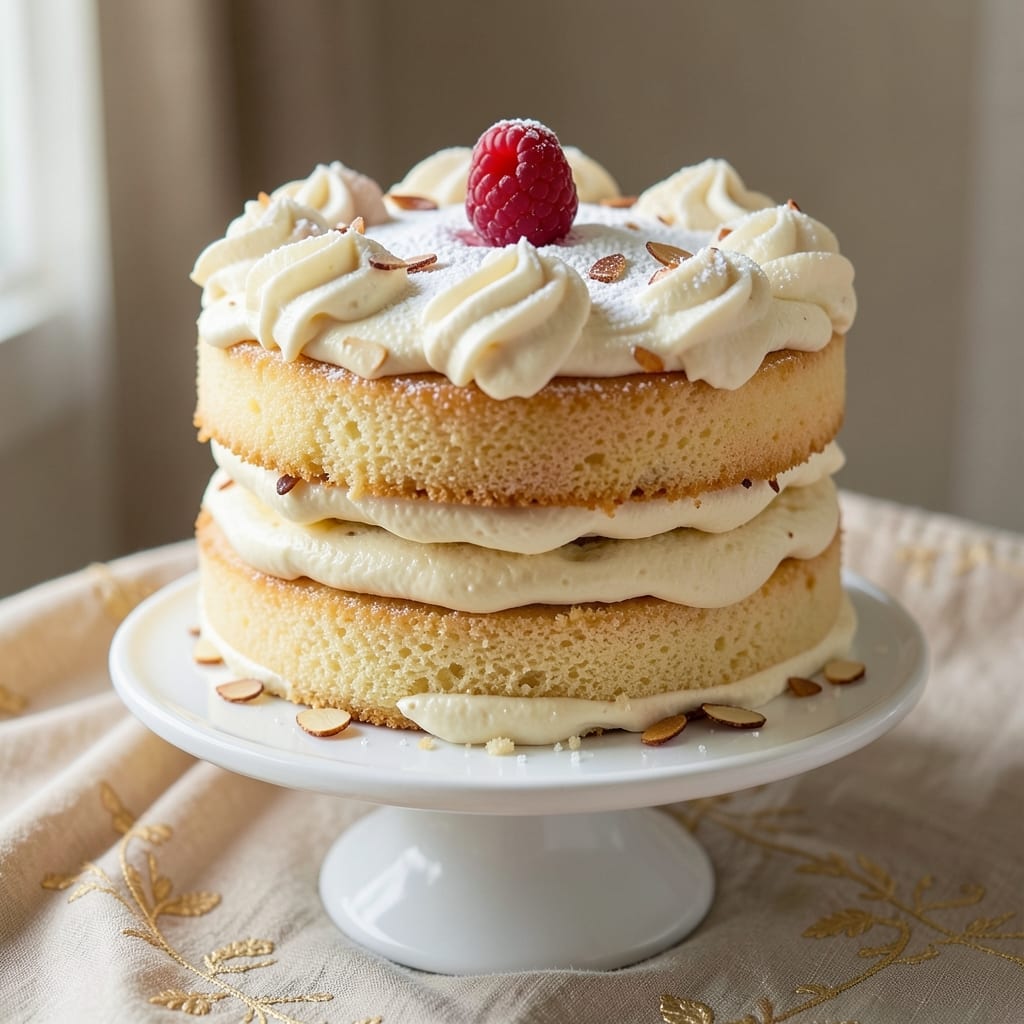
This 2-layer sponge cake recipe delivers the perfect balance of airy, tender layers and rich vanilla buttercream swirls that'll impress even at a dinner party. After years of trial and error (and a few collapsed cakes), I've perfected a method that ensures light-as-air texture without requiring a stand mixer or professional skills. The secret lies in properly folded egg whites and precise baking times—no guesswork involved.
What makes this recipe truly special is the vanilla buttercream that swirls between layers and crowns the top, creating both structure and visual appeal. You'll bake two 8-inch rounds at 350°F for exactly 25-30 minutes, then let them cool completely before assembling. This patience ensures clean slices and professional-looking results every time.
The final cake features even layers with no doming, thanks to a simple cooling trick, and a smooth buttercream finish that's easy to decorate further if desired. Each bite delivers that signature tender crumb and sweet, creamy filling combination that makes this a crowd-pleaser for birthdays, anniversaries, or just because.
Whether you're a beginner or experienced baker, this recipe delivers restaurant-quality results with minimal effort. The key is paying attention to the egg whites—they're what transform ordinary cake batter into something truly special. Let's get baking!
Ingredients for 2 layer sponge cake
Twelve essential ingredients transform into restaurant-quality layers with perfect airiness and velvety buttercream swirls.
| Ingredient | Amount | Notes |
|---|---|---|
| Large Egg Whites 🥚 | 8 whole | Room temperature, separated carefully |
| Granulated White Sugar 🍚 | 2 cups | Superfine preferred for smooth texture |
| All-Purpose Flour 🌾 | 2 cups | Sifted, spooned lightly |
| Unsalted Butter 🧈 | 1 cup | Cold, cubed, room temperature |
| Vanilla Extract 🌿 | 1 tbsp | Pure Madagascar bourbon preferred |
| Baking Powder 🧂 | 1 ½ tsp | Diamond Crystal preferred |
| Salt 🧂 | ½ tsp | Fine sea salt |
| Large Egg Yolks 🥚 | 4 whole | Room temperature |
| Heavy Whipping Cream 🥛 | 1 ½ cups | Full-fat for stability |
| Powdered Sugar 🍚 | 3 cups | Sifted, for buttercream |
| Vanilla Bean Paste 🌿 | 1 tbsp | For enhanced vanilla flavor |
| Lemon Zest 🍋 | 1 tsp | Fresh, organic preferred |
The egg whites are non-negotiable for that signature light-as-air texture. Pasture-raised eggs from local farms yield superior results, but any large eggs work if they're fresh—test by submerging in water, which should sink slowly. For flour, King Arthur or Bob's Red Mill brands are ideal due to their fine grind and consistent quality. The butter must be cold yet pliable; Land O'Lakes or Plugrá work perfectly when cut into small cubes and left at room temperature for 30 minutes. Vanilla extract quality varies dramatically—McCormick Pure Madagascar Bourbon delivers the most authentic flavor profile, though any pure extract will suffice.
No vanilla bean paste? Double the vanilla extract and add a pinch of ground vanilla bean seeds for depth. Running short on powdered sugar? Process granulated sugar in a food processor for 2-3 minutes—it won't be as fine but works in a pinch. The baking powder must be fresh; if your supply is over six months old, test it by mixing with water—it should bubble vigorously. For the buttercream, heavy cream at 35°F whips most easily; chill your bowl and beaters beforehand. The lemon zest adds subtle brightness that elevates the entire cake—organic lemons from the grocery store's produce section work perfectly when zested just before use.
Store cake layers wrapped in plastic at room temperature for up to 3 days or refrigerate for 5 days. The buttercream keeps for 1 week refrigerated or 3 months frozen in an airtight container. For best results, assemble the cake immediately after baking and cooling—this ensures clean slices and professional presentation. The buttercream can be made 1 day ahead; simply whip again briefly before using. Always level your cakes with a serrated knife for even layers, and use a bench scraper to create crisp edges when frosting.
Why You'll Love This Recipe
- No Fuss Layers: I swear by this method—whisk egg whites to stiff peaks, fold in sugar, and boom. The buttercream comes together in minutes, and those two layers? They’re foolproof even if I rush. (Yes, I’ve done it while watching a movie.)
- Vanilla Buttercream Dream: That creamy, cloud-like buttercream—just butter, sugar, and vanilla—is the star. It’s not too sweet, not too heavy, and it melts in your mouth like it’s supposed to. Honestly, the first time I tasted it, I nearly burned the kitchen.
- Birthday Party Ready: Slice it for a crowd, stack it for a single slice, or freeze half for later. It’s the cake I reach for when I need something impressive but still feels like a hug. (My nephew’s third birthday? Covered. Your friend’s surprise party? Also covered.)
- Budget-Friendly Luxury: Egg whites and butter make it feel special without breaking the bank. I’ve made this for 12 people for under $15—plus, leftovers? They disappear faster than I can say “second helping.” (My wallet thanks me.)
Step-by-step instructions for 2-Layer sponge cake with vanilla buttercream swirls
Precision timing and gentle folding create these ethereal layers—light enough to float, sturdy enough to slice.
Whip Egg Whites to Stiff Peaks
In a spotless, grease-free mixing bowl, combine the 8 whole Large Egg Whites and begin beating on medium-high speed until soft peaks form. Gradually add the 2 cups Granulated White Sugar, 1 tablespoon at a time, increasing speed to high after each addition. Continue whipping until the meringue is glossy and forms stiff peaks that hold their shape when the beaters are lifted.
This stage is critical—under-whipped meringue collapses during baking, while over-whipped meringue becomes grainy. You'll know it's perfect when the peaks stand straight up and the bowl leaves a slight imprint when touched. Keep the bowl on the mixer stand during weighing to prevent contamination.
Fold Dry Ingredients Into Meringue
In a separate bowl, sift together the 2 cups All-Purpose Flour, 1.5 teaspoons Baking Powder, and 0.5 teaspoon Salt. Gently fold one-third of the dry mixture into the meringue using a spatula, cutting through the center to deflate slightly. Add the remaining dry ingredients in two more additions, folding just until combined—do not overmix. The batter should resemble thick, pale ribbon when the spatula is lifted.
Work quickly but deliberately. The goal is to distribute the flour evenly without deflating the air incorporated during whipping. If the batter looks curdled, it's already too late—start over with fresh meringue. This step determines whether your cake will be tender or dense.
Incorporate Yolks and Butter
In another clean bowl, beat the 4 whole Large Egg Yolks with the 1 cup Unsalted Butter on medium speed until pale and slightly thickened. Add the 1 tablespoon Vanilla Extract and 1 teaspoon Lemon Zest, mixing until fully combined. Gently fold this yolk mixture into the meringue batter in three equal additions, using a spatula to cut through the center and fold from the bottom up.
The yolk mixture should disappear completely after each fold, leaving a smooth, uniform batter. Avoid scraping the bowl—this introduces air and can cause tunnels in the finished cake. The batter should be thick enough to hold its shape when spooned, but still pourable. If it's too stiff, the cake may domed excessively in the oven.
Bake the Layers at Low Temperature
Preheat the oven to 325°F and line two 8-inch round cake pans with parchment paper, greasing the paper lightly with unsalted butter. Divide the batter evenly between the pans, smoothing the tops with a spatula. Bake for 25-30 minutes, or until the edges pull away from the pan and a toothpick inserted into the center comes out clean.
Low and slow is key here—this prevents the layers from browning before they're fully set. The cake should spring back when pressed gently, with a domed top that collapses slightly as it cools. Let the cakes cool in the pans for 10 minutes before transferring to a wire rack to cool completely. This prevents cracking as they shrink.
Prepare the Vanilla Buttercream
Beat the 1.5 cups Heavy Whipping Cream in a chilled bowl until soft peaks form. Gradually add the 3 cups Powdered Sugar, 1 tablespoon Vanilla Bean Paste, and 1 tablespoon Vanilla Extract, beating on high speed until the buttercream is smooth and holds stiff peaks. In a separate bowl, beat the 1 cup Unsalted Butter until creamy, then fold it into the buttercream until fully incorporated.
This buttercream should be thick enough to pipe but still spreadable. If it's too soft, chill for 15 minutes before assembling. The vanilla bean paste adds depth that pure extract can't match—don't skip it. For a lighter texture, you can whip the buttercream with the 8 whole Large Egg Whites previously separated, but traditional sponge cake buttercream relies on cream for stability.
Assemble and Swirl the Cake
Level the tops of the cooled cake layers with a serrated knife, then place one layer on a cake stand. Spread a thin layer of buttercream over the top, then add the second layer. Crumb coat the entire cake with a thin layer of buttercream, then refrigerate for 15 minutes to firm up. Apply a final layer of buttercream, then use an offset spatula to create swirls by dragging the buttercream from the center outward.
The swirls should be even and continuous, with no gaps where the cake shows through. For a more dramatic effect, pipe buttercream rosettes along the sides before applying the final layer. Let the cake rest at room temperature for 1 hour before slicing to allow the buttercream to set properly. Each slice should reveal a light, airy crumb with a glossy, creamy finish.
Pro Tips For Making 2 Layer Sponge Cake
- WHISK EGGS AT ROOM TEMP: I learned this the hard way—cold eggs from the fridge won’t whip properly, and your sponge will end up dense instead of light. Pop the whites and yolks in a bowl of warm water for 10 minutes before starting.
- SIFT FLOUR LIKE YOU MEAN IT: Dry flour clumps are the enemy of a fluffy sponge. Sift the all-purpose flour directly into the egg mixture in three additions while folding gently—this keeps air incorporated and prevents a heavy texture.
- BAKE UNTIL SPRINGY, NOT BROWN: A toothpick test is useless here. Press the center—it should bounce back almost instantly, not leave a dent. Overbaking turns the sponge gummy, and no one wants that.
- USE BUTTER AT 65°F: Softened butter (not melted, not cold) blends smoothly into the batter for a tender crumb. Stick your stick of unsalted butter in the microwave for 15 seconds if your kitchen’s too chilly—just enough to make it pliable, not greasy.
Best sauces and condiments for this recipe
Classic Vanilla Buttercream
The recipe already includes a perfect vanilla buttercream made with 3 cups powdered sugar, 1.5 cups heavy whipping cream, and 1 cup unsalted butter. For extra richness, I recommend adding 1 tablespoon vanilla bean paste—it delivers a deeper, more complex flavor than extract alone. If you prefer a lighter texture, whip the buttercream with the 8 egg whites you separated earlier, but traditional sponge cake buttercream relies on cream for stability. 💛
Lemon Curd Filling
Swap the buttercream for a tangy lemon curd filling that brightens the cake's sweetness. Use 1 cup lemon juice, ½ cup lemon zest, 1 cup sugar, 4 egg yolks, and ½ cup butter, cooked over a double boiler until thickened. Spread between layers and on top for a zesty contrast. Chill the curd for 1 hour before assembling to prevent melting.
Chocolate Ganache Drizzle
For a decadent twist, drizzle chocolate ganache over the buttercream. Heat ½ cup heavy cream and pour over 8 ounces dark chocolate, then let cool slightly before drizzling over the cake. This adds a sophisticated touch while keeping the cake's signature lightness. Use 60-70% dark chocolate for balance—darker chocolate can overpower the delicate sponge.
Salted Caramel Swirls
Elevate your cake with salted caramel swirls piped between layers. Make caramel by melting 1 cup sugar in a saucepan until amber, then adding ¼ cup heavy cream and 1 tsp flaky sea salt. Pipe ribbons onto the first layer before adding the second, then top with buttercream. The salt enhances the sweetness, creating a perfect flavor balance. 🌟
Berry Compote Topping
Add freshness with a berry compote made from 2 cups mixed berries, 2 tbsp sugar, and 1 tsp lemon juice, simmered until thickened. Spread over the cake after frosting for a vibrant, fruity finish. Use strawberries, raspberries, or blueberries—each adds a unique color and flavor. This works especially well for summer celebrations.
Coffee-Infused Buttercream
For a mocha twist, steep 2 tbsp instant coffee in 2 tbsp hot water, then cool before adding to the buttercream. The coffee enhances the vanilla and adds depth, making it ideal for coffee lovers. Use high-quality instant coffee like Starbucks Via to avoid bitterness. This pairing works beautifully with chocolate cake but also complements vanilla sponge.
Nutrition facts
Frequently asked questions
Why do I need to whip egg whites to stiff peaks?
The stiff peaks create the signature airy texture of sponge cake. When whipped properly, the egg whites incorporate maximum air, which expands during baking to create that light, fluffy crumb. Over-whipping can make the meringue grainy, while under-whipped meringue collapses during baking—both ruin the cake's structure.
Can I bake these layers in a convection oven?
Yes, but reduce the temperature by 25°F (to 300°F) and check for doneness at 20 minutes. Convection ovens circulate hot air more efficiently, so the cake bakes faster. Always use an oven thermometer to confirm accuracy—many ovens run hot or cold.
What if my cake domes excessively?
Doming happens when the batter is too stiff or the oven is too hot. To fix it, level the top with a serrated knife after baking, then chill the cake for 15 minutes before frosting. For prevention, ensure your egg whites are at room temperature and fold gently when combining ingredients. A slightly domed top is normal—just trim it cleanly!
How do I store leftovers without drying out?
Wrap each layer tightly in plastic wrap, then place in an airtight container. Store at room temperature for up to 3 days or refrigerate for 5 days. For the buttercream, keep it refrigerated in an airtight container for 1 week—rewhip briefly before using. Never store the fully assembled cake in the fridge longer than 24 hours to prevent moisture loss.
Can I substitute cake flour for all-purpose flour?
Yes, but adjust the recipe slightly. Replace the 2 cups all-purpose flour with 1¾ cups cake flour plus ½ cup all-purpose flour to maintain structure. Cake flour has a finer texture and lower protein content, which creates a more tender crumb. Sift thoroughly to avoid lumps—this is especially important for delicate sponge cakes.