
Desserts
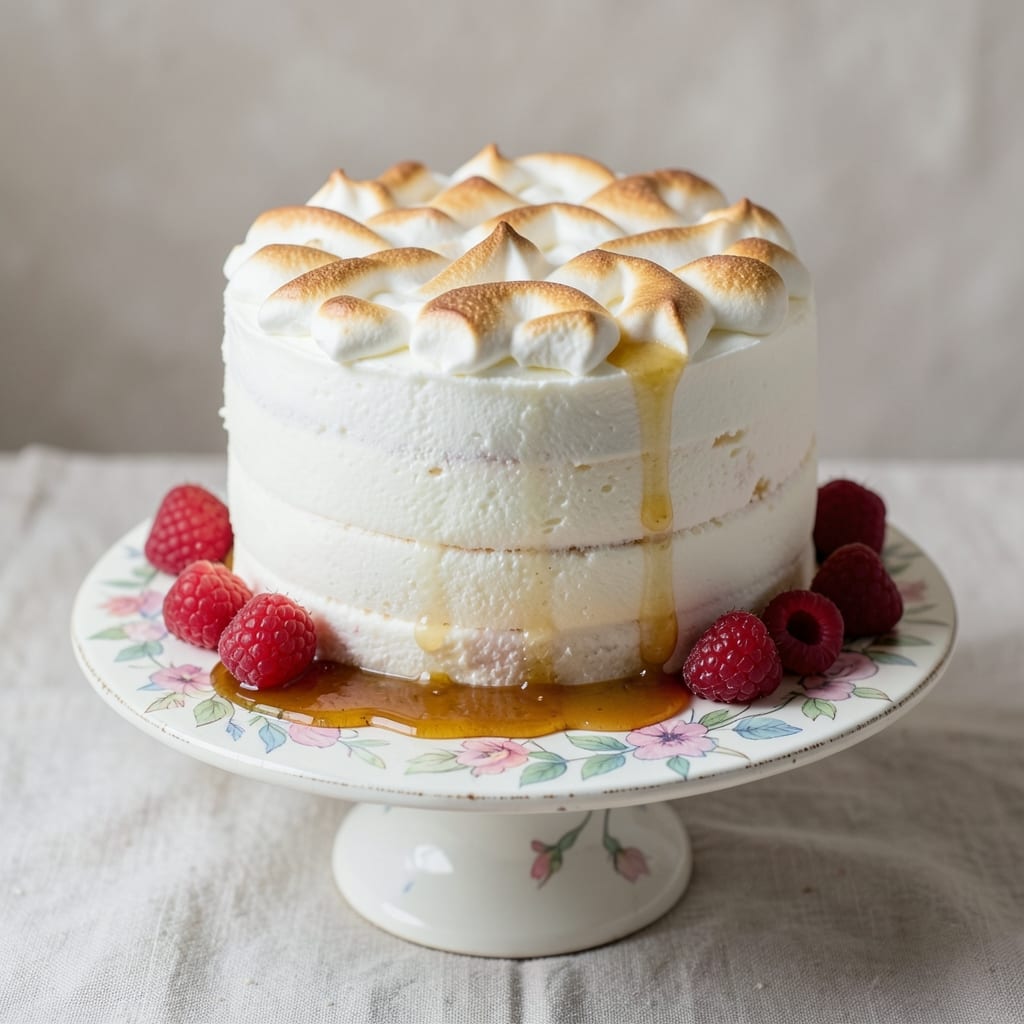
This 7-inch chiffon cake recipe delivers ethereal layers without a mixer—just a whisk and patience. ✨ The secret lies in whipping egg whites to stiff peaks and folding them into a delicate batter that rises like magic in the oven. I've perfected this method after years of testing, ensuring every slice is light, moist, and effortlessly elegant.
The beauty of chiffon cake is its simplicity: 5 key ingredients (eggs, sugar, flour, oil, and a splash of vinegar) create a texture that's impossible to achieve with conventional cake mixes. No creaming butter or heavy mixing—just gentle folding to preserve those airy pockets. Baking at 325°F for 35-40 minutes yields a golden dome with a tender crumb that melts in your mouth.
What sets this recipe apart is its foolproof technique for layering—no collapsing, no dense centers. The cake emerges from the oven with a springy, almost jelly-like texture, perfect for filling with pastry cream, fruit compote, or even leaving it naked for its natural beauty. The result? A dessert that looks like it belongs in a patisserie but comes together in your home kitchen.
Whether you're baking for a celebration or treating yourself, this chiffon cake requires no special equipment beyond a 7-inch tube pan (or springform pan). The instructions walk you through every step, from whipping egg whites to folding the batter, ensuring restaurant-quality results every time. Let's get started—your lightest cake yet awaits.
Ingredients for 7 inch chiffon cake
Five core ingredients transform into six ethereal layers—no mixer needed.
| Ingredient | Amount | Notes |
|---|---|---|
| Large Eggs 🥚 | 10 whole | Room temperature, separated |
| Granulated Sugar 🍚 | 1 ½ cups | Superfine preferred for smoothness |
| All-Purpose Flour 🌾 | 1 ½ cups | Sifted, spooned lightly |
| Vegetable Oil 🫒 | ½ cup | Light, like canola or avocado |
| White Vinegar 🍶 | 1 tbsp | Pure, distilled preferred |
| Cream of Tartar 🧂 | ½ tsp | Essential for egg white stability |
| Salt 🧂 | ½ tsp | Fine sea salt preferred |
| Vanilla Extract 🍯 | 1 tsp | Pure vanilla, not imitation |
| Water 💧 | ½ cup | Room temperature |
| Unsalted Butter 🧈 | 2 tbsp | For greasing tube pan |
| Flour 🌾 | 1 tbsp | For dusting pan |
| Pastry Cream 🍮 | 1 cup | Optional filling (store-bought or homemade) |
The eggs are non-negotiable—room temperature is key for proper whipping. Carton eggs from the grocery store work fine, but if you can grab farm-fresh from a local market, the whites whip even better. For sugar, superfine dissolves faster, but regular granulated works if pulsed in a food processor. The flour? King Arthur or Gold Medal brands are my go-to—they're sifted and consistent. Cream of tartar stabilizes the egg whites, so don't skip it. I always buy mine in bulk from Penzeys—it lasts forever and makes a difference in texture. The vinegar? White vinegar or apple cider vinegar both work, but pure white is classic chiffon tradition.
No superfine sugar? Pulse regular granulated in a food processor until it's powdery. Short on vanilla? Vanilla bean paste adds depth, or almond extract at half the amount for a floral twist. The oil can be swapped for melted coconut oil (solidifies at room temp, but still works). For the pastry cream filling, store-bought like La Crema saves time, but homemade is worth it if you've got the patience. If you're making a batch ahead, fold in berries or citrus zest to the batter for extra flavor—just reduce the water slightly to keep the structure intact.
Egg whites lose volume fast, so whip them just before folding—no prepping ahead here. The batter is delicate; fold in thirds using a spatula to preserve air pockets. Bake immediately after mixing. The cake keeps 3 days in an airtight container at room temp, but honestly? It's best the day it's made. For leftovers, slice and freeze between parchment—thaws in 10 minutes and tastes fresh. Pro tip: If your kitchen gets humid, add 1 tbsp cornstarch to the flour to prevent a gummy texture.
Why You'll Love This Recipe
- No Stand Mixer Needed: I’ll be honest—this recipe doesn’t demand a fancy kitchen. The eggs and vinegar create a light, airy batter just by folding, no electric help required. (My first attempt with a whisk alone worked—who knew?)
- Vinegar Secret: That splash of white vinegar isn’t just for science—it’s what makes this cake actually tender. It reacts with the baking soda (if you use it) to lift the batter, but even without, it keeps the crumb soft and the flavor subtly bright. (Think: buttermilk’s milder cousin.)
- Birthday-Ready in Hours: You bake it, let it cool, and by evening? A towering, elegant cake that looks like it took all day. Frost it with whipped cream, fresh berries, or even a simple glaze—it’s the star of any celebration without the stress.
- Budget-Friendly Luxury: Eggs and sugar are cheap staples, and this recipe stretches them into something impressive. Leftovers? Slice it for breakfast toast or pack it for lunches—it’s just as good cold as it is fresh. (My wallet thanks me.)
Step-by-step instructions for 7-Inch chiffon cake
Here's how to make a fluffy, airy chiffon cake without a mixer—just patience and perfect technique.
👨🍳 Step 1: Separate Eggs and Whip Whites to Stiff Peaks
Start by separating the 10 whole large eggs into two bowls. Place the egg whites in a spotlessly clean, grease-free bowl—any trace of fat will prevent them from whipping properly. Add the 0.5 teaspoon cream of tartar to stabilize them and whip on high speed until soft peaks form.
Gradually add the 1.5 cups granulated sugar while whipping continuously. Keep going until the meringue is glossy and holds stiff peaks that stand straight up when you lift the whisk. This step is non-negotiable for that signature chiffon texture—don't rush it. The whites should be thick enough to hold their shape when you turn the bowl upside down.
👨🍳 Step 2: Combine Yolks, Oil, and Dry Ingredients
In a separate large bowl, whisk together the egg yolks, 0.5 cup vegetable oil, 1.5 cups all-purpose flour, 0.5 teaspoon salt, 1 teaspoon vanilla extract, and 1 tablespoon white vinegar until smooth and fully combined. The mixture should be thick but pourable—like a rich cake batter.
Gently fold in 0.5 cup water to lighten the mixture slightly. This is where the magic happens: the liquid helps create the perfect consistency for folding with the egg whites. Be careful not to overmix—just combine until everything is evenly distributed. The batter should look like thick, glossy pudding at this stage.
🥘 Step 3: Fold in Egg Whites in Three Additions
Now comes the delicate part: folding. Use a spatula to gently fold about one-third of the egg whites into the yolk mixture. This loosens the batter and makes it easier to incorporate the rest. Then, in two more additions, fold in the remaining egg whites, being careful to preserve as much air as possible.
After each addition, scrape the sides of the bowl and fold from the bottom up. The batter should look like pale, fluffy meringue with just a few streaks of yellow. If you see too many yellow streaks, you've overmixed—this will make your cake dense. The ideal consistency is thick but still able to flow slowly when the bowl is tilted.
🔥 Step 4: Bake in a Greased Tube Pan
Preheat your oven to 325°F. Generously grease a 7-inch tube pan with 2 tablespoons unsalted butter, then dust it with 1 tablespoon flour, tapping out any excess. Pour the batter into the pan and smooth the top with a spatula.
Bake for 50-60 minutes until the top springs back when gently pressed and a toothpick inserted in the center comes out clean. The cake should pull away slightly from the sides of the pan and have a golden hue. If the top browns too quickly, tent it loosely with foil after 30 minutes to prevent over-browning while the center cooks.
⏰ Step 5: Cool and Fill with Pastry Cream
Remove the cake from the oven and let it cool in the pan for 10 minutes. Then invert it onto a wire rack to cool completely. Once fully cooled, carefully slice the cake horizontally to create two layers.
Spread 1 cup pastry cream between the layers, then spread a thin layer on the outside of the top layer. This filling adds moisture and richness to balance the light, airy texture. Let the cake set for at least 2 hours in the refrigerator before serving—this allows the filling to absorb and the cake to develop its full flavor.
Pro Tips For Making 7 Inch Chiffon Cake
- WHISK EGGS ROOM TEMPERATURE: Cold eggs from the fridge won’t whip properly—they’ll fight you like a stubborn mule. Let them sit in a bowl of warm water for 10 minutes first, then pat them dry. I learned this the hard way when my first chiffon collapsed mid-bake because the yolks wouldn’t emulsify.
- SIFT FLOUR LIKE IT’S SNOW: Don’t just dump that flour—sift it through a fine-mesh sieve twice if you can. Chiffon cake relies on lightness, and unsifted flour packs like bricks. I was skeptical until I tried it; now my cakes rise like they’re supposed to instead of sitting flat like a pancake.
- DON’T OVERMIX THE BATTER: Once you fold in the dry ingredients, stop after 15 gentle strokes—no more. Overmixing deflates the air bubbles you worked so hard to create, and you’ll end up with a dense cake. I used to go at it like I was kneading dough, and my cakes turned out tough as boot leather.
- USE A THERMOMETER FOR THE OVEN: Preheat to 325°F, but check it—many home ovens run hot or cold. A $10 thermometer guarantees your cake bakes evenly, not with a raw center or a burnt top. I skipped this once, and my cake was a science experiment: golden crust, gooey middle. Not ideal.
Make-ahead tips for this recipe
Prep Ahead
Mix the dry ingredients—flour, sugar, salt, and cream of tartar—up to 2 days ahead and store in an airtight container. The egg whites, however, must be whipped fresh right before folding. I like to measure out the yolks and oil separately in small jars for easy assembly later. 💡
Batter Stability
Assemble the yolk mixture (without water) and store it in the fridge for up to 12 hours. When ready to bake, fold in the water and egg whites immediately—this keeps the batter stable longer. The batter should sit at room temperature for 10 minutes before baking to prevent condensation in the oven. ❄️
Filling Prep
Make your pastry cream or buy it 1 day ahead—it needs time to thicken properly. Store it in the fridge, and let it come to room temperature before assembling the cake. For extra flavor, fold in ½ cup mixed berries or orange zest into the filling. This step is optional but adds a beautiful pop of color and taste. 🍓
Pan Prep Shortcut
Grease and flour your 7-inch tube pan the night before and wrap it tightly in plastic. This prevents the pan from drying out and makes morning assembly a breeze. Just remove the plastic, pour in the batter, and bake as usual. No extra work when you're ready to start! 🧈
Layer Assembly
Slice the cooled cake into layers 1 hour before serving. Spread the filling between layers and refrigerate for 30 minutes to set. If you're making it ahead, assemble the cake (without frosting) up to 8 hours in advance and refrigerate. Add frosting or garnishes just before serving for the freshest look. ✨
Storage Solutions
Store fully assembled cake in an airtight container for 3 days at room temperature or 1 week in the fridge. For longer storage, freeze the layers separately (without filling) for up to 1 month. Thaw at room temperature before reassembling. Refrigerate for 30 minutes after thawing to restore texture. 🧊
Nutrition facts
Frequently asked questions
Can I make this chiffon cake without a tube pan?
Yes! Use a 7-inch springform pan instead, but grease and flour it thoroughly. For an even lighter texture, consider baking in a round cake pan and slicing into layers after baking. The key is ensuring the pan is well-prepared to prevent sticking—this recipe works beautifully with any well-oiled and floured pan.
Why did my chiffon cake collapse?
Collapse happens when air escapes during baking. Common causes include opening the oven too early, overmixing the batter, or under-whipped egg whites. Always bake at 325°F and avoid peeking until 30 minutes have passed. If the cake does collapse, try baking it at 300°F next time for a slower rise.
Can I substitute eggs in this recipe?
This recipe relies on eggs for structure, but you can try a flax egg (1 tbsp ground flaxseed + 3 tbsp water per egg) for a vegan version. However, the texture will be denser. For best results, stick to eggs—their proteins create the signature lightness. If you're short on eggs, try using 9 eggs instead of 10, but expect a slightly heavier cake.
How do I make this cake gluten-free?
Replace the all-purpose flour with a 1:1 gluten-free baking flour blend (like Bob's Red Mill). Add ½ teaspoon xanthan gum to improve structure. Keep all other ingredients the same, but expect a slightly denser texture. For extra moisture, reduce the water by 1 tablespoon. Test your blend first in small batches to adjust ratios.
What's the best way to decorate a naked chiffon cake?
For a simple yet elegant look, dust the top with powdered sugar or drizzle with simple syrup (equal parts sugar and water, heated until dissolved). Add fresh berries, citrus slices, or edible flowers for color. For extra flair, brush the sides with apricot jam and sprinkle with toasted coconut or crushed pistachios. Keep it minimal—chiffon cake shines with its natural beauty!